

1446. Acrylic On Canvas. Musée de l'Hôtel Dieu.

§ 1Catalogue data


§ 2Abstract
Collectible Description
Experience Rogier van der Weyden’s ‘Last Judgment’ detail! Witness intense emotion & Bosch-inspired chaos in this Netherlandish masterpiece, showcasing divine judgment and human reaction.
 Read More
Artist Biography
Early Netherlandish painter of profound grief and luminous oil glazes, known for expressive pathos and meticulous, sculptural realism.
§ 3Commentary
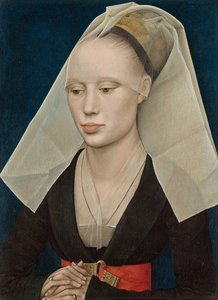
A Descent Into Eternity: Rogier van der Weyden’s ‘The Last Judgment’ (Detail)
Rogier van der Weyden's “The Last Judgment” – specifically this arresting detail – isn’t merely a depiction of biblical narrative; it’s a visceral plunge into the heart of human mortality and divine judgment. Painted in 1446, during his time in Bruges, this fragment offers a glimpse into the artist’s masterful command of emotion and his pioneering approach to portraying religious scenes. The scale of the original polyptych is immense, but even within this detail, van der Weyden achieves an astonishing level of realism and psychological depth, drawing the viewer directly into the chaotic drama unfolding before them.
The scene itself is a whirlwind of activity – a swirling vortex of souls ascending to heaven and descending to hell. At the center, seated on a simple chair, sits what is unmistakably Jesus Christ, radiating an almost serene authority amidst the turmoil. Surrounding him are angels, not in triumphant poses of victory, but engaged in a fervent act of worship, their hands raised in supplication – a poignant reminder that even divine beings acknowledge the gravity of this event. The figures below, rendered with remarkable anatomical accuracy and attention to texture, represent humanity’s fate: some are being dragged downwards by demons, others are rising towards the light, each face etched with terror, regret, or hopeful anticipation.
The Language of Flesh and Shadow
Van der Weyden's technique is revolutionary for its time. He moved beyond the stylized representations prevalent in earlier Gothic art, embracing a naturalism that bordered on photographic realism. Observe the meticulous rendering of fabrics – the flowing robes, the coarse garments of the damned – each thread and fold painstakingly depicted. This commitment to detail extends to the faces, where subtle shifts in expression convey a profound range of emotions: anguish, despair, acceptance, and even a flicker of hope. The use of *sfumato*, a technique borrowed from Renaissance masters like Leonardo da Vinci, creates soft transitions between light and shadow, adding depth and volume to the figures and lending an almost ethereal quality to the scene.
- Oil Paint Mastery: Van der Weyden was one of the first artists to fully exploit the potential of oil paint, allowing for richer colors, smoother gradations, and greater detail than could be achieved with tempera.
- Anatomical Precision: His deep understanding of human anatomy is evident in the realistic portrayal of musculature and skeletal structure.
- Emotional Resonance: He masterfully captures the psychological impact of judgment, conveying a sense of dread and uncertainty that resonates powerfully with the viewer.
Symbolism and Context – A Window into Medieval Thought
“The Last Judgment” is deeply rooted in medieval theology and iconography. The scene draws heavily from biblical passages describing the final reckoning, emphasizing themes of sin, redemption, and divine justice. The nakedness of some figures—particularly those being condemned—is a deliberate symbolic gesture, representing their vulnerability before God and the exposure of their sins. The presence of demons is equally significant, embodying the forces of evil that oppose humanity’s salvation. It's important to note that this work was intended for private devotion within a wealthy patron’s chapel, reflecting the importance of personal piety in the medieval era.
Interestingly, van der Weyden’s style shares affinities with Hans Memling, another prominent Early Netherlandish painter working in Bruges during the same period. Both artists demonstrated an exceptional ability to imbue their works with emotional intensity and a remarkable attention to detail – qualities that cemented their reputations as masters of their craft.
Bringing ‘The Last Judgment’ Home: A Reproduction for the Soul
AllPaintingsStore offers meticulously crafted, hand-painted reproductions of Rogier van der Weyden's “The Last Judgment” (detail), allowing you to experience the profound beauty and emotional power of this iconic masterpiece in your own space. Our artists replicate van der Weyden’s techniques with the utmost care, capturing not only the visual details but also the underlying atmosphere of drama and spirituality. Whether you are an art collector, a design enthusiast, or simply someone seeking to infuse their home with a touch of timeless elegance and profound contemplation, a AllPaintingsStore reproduction offers a unique opportunity to connect with one of the most significant works in Western art history.
Explore the full artwork here: /en/art/rogier-van-der-weyden-the-last-judgment-detail-8Y2VYK-en/
Questions & Answers
What mood does "The Last Judgment (detail) (37)" by Rogier van der Weyden express within Early Netherlandish Painting?
"The Last Judgment (detail) (37)" carries a dramatic emotional tone within the Early Netherlandish Painting movement.
What level of contrast does "The Last Judgment (detail) (37)" by Rogier van der Weyden show?
The contrast level of "The Last Judgment (detail) (37)" by Rogier van der Weyden is statement.
What mood and emotion come together in "The Last Judgment (detail) (37)"?
In "The Last Judgment (detail) (37)", a dramatic mood accompanies a dramatic emotion.


 Switch to Print


 For artworks or reproductions larger than 105 cm (approximately 41 inches) on any side, the frame will be shipped as a kit, disassembled. This method ensures safe delivery and prevents damage during transport.


