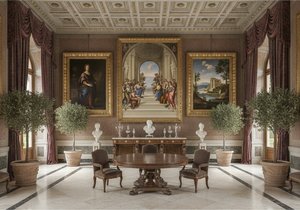
1576. Acrylic On Canvas, 351.0 x 389.0 cm.

§ 1Catalogue data
 Acrylic On Canvas
- WallArt
- WahooArt Database
 1576
1576- Renaissance
 351.0 x 389.0 cm
§ 2Abstract
وصف المقتنيات
Discover 'Pieta' by Titian Ramsay Peale II (1576), a rediscovered Renaissance masterpiece blending religious solemnity with Venetian-inspired artistry. Explore this captivating work and the artist’s legacy at AllPaintingsStore.
 اقرأ المزيد
نبذة عن الفنان
اكتشف الفنان الأمريكي تيتيان رامزي بيل الثاني (1799-1885)، الذي مزج بين الفن النهضاري والاهتمام العلمي. استكشف لوحاته المذهلة للحياة البرية والأعمال الدينية المستوحاة من أسلوب فناني البندقية الكلاسيكي، وشاهد كيف جسد رؤية فريدة تجمع بين التقاليد الأوروبية والهوية الأمريكية.
§ 3Commentary
A Renaissance Echo in America: Titian Ramsay Peale II’s *Pieta*
Titian Ramsay Peale II's *Pieta*, completed in 1576, is not merely a painting; it’s a poignant echo of the High Renaissance ideals brought to life on American soil. Standing at an impressive 351 x 389 cm, this monumental work commands attention, drawing viewers into a scene steeped in sorrow and spiritual contemplation. While bearing the title *Pieta* – traditionally depicting the Virgin Mary cradling the body of Jesus – Peale’s interpretation diverges from the Italian masters like Michelangelo, offering a uniquely American sensibility to this timeless subject. The composition is dynamic, filled with figures that convey a palpable sense of grief and devotion. A kneeling figure dominates the foreground, his hands raised in supplication, while the central form—presumably representing Christ—is held with tender reverence. In the background, flanking what appears to be a doorway or architectural recess, stand two angels, their presence both ethereal and grounding.
The Peale Legacy and Artistic Influences
To understand *Pieta*, one must consider Titian Ramsay Peale II within the context of his family. Born in 1799, he was the son of Charles Willson Peale, a celebrated American portraitist and founder of the Pennsylvania Academy of the Fine Arts. This familial connection provided young Titian with an early immersion into the world of art, though he ultimately forged his own path, blending artistic training with a deep fascination for natural history—a pursuit that would define much of his career. The influence of the High Renaissance is undeniable in *Pieta*. Peale’s meticulous attention to detail, refined color palette, and balanced composition all point towards an admiration for masters like Raphael and Titian (for whom he was named). However, unlike many American artists who traveled to Europe to study the Old Masters firsthand, Peale II largely developed his style through exposure to works available in America and through familial instruction. This resulted in a distinctive synthesis of European tradition and American artistic sensibilities.
Symbolism and Emotional Resonance
The *Pieta* motif itself is laden with symbolism, representing not only the sorrow of Mary over her son’s death but also themes of sacrifice, redemption, and divine love. Peale II's rendition amplifies these emotions through careful arrangement and expressive gestures. The kneeling figure embodies human grief and faith, while the angels symbolize heavenly solace and intervention. The architectural setting in the background isn’t merely decorative; it suggests a sacred space—a church or temple—further emphasizing the religious nature of the scene. While details regarding specific iconographic choices within Peale's *Pieta* remain open to interpretation due to limited documentation, the overall effect is profoundly moving. The painting evokes a sense of solemnity and quiet contemplation, inviting viewers to reflect on themes of mortality, faith, and compassion. The work’s scale contributes significantly to its emotional impact; it isn’t a small, intimate devotional piece but rather a grand statement of religious belief.
A Rediscovered Masterpiece for the Modern Home
For collectors and interior designers seeking a statement piece that blends historical significance with artistic beauty, Titian Ramsay Peale II's *Pieta* offers an exceptional opportunity. A hand-painted reproduction from AllPaintingsStore allows you to bring this rediscovered masterpiece into your space, adding a touch of Renaissance grandeur and American artistry. The painting’s somber yet hopeful tone makes it suitable for a variety of settings—from traditional libraries and studies to more contemporary living areas seeking a focal point with depth and meaning. Its large size demands attention, making it ideal for spacious rooms where its details can be fully appreciated. *Pieta* is not simply a decorative element; it’s an invitation to engage with art history, contemplate profound themes, and enrich your surroundings with the legacy of a remarkable American artist.
الأسئلة والأجوبة
ما مدى سطوع "Pieta" للفنان تيتيان رامزي بيل الثاني؟
بشكل عام، تم تسجيل درجة السطوع لـ "Pieta" بـ deep_shadow. ويصف السطوع المدرك مدى ظهور العمل الفني كضوء أو عتمة.
ما مستوى التباين الذي يظهره "Pieta" للفنان تيتيان رامزي بيل الثاني؟
تُظهر لوحة "Pieta" للفنان تيتيان رامزي بيل الثاني تباينًا Bold بين مناطق الضوء والظلال فيها.
ماذا يصور "Pieta" للفنان تيتيان رامزي بيل الثاني، وبأي طابع؟
تجمع لوحة "Pieta" للفنان تيتيان رامزي بيل الثاني بين pieta, religious art, renaissance, mourning, angels, biblical scene, devotion, lamentation وأجواء Elegant.


 التبديل إلى المطبوعات


 بالنسبة للأعمال الفنية أو النسخ المطبوعة التي يتجاوز طول أي من أضلاعها 105 سم (حوالي 41 بوصة)، سيتم شحن الإطار كمجموعة مفككة. تضمن هذه الطريقة سلامة التوصيل وتمنع حدوث أي أضرار أثناء النقل.