The Soul of the Valleys: The Life and Vision of Ernest Zobole
Ernest Zobole (1927-1999) remains a singular voice in Welsh art history, an artist whose canvases breathed with the grit and beauty of the Rhondda Valleys during the twilight years of industrial Britain. Born in Tylorstown, within the heart of Rhondda Cynon Taf, Zobole’s formative years were deeply steeped in the atmosphere of coal mining communities. As the son of a miner, he absorbed firsthand the rhythms of working-class life—the camaraderie, the hardship, and above all, the profound connection to the land. This intimate familiarity with the landscape would later become the emotional bedrock of his work, allowing him to document a vanishing world through a lens imbued with deep, personal resonance.
His artistic journey began in earnest during his studies at the Cardiff School of Art, where he honed his technical mastery of watercolor and oil painting. However, Zobole’s true creative breakthrough was forged through his involvement with the Rhondda Group. This collective of artists, including figures such as Gwyneth Roberts and David Davies, sought to move beyond mere topographical representation. They aimed for a deeper expression of feeling, capturing not just the physical reality of industrial Wales, but how that reality felt to those living within it. Through this movement, Zobole found his purpose: portraying the landscapes of Ystrad and Llwynypia not merely as collections of coal mines and slag heaps, but as living entities imbued with melancholy, resilience, and an enduring spirit.
A Symphony of Color and Expression
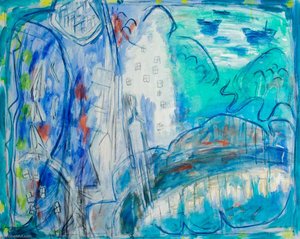
Zobole’s distinctive style is a captivating blend of Expressionist influences and a unique, almost hallucinatory quality. Drawing inspiration from masters such as Edvard Munch and Franz Marc, he eschewed meticulous, photographic detail in favor of capturing the raw essence of a scene. His technique is characterized by bold, energetic brushstrokes and a vibrant color palette that can transform a somber industrial landscape into something otherworldly and emotionally charged. In works like Ystrad, Rhondda, one can witness this mastery, where the post-impressionist beauty of the Welsh countryside meets a profound sense of atmosphere.
The power of his work lies in its ability to balance the heavy reality of industrial decay with a soaring, imaginative spirit. His paintings often feature:
- Dynamic Landscapes: Depictions of hills and houses that seem to pulse with life, as seen in Houses and Hills.
- Emotional Coloration: The use of intense hues to convey the psychological weight of the mining era.
- Structural Essence: A focus on the skeletal beauty of the valleys, prioritizing the mood of the landscape over literal accuracy.
Legacy and Historical Significance
Though his recognition was largely concentrated within Wales during his lifetime, the historical significance of Ernest Zobole cannot be overstated. He served as a vital chronicler of a pivotal era in British history, capturing the transition of the Rhondda Valleys from industrial powerhouses to the quiet, reflective landscapes they are today. His work provides a visual archive of the 56 Group Wales era and the broader post-war Welsh art movement, documenting the social and physical transformations of his homeland.
Ultimately, Zobole’s legacy is found in his ability to find beauty in the industrial and the profound in the everyday. He did not merely paint landscapes; he painted the collective memory of a people. Through his expressive canvases, the grit of the coal mines and the rolling hills of the Rhondda are preserved forever, rendered with a passion that ensures the spirit of his community will never truly fade.