The Poetic Eye of the Everyday: The Legacy of Henry Wessel Jr.
In the vast, sun-drenched expanse of the American West, there exists a particular kind of beauty found not in the soaring peaks of the Sierras, but in the quiet, often overlooked corners of the vernacular landscape. Henry Wessel Jr., born in Teane and raised with an eye for the subtle, became one of the most profound chroniclers of this understated reality. His journey into the heart of photography was almost accidental, sparked during his undergraduate years at Pennsylvania State University when a chance encounter with a photographic book ignited a lifelong obsession with the medium. This serendipitous beginning led him to adopt the Leica 35mm camera and a 28mm lens—tools that would become extensions of his own vision, allowing him to move through the world with a sense of intimacy and immediacy.
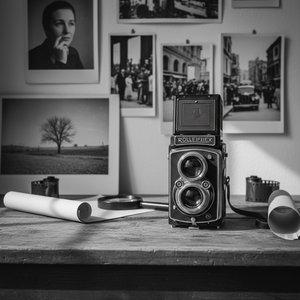
Wessel’s aesthetic was deeply rooted in the textures of reality. Utilizing Kodak Tri-X film, he mastered a tonal range that could transform a mundane roadside scene into a piece of personal poetry. His work emerged alongside the influential New Topographics movement, a group of photographers who sought to document the "man-altered landscape" without the romanticized lens of traditional landscape photography. Rather than seeking out pristine wilderness, Wessel found inspiration in the architecture of human presence: the brilliant light hitting a suburban facade, the social landscapes of Northern and Southern California, and the way culture and nature intersect at the edges of the American highway system.
A Master of the Unpretentious Moment
What set Wessel apart was his ability to find an inexhaustible richness in the aesthetics of the everyday. His images often possessed a deadpan quality, sharing the spontaneity and authenticity of a snapshot while maintaining a rigorous, thoughtful composition. There was a certain wryness, even a gentle humor, embedded in his black-and-white captures—a way of looking at the world that was both disarming and deeply observant. He did not merely document buildings or streets; he captured the "personality" of the built environment, viewing architecture as a reflection of the human beings who inhabit it, much like genetics define a face.
This approach to the subject matter—the unpretentious, the ordinary, and the vernacular—allowed him to bridge the gap between documentary photography and fine art. His work was never about the monumental; instead, it celebrated the small, the fleeting, and the overlooked. Whether he was exploring the light of the Bay Area or the sprawling landscapes of the West, his lens remained focused on the truth of the moment, finding dignity in the most modest of subjects.
Critical Recognition and Lasting Influence
The trajectory of Wessel’s career was marked by significant milestones that cemented his place in the pantheon of American photography. His debut solo exhibition at the Museum of Modern Art (MoMA) in New York in 1972, curated by the legendary John Szarkowski, served as a definitive introduction to the art world. This was followed by his participation in the seminal New Topographics: Photographs of a Man-Altered Landscape exhibition at George Eastman House in 1975, an event that would redefine the genre for generations to come.
Throughout his decades of practice, Wessel’s contributions were recognized through numerous prestigious honors, including:
- Two Guggenheim Fellowships, which supported his deep explorations of the American landscape.
- Three National Endowment for the Arts grants, acknowledging his technical and artistic mastery.
- A distinguished career as an emeritus professor of art at the San Francisco Art Institute, where he passed his passion to new generations of artists.
His photographic legacy is preserved in some of the world's most esteemed institutions, including the Tate Modern in London, the San Francisco Museum of Modern Art (SFMOMA), and the Museum of Contemporary Art, Los Angeles. Even as he ventured into color photography later in his career, the core of his vision remained unchanged: a steadfast commitment to seeing the extraordinary within the ordinary, leaving behind a body of work that continues to teach us how to look at the world with wonder and humility.