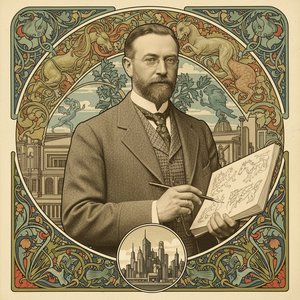
Kenneth Dingwall: A Life in Color and Form
Born in Clackmannanshire, Scotland, in 1938, Kenneth Dingwall’s artistic journey is one of quiet contemplation and profound engagement with the visual world. His life has been a tapestry woven from threads of teaching, travel, and an unwavering dedication to exploring the abstract through color, texture, and geometric form. From his early studies at Edinburgh College of Art to his distinguished career as a professor and artist, Dingwall’s work reflects a deep-seated belief in the power of art to communicate complex emotions and ideas – often without resorting to overt representation.
Early Influences and Artistic Formation
Dingwall's artistic development was shaped by a confluence of experiences. His formal training at Edinburgh College of Art provided him with a solid foundation in traditional painting techniques, but it was his subsequent travels that truly ignited his creative spirit. A period spent living and working in Greece during the early 1960s exposed him to the rhythms of nature and the ancient geometries found within its landscapes. This experience, coupled with his time at Athens School of Fine Art, instilled a sensitivity to pattern and proportion – elements that would later become central to his abstract compositions. Crucially, he cites Mark Rothko and Robert Ryman as key influences, artists who demonstrated how non-objectivity could be imbued with psychological and metaphysical resonance.
The Development of Abstract Style
Beginning around 1973, Dingwall began to develop his distinctive abstract style. He moved away from representational forms, focusing instead on exploring the relationships between color, line, and surface. His paintings are characterized by a deliberate restraint – a careful consideration of each brushstroke, each mark, and each shift in texture. He often employed a limited palette of sombre colors—blues, reds, yellows—creating a sense of depth and mystery within his canvases. These works aren’t merely decorative; they invite the viewer to engage with them on an emotional level, seeking out personal interpretations within their carefully constructed compositions. The influence of Mondrian, Malevich, and Barnett Newman is evident in his exploration of geometric abstraction and the pursuit of a universal visual language.
Key Exhibitions and Recognition
Throughout his career, Dingwall’s work has been exhibited both nationally and internationally. Solo shows at the Scottish Gallery, Graeme Murray, and the Peter Noser Galerie in Zurich showcased his evolving style to a wide audience. Significant exhibitions have included those at the Cleveland Center for Contemporary Art (MOCA), Pier Arts Centre in Orkney, and the Cairn Gallery in Pittenweem. He received numerous awards and fellowships, including the Scottish Arts Council Award in 1977 and the Ohio Arts Council Fellowship in 1995. Notably, his work was featured in a major traveling exhibition organized by the Talbot Rice Gallery in Edinburgh and the Cleveland Center for Contemporary Art in 1996-1997, solidifying his position as a leading figure in contemporary British art.
Legacy and Continuing Influence
Kenneth Dingwall’s legacy extends beyond his individual artworks. His commitment to teaching has shaped the careers of countless young artists, and his work continues to inspire dialogue about the possibilities of abstract expressionism. His paintings are characterized by a quiet intensity—a sense of profound contemplation that invites viewers to engage with them on a deeply personal level. Recent exhibitions, such as those at the Cairn Gallery in 2019 and the Pier Arts Centre in 2014, demonstrate the enduring relevance of his work and its continued ability to resonate with audiences today. His work is held by institutions including the Scottish National Gallery of Modern Art, Perth Museum and Art Gallery, and Kelvingrove Art Gallery and Museum, ensuring that his artistic vision will continue to be appreciated for generations to come.