

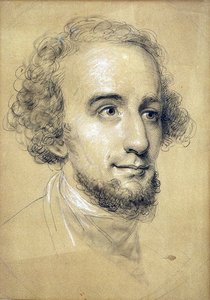
1562. Масло върху платно, 96.0 x 75.0 cm.

§ 1Catalogue data

- 96.0 x 75.0 cm


§ 2Abstract
Описание на колекционерския предмет
Титън Раймс Пейл II е американски художник и натуралист, известен със своите детайлни живописни изображения на дивата природа и научни рисунки. Това произведение изобразява самопортрет от 1562 г., изпълнено в маслена живопис и представлява върхът на ренесансовия стил.
 Прочети повече
Биография на художника
Открийте Тициан Рамзи Пийл II (1799-1885) - американски художник и натуралист, съчетаващ Ренесансова изящност с научни наблюдения. Разгледайте неговите пленителни картини на дивата природа!
§ 3Commentary
Titian Ramsey Peale II: A Renaissance Echo in the New World
Titian Ramsay Peale II occupies a fascinating, often overlooked niche within the landscape of 19th-century American art. Born in Philadelphia in 1799, he was steeped in artistic lineage as the youngest son of Charles Willson Peale, a pivotal figure in early American portraiture and founder of the nation’s first museum. While his father's legacy loomed large, Titian forged his own path, one deeply rooted in the aesthetic ideals of the High Renaissance, particularly those emanating from Venice. He wasn’t merely replicating styles; he was channeling a profound artistic sensibility, imbuing his canvases with a meticulous detail and vibrant color palette that set him apart from many of his contemporaries. His life unfolded against a backdrop of burgeoning American identity, yet his artistic heart remained tethered to the classical masters, creating a compelling tension between Old World reverence and New World expression. His work reflects this duality beautifully. Consider “Doge Antonio Grimani Kneeling Before the Faith,” housed in Palazzo Vescovile in Pienza, Italy – an exemplar of Renaissance grandeur. The meticulous layering of pigments captures not only the subject’s likeness but also the solemnity of the occasion, mirroring the artistic conventions prevalent during that era. Peale II skillfully employed oil on canvas, a technique favored by artists like Michelangelo and Raphael, achieving luminosity and depth that speaks to the enduring power of classical art forms. The painting's composition directs the viewer's gaze towards Grimani’s kneeling posture, symbolizing humility and devotion – themes central to Renaissance spirituality. Beyond technical prowess, Peale II’s artistic vision resonated with a broader cultural movement. He was influenced by the humanist philosophy championed during the Renaissance, which emphasized human dignity and reason alongside religious faith. This intellectual fervor is palpable in his portraits, where he strives to convey not just physical appearance but also inner character. “Portrait of a Man,” for instance, showcases Peale II’s ability to capture subtle expressions and gestures that reveal the sitter's personality—a hallmark of Renaissance portraiture. The artist’s careful attention to detail – from the texture of the robe to the glint in the eye – elevates the image beyond mere representation, transforming it into a meditation on human experience. Furthermore, Peale II’s exploration of natural history aligns with the Renaissance fascination for observation and scientific inquiry. His meticulous illustrations of animals and plants demonstrate his commitment to documenting the natural world with accuracy and beauty—a pursuit that reflects the broader humanist impulse to understand God's creation through empirical study. Like Michelangelo’s frescoes in the Sistine Chapel, Peale II sought to inspire awe and wonder through artistic representation, mirroring the Renaissance desire to elevate human intellect and creativity. “Self-portrait” exemplifies this artistic ethos perfectly. The painting—measuring 96 x 75 cm—is a testament to Peale II’s mastery of oil paint and his ability to convey profound introspection. His gaze is direct, unwavering, reflecting a deep engagement with the subject matter – himself. The artist's clothing contributes to the scene's texture and depth, mirroring the Renaissance penchant for realism and symbolic richness. As a whole, this artwork embodies the spirit of the Renaissance: a celebration of human potential coupled with reverence for classical tradition. For those wishing to delve deeper into Peale II’s oeuvre, “Titian Ramsay Peale II: Self-portrait” is available on AllPaintingsStore.com.- Artist: Titian Ramsay Peale II
- Born Year: 1799
- Death Year: 1885
- Birth City: None
- Birth Country: None
- Titian Ramsay Peale II: Self-portrait
- Titian Ramsey Peale II on Wikipedia
- Palazzo Vescovile, Pienza, Italy - A Haven of Renaissance Art
Въпроси и отговори
Къде се препоръчва да бъде изложена творбата "Титън Раймс Пейл II" във формат Портретна ориентация?
Формат (Портретна ориентация) и препоръчителното пространство (Дневна стая) са двете посочени подробности за разположението на „Титън Раймс Пейл II“ на Тициан Рамзи Пейл II.
Какво историческо място заема "Титън Раймс Пейл II"?
Исторически „Титън Раймс Пейл II“ е произведение от Renaissance, принадлежащо към по-широката епоха на Ренесанс.
Какви са размерите на оригиналния „Титън Раймс Пейл II“ на Тициан Рамзи Пейл II?
Размерите на оригиналната творба „Титън Раймс Пейл II“ на Тициан Рамзи Пейл II са 96 x 75 cm.


 Превключване към принт


 За произведения на изкуството или репродукции, чийто размер е над 105 см (приблизително 41 инча) във всяка страна, рамката ще бъде изпратена в разглобен вид като комплект за сглобяване. Този метод гарантира безопасна доставка и предотвратява повреди по време на транспортиране.


