Giorgione (1477/8-1510): A Venetian Enigma
Giorgio Barbarelli da Castelfranco, known to the world as Giorgione, remains one of the most elusive and captivating figures in Renaissance art. Born in the small town of Castel Franco Veneto near Venice around 1477 or 1478 – the exact year is debated – his tragically short life, ending around 1510 at the age of thirty-two or thirty-three, belies an artistic impact that continues to resonate centuries later. Unlike many of his contemporaries whose lives are well documented, Giorgione’s story is shrouded in mystery, pieced together from scant historical records and the often romanticized accounts of Giorgio Vasari. What we do know suggests a man deeply immersed in the vibrant culture of Venice, a city that fostered both artistic innovation and a sensual appreciation for beauty. He likely apprenticed under Giovanni Bellini, a leading Venetian painter, absorbing the established traditions before forging his own unique path. Early commissions included portraits of prominent figures like Doge Agostino Barbarigo, demonstrating an immediate talent for capturing likeness and status. However, it was in his departure from conventional subject matter and his revolutionary approach to painting that Giorgione truly distinguished himself.
Early Life and Artistic Training
Giorgio Barbarelli’s origins are relatively obscure. He was born into a family of modest means in Castel Franco Veneto, a region known for its textile industry and burgeoning artistic patronage. While precise details about his childhood remain elusive, biographical sketches indicate he possessed an innate fascination with art from a young age. His formal training began under Giovanni Bellini, arguably the most influential Venetian painter of his time. Bellini’s workshop served as a crucible for artistic experimentation, fostering a tradition of blending Byzantine influences with emerging humanist ideals. Giorgione diligently studied Bellini's techniques – particularly his masterful use of color and glazing – absorbing the stylistic conventions that would shape his own distinctive style. This apprenticeship instilled in him not only technical proficiency but also a profound understanding of Venetian artistic culture.
A Revolutionary Style: Color, Atmosphere, and *Sfumatò*
Giorgione’s artistic style represented a radical departure from the prevailing Florentine aesthetic, which prioritized linear perspective and meticulous draughtsmanship. He championed color, atmosphere, and an evocative moodiness that became hallmarks of the Venetian school – a movement characterized by its sensual beauty and emotional depth. Unlike his Florentine counterparts who sought to represent the world as it appeared objectively, Giorgione aimed to capture its essence—its fleeting emotions and spiritual resonance. His technique involved softening outlines, employing subtle gradations of tone – *sfumato* – to create atmospheric effects that blurred boundaries between objects and imbued scenes with a hazy luminescence. This approach wasn’t merely a stylistic preference; it reflected a fundamentally different artistic sensibility rooted in Byzantine art traditions. Giorgione skillfully utilized color symbolism—particularly muted hues—to convey complex psychological states and heighten the emotional impact of his paintings. The result was an unparalleled sense of depth and luminosity, transforming landscapes into immersive experiences for the viewer.
Notable Works: Visions of Beauty and Mystery
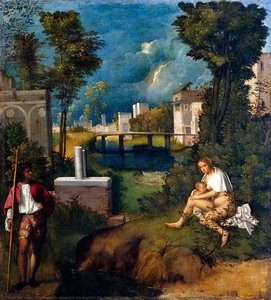
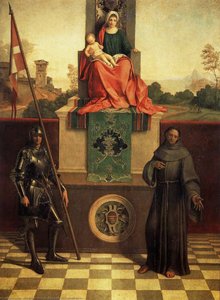
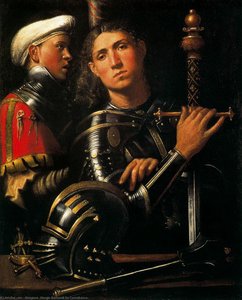
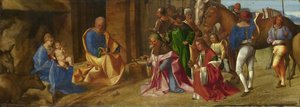
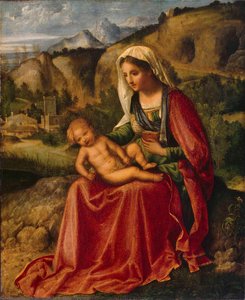
Giorgione’s oeuvre is remarkably small compared to other Renaissance masters, consisting primarily of a handful of paintings that nevertheless command immense artistic significance. The Tempest (c. 1506-1508), arguably his masterpiece, depicts a soldier and a nursing mother amidst a stormy landscape—a scene fraught with ambiguity and symbolic richness. The painting’s hazy atmosphere and muted colors evoke a profound sense of melancholy and contemplation, prompting viewers to ponder the mysteries of human existence. Similarly, Pastoral Concert (Fête champêtre) presents an idyllic gathering of musicians in a pastoral setting—a celebration not of narrative detail but of harmonious composition and lyrical beauty. Giorgione’s masterful use of color and light creates an ethereal illusion, transporting the viewer to another realm of sensory experience. Other notable works include Sleeping Venus (c. 1509-1510), a sensual depiction of Aphrodite resting on a scallop shell—a testament to Giorgione's ability to convey beauty and emotion with understated elegance; *Judith* (c. 1504), an early example of his evolving style, demonstrating his growing mastery of chiaroscuro—the dramatic interplay of light and shadow—and *Portrait of Lucrezia Borgia* – a psychologically astute portrayal capturing the enigmatic gaze and aristocratic demeanor of one of Venice’s most influential figures.
Influence and Legacy
Giorgione's artistic innovations profoundly impacted Venetian painting and exerted considerable influence on subsequent generations of artists. His pioneering use of *sfumato*, combined with his masterful color palette and atmospheric perspective, established a new aesthetic standard that resonated throughout Europe. He served as a mentor to Titian, who would become one of the most celebrated painters of the High Renaissance—carrying forward Giorgione’s stylistic legacy and solidifying Venice's position as a center for artistic excellence. Giorgione’s enduring fascination stems not only from his technical brilliance but also from the profound emotional depth of his paintings—works that continue to inspire awe and contemplation centuries after their creation. He remains an emblem of artistic freedom, innovation, and the pursuit of beauty—a painter who dared to transcend convention and forge a path toward new expressive possibilities.