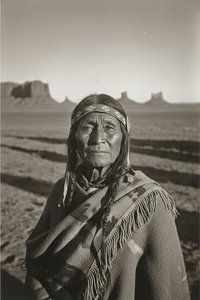
Edward S. Curtis: The Shadow Catcher and the Preservation of Indigenous Culture
Edward S. Sheriff Curtis (1868-1952) stands as one of the most iconic figures in American photography, a pioneer whose monumental project—*The North American Indian*—transformed our understanding of Native American cultures at the dawn of the 20th century. Born in Whitewater, Wisconsin, to Reverend Asahel Curtis and Ellen Sheriff, his early life was marked by hardship – his father’s struggles with poverty instilled in him a profound empathy for marginalized communities that would define his artistic vision. Unlike many artists of his time, Curtis eschewed formal academic training, prioritizing direct observation and immersion in the world he sought to document. This autodidactic approach—coupled with an unwavering dedication to preserving cultural heritage—became the cornerstone of his extraordinary legacy.
- Early Years & Photographic Beginnings: Curtis’ fascination with photography began during his youth when he constructed his first camera from readily available materials. He apprenticed as a photographer in St. Paul, Minnesota, honing his skills and establishing himself as a respected craftsman before relocating to Seattle in 1887 where he partnered with Rasmus Rothi and Thomas Guptill.
- The Genesis of *The North American Indian*: Inspired by the plight of Native Americans facing assimilation policies and westward expansion, Curtis embarked on an ambitious endeavor—a twenty-volume series aimed at comprehensively documenting tribal life through meticulous photography and ethnographic recordings. Securing substantial funding from J.P. Morgan fueled this monumental undertaking.
- A Photographic Style Defined: Curtis’ distinctive aesthetic favored a soft focus technique, reflecting the artistic sensibilities of his era while simultaneously conveying a dreamlike quality to his images. He utilized large format cameras and photogravure printing—a revolutionary process at the time—to achieve unparalleled detail and tonal nuance.
- Collaboration & Challenges: Curtis worked closely with Native American communities, relying on their knowledge and cooperation to recreate traditional scenes. However, critics have debated whether his photographic representations were entirely objective, acknowledging the influence of Western artistic conventions and raising questions about potential biases.
The North American Indian Project: A Legacy of Detail
Curtis’ magnum opus—*The North American Indian*—represents an unparalleled achievement in ethnographic photography. With over 40,000 photographic images capturing the rituals, customs, and daily lives of eighty tribes across the United States and Alaska, it stands as a testament to his unwavering commitment to preserving cultural heritage. The project’s scope extended beyond mere portraiture; Curtis painstakingly recorded wax cylinder recordings of Native languages and music—a pioneering effort in documenting oral traditions—further enriching the scholarly value of his work.
- Funding & Production: Securing $75,000 from J.P. Morgan ensured the project’s completion, albeit spanning over two decades despite initial plans for five years.
- The Team Behind the Vision: Curtis assembled a skilled team including William E. Myers (writer), Bill Phillips (logistics), and Frederick Webb Hodge (anthropologist and editor) who collaborated to produce a comprehensive ethnographic record.
- Publication & Recognition: Despite facing challenges in securing widespread distribution, *The North American Indian* was eventually published in 222 complete sets—a remarkable feat of printing and publishing—receiving international acclaim and cementing Curtis’ place as one of the most influential photographers of his time.
Beyond Photography: Film & Artistic Expression
Curtis's creative spirit extended beyond photography into filmmaking, where he experimented with early motion pictures as early as 1906. His film *In the Land of the Head Hunters* (1914), featuring an all-Native American cast—one of the first films to achieve this feat—demonstrated his ability to translate ethnographic observation into compelling cinematic storytelling. He continued his artistic endeavors in Hollywood, serving as a portrait photographer and production still photographer for iconic films like *The Ten Commandments* and *The Plainsman*.
Curtis’ Enduring Influence & Historical Significance
Edward S. Curtis's work profoundly impacted subsequent generations of ethnographers and photographers, establishing standards for meticulous documentation and artistic representation. While debates continue regarding the ethical considerations inherent in his project—particularly acknowledging the colonial gaze—his legacy remains undeniable as a champion of Indigenous cultures and a pioneer in preserving cultural heritage through visual media. His images continue to inspire awe and provoke reflection on the complexities of intercultural understanding and the importance of safeguarding traditions facing imminent disappearance.