Rychlá odpověď
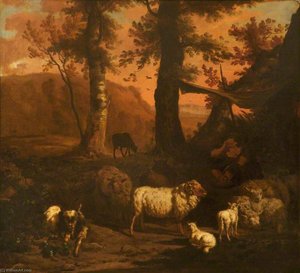
Mezi obrazy umělce Dirck van der Bergen je na prvním místě Farmyard with a woman and farm animals (1650). Na druhém a třetím místě: Landscape and Animals (1668) a Cattle in a Rocky Landscape (1680). Náš katalog obsahuje 39 děl umělce Dirck van der Bergen. Zde je vybráno 39 nejznámějších děl seřazených podle popularity, včetně roku vzniku a muzea, ve kterém se nachází originál každého díla.
Top 10: nejznámější obrazy umělce Dirck van der Bergen
Pořadí od 11 do 39: více obrazů od Dirck van der Bergen
obrazy autora Dirck van der Bergen podle tématu
Čtyři nejčastější témata v tomto žebříčku, včetně nejvýraznějšího díla pro každé z nich.
Rural life 2 děl
Landscape painting 2 děl
Landscape 2 děl
Muzea, ve kterých jsou vystavena originálna umělce Dirck van der Bergen
8 muzea, v nichž je umístěno nejvíce obrazů z této stránky.
| Muzea | Město | Díla autora Dirck van der Bergen | Obrazy z tohoto seznamu |
|---|---|---|---|
| Thames | 16 | Night Scene with Figures Grouped around a Fire, Landscape with a Milkmaid Milking a Cow, a Farm Dwelling, Cows, Sheep and a Donkey, A Landscape with an Antique Tomb with a Ruined Urn, a Herdsboy and Shepherd Girl, Cattle, Sheep, and a Goat | |
| Amsterdam | 4 | Landscape with Herdsmen and Cattle near a Tomb, Dirck van Bergen, 1660 - 1690, landscape with fighting bulls, Landscape with Herdsmen and Cattle, Dirck van Bergen, 1660 - 1690 | |
| Dublin | 2 | Cattle in a Rocky Landscape, The Old White Horse | |
| Antverpy | 2 | Landscape with a Spinner and Cattle, Landscape with a Shepherd | |
| Vídeň | 1 | Mountainous landscape with a shepherdess and cows | |
| Gouda | 1 | Resting Cattle near a Grave monument | |
| Helsinki | 1 | Meadow Landscape | |
| Stockholm | 1 | Cattle near a Barn |
Nejlepší obraz každého desetiletí od Dirck van der Bergen
Díla podle dekád
Vyberte dekádu, abyste si prohlédli její nejvýznamnějšíjší obraz.
Landscape with Herdsmen and Cattle near a Tomb, Dirck van Bergen, 1660 - 1690
Italian landscape with shepherds and cattle resting at a decaying antique tomb. A goat is milked by a girl.
Obrazy autora Dirck van der Bergen: FAQ
Které je nejznámější dílo umělce Dirck van der Bergen?Zobrazit odpověď
Na prvním místě je Farmyard with a woman and farm animals (1650), následuje Landscape and Animals (1668) a Cattle in a Rocky Landscape (1680).
Kterých deset nejslavnějších obrazů má Dirck van der Bergen?Zobrazit odpověď
Farmyard with a woman and farm animals, Landscape and Animals, Cattle in a Rocky Landscape, Mountainous landscape with a shepherdess and cows, Resting Cattle near a Grave monument, Night Scene with Figures Grouped around a Fire, Landscape with a Milkmaid Milking a Cow, a Farm Dwelling, Cows, Sheep and a Donkey, A Landscape with an Antique Tomb with a Ruined Urn, a Herdsboy and Shepherd Girl, Cattle, Sheep, and a Goat, Landscape with Figures, Cattle, Sheep and a Castle in the Distance a Meadow Landscape. Rok a muzeum pro každé dílo jsou uvedeny v hodnocení výše.
Kolik obrazů autora Dirck van der Bergen je v seznamu?Zobrazit odpověď
V našem katalogu je 39 děl umělce Dirck van der Bergen, datovaných od 1665 do 1690.
Ve kterých muzeích jsou vystavena nejznámější originály umělce Dirck van der Bergen?Zobrazit odpověď
Primárně v National Trust (Thames), Rijksmuseum (Amsterdam) a National Gallery of Ireland (Dublin). Pro úplný seznam se podívejte do tabulky muzeí výše.
Kdy byla vytvořena nejlepší díla umělce Dirck van der Bergen?Zobrazit odpověď
V období 1670s: 20 z 39 obrazů zařazených zde pochází z této doby, včetně Night Scene with Figures Grouped around a Fire.
Jaká jsou nejstarší a nejnovější slavná díla umělce Dirck van der Bergen?Zobrazit odpověď
Nejstarší na této stránce: Two Calves, a Sheep and a Dun Horse by a Ruin (1665). Nejnovější: Landscape with Herdsmen and Cattle near a Tomb, Dirck van Bergen, 1660 - 1690 (1690).
Jaká témata se nejčastěji objevují v obrazech umělce Dirck van der Bergen?Zobrazit odpověď
Mezi 39 obrazy zařazenými v tomto žebříčku: Rural life (2), Landscape painting (2) a Landscape (2).
K jakému směru patří obrazy umělce Dirck van der Bergen?Zobrazit odpověď
Baroque a Dutch golden age, na základě obrazů zařazených na této stránce.
Jaká slavná díla autora Dirck van der Bergen má v obchządu National Trust?Zobrazit odpověď
V muzeu National Trust, Thames se nachází 16 z obrazů zařazených v tomto žebříčku, včetně Night Scene with Figures Grouped around a Fire, Landscape with a Milkmaid Milking a Cow, a Farm Dwelling, Cows, Sheep and a Donkey a A Landscape with an Antique Tomb with a Ruined Urn, a Herdsboy and Shepherd Girl, Cattle, Sheep, and a Goat.
Mohu si koupit reprodukci obrazu od Dirck van der Bergen?Zobrazit odpověď
Ano. Každý obraz na této stránce lze objednat jako ručně malovanou olejovou reprodukci nebo jako tisk. Otevřete obraz, zvolte velikost a dokončete objednávku.
Dirck van der Bergen: umělec za těmito obrazy
The Quiet Brilliance of Dirck van den Bergen
In the golden twilight of the Dutch Golden Age, a period defined by the monumental shadows of Rembrandt and the sweeping grandeur of Rubens, there existed a more intimate form of mastery. Dirck van den Bergen (1645 – c. 1700) emerged as a painter of profound subtlety, a master of the landscape who found the extraordinary within the ordinary. While history often favors the dramatic, van den Bergen’s work offers a different kind of enchantment—one rooted in the tranquil, atmospheric beauty of the Dutch and Flemish countryside. His canvases do not shout; instead, they whisper of moonlit pastures, the rhythmic toil of rural life, and the soft, shifting light that defines the northern European spirit.
Though much of his early life remains shrouded in the mists of time, we know that van den Bergen’s artistic soul was shaped by the rigorous traditions of his era. Born around 1645, he likely found his footing through the guidance of established masters. While some records suggest an apprenticeship under the Antwerp landscape painter Jacob Savertijns, other historical accounts point to him being a pupil of Adriaen van de Velde, a connection that would have deeply influenced his ability to capture delicate pastoral scenes. This formative training instilled in him a lifelong devotion to Baroque realism, a style where the meticulous observation of nature meets an almost poetic sense of atmosphere.
A Mastery of Light and Earthly Texture
To gaze upon a van den Bergen landscape is to experience the tactile reality of the seventeenth century. He possessed a singular ability to render the textures of the natural world, employing the impasto technique—the thick, sculptural application of paint—to breathe life into his subjects. Under his brush, the coarse wool of a sheep, the heavy hide of a grazing cow, and the weathered stone of an ancient ruin all possess a palpable weight and presence. His palette was one of sophisticated restraint, favoring the earthy, muted tones of ochre, umber, and slate grey, which allowed the subtle interplay of light to become the true protagonist of his compositions.
His oeuvre, consisting of approximately eighty known works, frequently explores the intersection of human presence and the vastness of nature. In masterpieces such as “Landscape with a Milkmaid Milking a Cow” (1677), we see his ability to transform a simple moment of agricultural labor into a scene of timeless grace. He was equally adept at capturing the nocturnal mysteries of the landscape; his “Night Scene with Figures Grouped around a Fire” demonstrates a breathtaking command over chiaroscuro, using the flickering glow of a campfire to pierce through the velvety darkness of a moonlit Dutch night. These works are not merely depictions of scenery but are emotional landscapes that evoke a sense of peace, solitude, and the enduring cycle of rural life.
Legacy and Historical Resonance
The significance of Dirck van den Bergen lies in his role as a bridge between the high drama of the early Baroque and the more refined, observational styles that followed. While he may not have sought the international fame of his contemporaries, his influence rippled through the generations of landscape painters who valued accuracy and atmospheric depth. His work provided a blueprint for capturing the pastoral ideal—a vision of the world that is both grounded in physical reality and elevated by artistic sensitivity.
As we reflect on his life, which saw him move between the vibrant art centers of Antwerp and Amsterdam before eventually settling in Haarlem, we see an artist who was deeply attuned to the rhythms of his time. His ability to find majesty in a herd of cattle or beauty in a ruined urn serves as a testament to the power of the observant eye. Today, his paintings remain vital touchstones for anyone seeking to understand the quiet, enduring heart of Dutch and Flemish landscape art, reminding us that true brilliance often resides in the most understated of moments.