The Geometry of Proportion: From Vitruvian Principles to Balanced Composition
The foundation of classical beauty rests upon a mathematical certainty that transcends mere aesthetic preference. It is a belief that the physical world operates according to a logic of proportion, a concept codified by the Roman architect Vitruvius in his treatise De architectura. This principle suggests that every element, from the height of a column to the width of a doorway, must exist in a specific, harmonious relationship to the whole. When we observe the structural integrity of classical architecture, we are seeing the application of these ancient axioms, where symmetry is not a repetitive pattern but a calculated equilibrium.
This pursuit of mathematical order finds a direct echo in the composition of a painting. Just as a building relies on a systematic order of proportions to achieve stability, a painter uses the canvas to create a sense of visual weight and balance. In the works of the Old Masters, the placement of figures and the division of the landscape are never accidental; they are governed by an invisible geometry that guides the eye through the scene. This structural clarity ensures that even the most complex narrative remains legible and calm, preventing the viewer from feeling overwhelmed by chaos.
The Discipline of Line: Neoclassical Form and the Clarity of Silhouette
Bertel Thorvaldsen. Danish-Icelandic Neoclassical sculptor of serene mythological figures and the monumental Christus, known for his purity of line and form.
In the transition from the theatricality of the Baroque to the rigor of Neoclassicism, the primacy of line became a central concern for artists and architects alike. This movement sought to strip away the heavy, swirling ornamentation of previous eras in favor of a purer, more authentic classical style. The goal was to emphasize the essential form of an object or a figure, using clear, decisive contours to define its presence in space. This was a reaction against the perceived decadence of the Rococo, favoring instead the intellectual clarity of the Enlightenment.
We see this discipline reflected in the precision of Neoclassical sculpture, such as the works of Bertel Thorvaldsen. In his rendering of the human form, the artist balances idealized anatomy with a profound sense of repose. The cascading waves of hair and the soft, flowing lines of the drapery are not merely decorative additions; they serve to articulate the contours of the body, reinforcing the structural integrity of the figure. This emphasis on the silhouette ensures that the subject possesses a sense of permanence and dignity, standing firm against the fleeting whims of fashion.
Restraint and Harmony: Moving Beyond Baroque Excess to Classical Order
William Hogarth. English satirist and engraver of modern moral subjects, using biting narrative series to dissect the social fabric of 18th-century London life.
The history of art is often a dialogue between the impulse toward grandiosity and the necessity of restraint. While the Baroque period embraced drama, movement, and intense emotionality, the rise of Classicism offered a necessary counterpoint through the virtues of simplicity and clarity. Artists like William Hogarth championed an approach that prioritized harmony and naturalism over theatrical excess. By utilizing loose brushstrokes and a more restrained palette, they sought to emulate the idealized forms of antiquity, finding beauty in the understated rather than the overwhelming.
This tension between the ornate and the restrained is a fundamental aspect of the classical tradition. Even within the Baroque era, one can find a sense of order that prevents the style from collapsing into pure chaos. Consider the works of Sebastiano Ricci, where the dynamic energy of the Baroque is tempered by a sophisticated sense of composition. The movement is present, but it is contained within a framework of elegance, ensuring that the emotional depth of the work is supported, rather than obscured, by its technical execution.
The Logic of Depth: Poussin’s Perspective and the Illusion of Space
Nicolas Poussin. French Classicist of geometric, rational compositions and mythological scenes, using wax figures and light boxes to plan every detail.
To master the classical style is to master the logic of space. The ability to create a convincing illusion of depth on a flat surface requires a meticulous attention to perspective and a clear organization of visual planes. Nicolas Poussin was a master of this technique, employing a clarity of composition that allowed the viewer to navigate his scenes with ease. By establishing a distinct foreground, middle ground, and background, he created a sense of order that mirrored the rationalism of the age.
This logical approach to space is what distinguishes a structured composition from a mere collection of objects. In a Poussin landscape, every element is placed with a specific purpose, contributing to a cohesive whole that feels both expansive and controlled. This mastery of perspective does not just trick the eye; it provides a sense of intellectual satisfaction, as the viewer can perceive the underlying logic that governs the entire scene. It is a testament to the idea that art should reflect the orderly nature of the cosmos.
Architectural Synthesis: Integrating Art with Structural Design
Explore San Francesco alle Scale, Ancona’s historic church & Civic Museum! Admire Giorgio da Sebenico's portal, Lotto & Tibaldi masterpieces, and a rich artistic legacy within a stunning architectural setting.
True classical elegance is often found in the seamless integration of different artistic disciplines. Architecture provides the skeleton, but it is the application of art—frescoes, sculptures, and decorative elements—that provides the soul. In complex structures like San Francesco alle Scale in Ancona, we see a synthesis of styles where the architecture and the art exist in a state of mutual reinforcement. The transition from a Gothic portal to refined Baroque interiors demonstrates how layers of history can be woven into a single, cohesive visual narrative.
This synthesis ensures that the art is not merely an afterthought or a superficial application of ornament. Instead, the decorative elements are intrinsic to the architectural logic. When a fresco is designed to follow the curvature of a ceiling or a sculpture is placed to anchor a corner, the boundary between the structure and the art begins to dissolve. This creates an immersive environment where the viewer is not just looking at an object, but is standing within a complete, unified expression of beauty.
Symmetry and Stability: The Palladian Influence on Visual Balance
Andrea Palladio. Italian Renaissance architect known for symmetrical villas and classical designs inspired by Vitruvius, shaping the landscape of the Veneto.
The influence of Andrea Palladio on the classical tradition cannot be overstated, particularly in how he translated the principles of ancient Roman architecture into a language suitable for the modern era. Palladianism emphasizes symmetry and the use of classical motifs to create buildings that feel grounded and permanent. This style became a cornerstone of architectural stability, influencing everything from the grand estates of Georgian Britain to the civic buildings of the 19th century.
This sense of stability is a recurring theme in classical design. Symmetry provides a visual anchor, a point of rest that allows the eye to find its center. Whether in the façade of a palace or the arrangement of a series of paintings on a long gallery, the use of symmetrical balance creates a feeling of inevitability. It suggests that the arrangement is not accidental, but is the only logical way for the elements to exist together, providing a sense of calm and authority to the space they inhabit.
The Tactile Tradition: Materiality and the Permanence of Hand-Painted Art
The physical reality of the medium remains a primary indicator of quality in the classical tradition. This tradition is rooted in the tactile—the weight of the stone, the texture of the canvas, and the physical presence of the pigment. A hand-painted oil reproduction provides a depth of tonal range and visible brushstrokes that a digital print cannot replicate. The impasto of the paint creates a surface that interacts with light, giving the work a presence that is felt as much as it is seen. This physical texture distinguishes a unique work of art from a flat, digital reproduction.
This commitment to materiality is essential for the longevity of the work. Using traditional materials, such as flexible gesso to prevent cracking and specific oils like safflower for whites to prevent yellowing, allows these pieces to endure. The application of a protective Damar varnish is a standard practice to protect the surface from dust, moisture, and atmospheric pollutants for generations. These technical choices are not merely decorative; they are necessary to respect the permanence of the art. To possess a hand-painted work is to hold something shaped by human hands and built to withstand the passage of time.
Immerse yourself in the grandeur of French Baroque with our curated guide to the top 25 Nicolas Poussin artworks. Explore the stories behind these classical masterpieces and find museum-quality art reproductions for your decor. Discover all masterpieces on AllPaintingsStore.com.
Master the art of discernment with our connoisseur's guide. Learn to distinguish tactile, hand-painted oil masterpieces from digital prints through texture, impasto, and archival quality—essential knowledge for every serious Impressionist art collector.


 Bertel Thorvaldsen
 William Hogarth
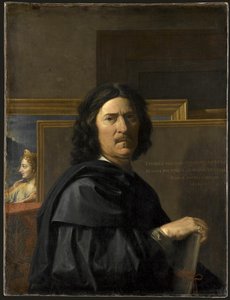 Nicolas Poussin
 San Francesco alle Scale
 Andrea Palladio


