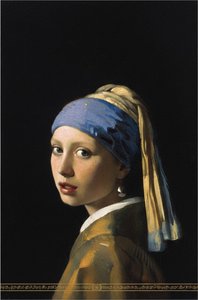
Rembrandt van Rijn: A Master of Light and Shadow
Rembrandt Harmenszoon van Rijn, born in Leiden on July 15, 1606, remains one of the most revered figures in Western art. More than just a painter, he was a profound storyteller, a master of capturing human emotion, and an innovator in the use of light and shadow – techniques that continue to inspire artists centuries later. His life, marked by both extraordinary success and periods of financial hardship, provides a fascinating backdrop to his artistic evolution. Rembrandt’s legacy isn't simply defined by the sheer volume of his output, but rather by the depth of feeling and psychological insight he brought to each canvas and etching.
Rembrandt’s early education was somewhat unconventional for an aspiring artist. Initially enrolled at Leiden University to fulfill his father’s expectations, he quickly realized that his true calling lay in the world of art. He began his apprenticeship with Jacob van Swanenburgh, a painter who had recently returned from Italy, absorbing the principles of Italian Renaissance painting while simultaneously developing his own distinctive style. This early exposure to both Northern and Southern European artistic traditions would prove crucial to his later development.
The Formation of a Style: Early Works and Influences
Rembrandt’s formative years were spent in Leiden, where he honed his skills and began to establish himself as an artist. His early works, including the poignant “Stone Operation” (an allegory of touch) and the captivating “Three Musicians,” demonstrate a clear debt to the traditions of Northern European painting – particularly the work of Pieter Lastman, whose dramatic compositions and use of chiaroscuro (the contrast between light and dark) profoundly influenced Rembrandt. However, even in these early pieces, one can discern the seeds of his unique style: a sensitivity to color, an attention to detail, and a nascent ability to convey psychological depth.
A pivotal moment in Rembrandt’s career came with his move to Amsterdam in 1631. This relocation exposed him to a more vibrant artistic scene and provided access to a wider range of patrons. He quickly gained recognition for his portraits, which became increasingly popular among the wealthy elite of the city. Simultaneously, he continued to develop his skills as a history painter, producing works like “The Stoning of Saint Stephen,” which showcased his dramatic flair and masterful use of light and shadow.
A Revolutionary Approach: The Golden Age and Beyond
The mid-1640s marked a significant turning point in Rembrandt’s artistic trajectory. His style underwent a radical transformation, moving away from the polished realism of his earlier works towards a more expressive and emotionally charged approach. This shift is most evident in masterpieces like “The Night Watch” (1642), a complex and dynamic group portrait that captures the energy and excitement of a militia company. The painting’s innovative composition, dramatic lighting, and psychological depth revolutionized the genre of group portraits.
Throughout the 1650s and 1660s, Rembrandt continued to experiment with new techniques and subject matter. He produced a vast body of etchings, which became increasingly important to his artistic practice. These prints allowed him to explore themes and ideas that were difficult or impossible to convey in paint. His self-portraits during this period are particularly revealing, offering insights into the artist’s aging face and evolving psychological state. Despite facing financial difficulties towards the end of his life, Rembrandt remained a prolific and dedicated artist until his death on October 4, 1669, leaving behind an unparalleled legacy of artistic achievement.
Key Characteristics and Lasting Significance
Rembrandt’s art is characterized by several distinctive features. His masterful use of chiaroscuro – the dramatic interplay of light and dark – creates a sense of depth and atmosphere that draws the viewer into his scenes. He was also a keen observer of human nature, capturing the nuances of emotion with remarkable sensitivity. Rembrandt's brushwork is often loose and expressive, conveying a sense of movement and vitality. His compositions are frequently asymmetrical and dynamic, creating a visual tension that keeps the eye engaged.
Rembrandt’s influence on subsequent generations of artists has been immense. He is considered one of the founders of Dutch painting and his work continues to be studied and admired by art historians and enthusiasts around the world. His innovative techniques, psychological insights, and profound understanding of human emotion have cemented his place as a true giant of Western art – an artist who not only captured the beauty of the world but also revealed its hidden depths.