

1


Aktualizováno listopad 2026 · seřazeno podle našeho skóre popularity (vyhledávání, návštěvy a objednávky u každého díla) · 1 děl umělce E. Levy v našem katalogu
Rychlá odpověď
Mezi obrazy umělce E. Levy je na prvním místě dílo Rowing Scene: Crowds Watching from the River Banks (1850), jehož originál se nachází v National Gallery of Art, Washington. Náš katalog obsahuje 1 děl umělce E. Levy. Zde je vybráno 1 nejznámějších děl seřazených podle popularity, včetně roku vzniku a muzea, ve kterém se nachází originál každého díla.
Muzeum s největším počtem obrazů na této stránce.
| Muzeum | Město | Díla autora E. Levy | Obrazy z tohoto seznamu |
|---|---|---|---|
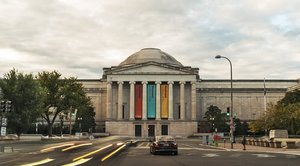 National Gallery of Art |
Washington | 1 | Rowing Scene: Crowds Watching from the River Banks |
1850: každý obraz autora E. Levy s uvedeným datem na této stránce pochází z tohoto roku. Zde jsou seřazeny podle pořadí.
Vyberte rok a prohlédněte si jeho obrazy.
Rowing Scene: Crowds Watching from the River Banks (1850) je na prvním místě.
V našem katalogu je 1 děl umělce E. Levy.
Primárně v National Gallery of Art (Washington). Pro úplný seznam se podívejte do tabulky muzeí výše.
To look at the work of Émile Lévy is to witness the tension of nineteenth-century Paris. He was a painter who operated within the rigorous discipline of the École des Beaux-Arts, absorbing the technical foundations laid by François-Éouard Picot and Abel de Pujol. This training was not merely academic; it was a structural necessity for an artist who sought to balance the weight of historical narrative with the fleeting light of a changing era. His ability to navigate the transition from rigid academicism to the spontaneous light of the Impressionist movement defines his place in the French canon.
Lévy did not rely on vague sentiment. His command of the canvas was built on anatomical precision and a calculated use of compositional balance. In his religious and mythological compositions, he utilized dramatic lighting to create deep shadows and brilliant highlights. This was not for mere decoration. It was a tool to make ancient stories feel immediate and visceral to a nineteenth-century audience.
His career was marked by specific, measurable achievements that moved him beyond the status of a mere student. In 1854, he was awarded the prestigious Grand Prix de Rome, a milestone that allowed him to immerse himself in the classical influences of Italy. This period of study provided the depth and texture that would characterize his later output. His versatility allowed him to move between the monumental scale of biblical drama and the intimate details of portraiture.
His repertoire included a wide range of subjects and mediums:
Lévy’s significance lies in his ability to translate both the epic and the mundane. He could handle the tension of a scene like "Noah cursing Canaan" with the same technical competence he applied to a portrait of a young girl. His work often captured the intersection of classical grandeur and atmospheric reality. Even in his later years, his ability to manipulate light remained his most effective tool for creating emotional resonance without relying on artifice.
His presence in the art market and museum collections, such as the National Gallery of Art, confirms his standing. He was a painter of the Salon, a man who understood the mechanics of light and the requirements of narrative. He died in 1890, leaving behind a body of work that remains a concrete record of the technical standards of his time.