Záruka vrácení peněz · 100 dní Doprava po celém světě zdarma
612 380umělecká díla 52 887umělci 5 406muzea 32jazyky

Ernest Dade

1864 - 1935

Základní údaje

  • Died: 1935
  • Top 3 works:
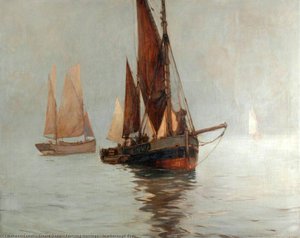
    • Off Scarbro'
    • A Convoy Passing Whitby High Lights
    • The 'Amity' Leaving for the Fishing Grounds
  • Copyright status: Public domain
  • Color intensity: vyvážená
  • Works on this site: 7
  • Nationality: Spojené království

Ernest Dade (1868–1936): Capturing Scarborough’s Maritime Soul

Ernest Dade, born in Scarborough, Yorkshire, England, remains a relatively obscure figure within the broader landscape of British marine art, yet his canvases possess an undeniable charm and convey a palpable sense of place—specifically, the vibrant fishing community surrounding Scarborough Bay. While biographical details are scarce, available records indicate he was primarily self-taught, honing his artistic skills through diligent observation and experimentation. This dedication to realism is evident in his masterful renderings of trawlers hauling nets, fishermen battling the elements, and bustling harbor scenes brimming with life. Dade’s artistic journey began modestly, focusing initially on landscapes before gravitating towards maritime subjects around 1900. Influenced by Impressionism and Post-Impressionism—particularly Claude Monet and Eugène Boudin—he adopted a technique characterized by loose brushstrokes and dappled light, mirroring the atmospheric conditions prevalent along the Yorkshire coast. Unlike many of his contemporaries who sought grand vistas or heroic narratives, Dade’s vision was rooted in capturing everyday life; he aimed to convey not just what he saw but also how it felt. This approach distinguishes him from other artists of his time and underscores his commitment to portraying authentic experiences. His prolific output spanned several decades, producing over 300 paintings and drawings predominantly depicting Scarborough Bay and its environs. Recurring motifs include trawlers patiently awaiting their crews, fishermen diligently tending to their nets, and the dramatic interplay of light and shadow on the choppy waters—scenes that encapsulate the spirit of Scarborough’s seafaring heritage. Dade's meticulous attention to detail – from the texture of weathered ropes to the subtle nuances of color – distinguishes his work from more generalized depictions of coastal life. He skillfully employed glazing techniques to achieve luminous effects, layering thin washes of pigment over textured underpaintings to create depth and vibrancy. These techniques allowed him to capture the ephemeral beauty of Scarborough’s coastline with remarkable accuracy. Dade's contribution to British art extends beyond mere aesthetic pleasure; he served as an important chronicler of a disappearing way of life. As Scarborough Bay transitioned from a thriving fishing port to a popular tourist destination, Dade's paintings offer invaluable glimpses into the traditions and rhythms of a bygone era. His images resonate with nostalgia for a time when fishermen relied on instinct and experience rather than sophisticated technology—a poignant reminder of Britain’s maritime past. He sought to preserve this heritage through his art, ensuring that future generations would appreciate the spirit of Scarborough's seafaring tradition. Despite his considerable output, Dade’s fame remained largely confined to Yorkshire and local art circles. However, his paintings continue to be appreciated for their honesty, sensitivity, and evocative portrayal of Scarborough Bay's maritime identity. They stand as testament to the power of observation and artistic dedication—a legacy that ensures Ernest Dade’s contribution to British marine art will endure for generations to come. His work remains a beautiful embodiment of Impressionistic principles applied to a specific locale, cementing his place in Yorkshire’s artistic history.

Kvíz

U každé otázky je pouze jedna správná odpověď.

Otázka 1:
Který umělecký styl Ernest Dade nejvíce ovlivnil jeho tvorbu?
Otázka 2:
Ernest Dade se zaměřil především na tvorbu obrazů:
Otázka 3:
Dade používal při tvorbě obrazů techniku...
Otázka 4:
Ernest Dade byl známý především díky svým dílům zobrazujícím:
Otázka 5:
Kde Ernest Dade působil hlavně?

Otázky a odpovědi

Která z obrazů Ernest Dade jsou nejznámější?

Podívejte se na nejznámější obrazy Ernest Dade, seřazené podle popularity.

Jaké barvy používal/a Ernest Dade nejčastěji?

Podívejte se na barvy, které Ernest Dade nejčastěji používá, změřeny v jeho dílech.

Kde a v jakém roce se narodil/a Ernest Dade?

Ernest Dade se narodil(a) v roce 1864 ve městě Kensington.

Patří díla Ernest Dade do volného dojmutí?

Ano. Ernest Dade zemřel(a) v roce 1935 a jehož/její díla jsou volna v rámci veřejné domény.

Mohu si koupit reprodukci obrazu od Ernest Dade?

Ano. Prohlédněte si malířské reprodukce Ernest Dade, které jsou k dispozici jako ručně malované olejomalby i jako tisky.

Ve kterých muzeích jsou zastoupeny obrazy Ernest Dade?

Obrazy Ernest Dade jsou zastoupeny v kolekcích Art Gallery of New South Wales.

Co bylo prvním a posledním dílem, které Ernest Dade namaloval(a)?

Mezi zde uvedenými díly s datem vzniku je nejstarší The Pool, London (1886) a nejnovější A Convoy Passing Whitby High Lights (1919). Zobrazit časovou osu děl umělce Ernest Dade.

Jak dlouho žil/a Ernest Dade?

Ernest Dade žil/a přibližně 71 let, od 1864 do 1935.

V jakém historickém období působil/a Ernest Dade?

Ernest Dade působil v období – 19. století. Toto období historicky vymezuje uměleckou činnost tohoto autora.