A Tapestry of Culture and Critique: The World of Kawayan de Guia
Kawayan de Guia, born in 1979 in the vibrant artistic hub of Baguio City, Philippines, is an artist whose work resonates with a uniquely Filipino sensibility. His practice isn’t confined to a single medium; it's a fluid exploration encompassing painting, installation, sculpture, and performance—a testament to his restless curiosity and desire to dissect the complex layers of his nation’s identity. De Guia doesn’t simply create art; he constructs narratives, weaving together fragments of history, consumer culture, and indigenous traditions into compelling visual statements that challenge perceptions and provoke dialogue. Growing up in Baguio City profoundly shaped his artistic trajectory. The region, nestled in the Cordillera mountains, is a melting pot of ancient cultures and modern influences, a place where tradition clashes with globalization, and where the legacy of American occupation lingers in unexpected ways. This inherent duality became a central theme in De Guia’s work, fueling his fascination with objects that carry multiple histories and meanings.
Early Influences and Artistic Development
De Guia's lineage played a pivotal role in nurturing his artistic spirit. As the son of renowned filmmaker Kidlat Tahimik—a pioneer of Third Cinema known for his politically charged and culturally sensitive works—he was immersed in an environment that valued creativity, social commentary, and a deep connection to Filipino heritage. His father’s establishment of the Baguio International Arts Festival in 1989 further exposed him to a community of artists dedicated to preserving indigenous traditions while pushing creative boundaries. This early exposure led to mentorships with influential figures like Santiago Bose, Benedicto Cabrera (Bencab), and Robert Villanueva—artists who were instrumental in establishing Baguio as a vital center for contemporary art. However, De Guia didn’t simply follow in their footsteps; he embarked on a personal journey of self-discovery, undertaking a Buddhist pilgrimage from Japan to Kathmandu. This period of introspection and exploration proved transformative, allowing him to refine his artistic voice and develop a unique approach to storytelling through visual media. His early works often featured hermetically sealed environments—canvases densely layered with religious iconography, secular imagery, and found objects—reflecting a desire to create self-contained worlds that encapsulated the complexities of Filipino identity.
Themes and Techniques: A Playful Irony
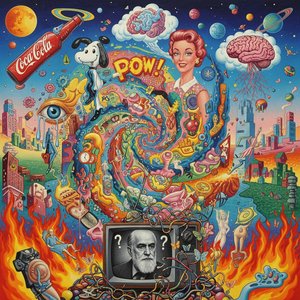
De Guia’s art is characterized by its playful irony and astute social critique. He masterfully appropriates everyday objects—Jeepneys, Dangwa buses, jukeboxes, even torpedo bombs—imbued with cultural significance and transforms them into lavish assemblages that challenge conventional notions of value and meaning. His work often juxtaposes remnants of different eras, exposing the precarious narratives embedded within these artifacts and their impact on Philippine society.
The incorporation of Ifugao rice gods alongside symbols of American consumerism is a recurring motif, highlighting the tension between indigenous traditions and the forces of globalization. He doesn’t shy away from confronting difficult topics—consumerism, global trade, political corruption—but he does so with a wit and subtlety that invites viewers to engage in critical self-reflection. His technique is equally compelling. De Guia's wall-based works are often described as “wallbound,” blurring the lines between painting, sculpture, and installation. He meticulously layers materials, creating dense compositions that reward close examination.
The surfaces are not merely decorative; they are palimpsests of history, each layer revealing a fragment of a larger story.
Major Achievements and Recognition
Throughout his career, Kawayan de Guia has garnered significant recognition for his innovative work and commitment to cultural preservation. He received the prestigious Ateneo Art Award in 2007 for his exhibition “Incubator,” which showcased his ability to create evocative portraits that paid homage to his artistic forebears. In 2012, he initiated AX(iS) Art Project—a biannual festival that brought together curators and contemporary artists with local communities in the Cordillera region. This project demonstrated his dedication to fostering collaboration and promoting cultural exchange.
- In 2014, his participation in “Markets of Resistance” further solidified his reputation as a socially engaged artist.
- His installation *De Liberating a Fall*—a large-scale Statue of Liberty mounted above Baguio City Public Market—became an iconic symbol of his critique of capitalism and globalization.
Notably, in 2016, he was recognized as a National Artist of the Philippines for Film, acknowledging not only his artistic achievements but also his contributions to cultural discourse.
Historical Significance and Lasting Impact
Kawayan de Guia’s work occupies a unique position within the landscape of contemporary Filipino art. He has successfully bridged the gap between tradition and innovation, creating artworks that are both deeply rooted in local culture and relevant on a global scale. His ability to transform everyday objects into powerful symbols of social critique has inspired a new generation of artists to explore similar themes.
De Guia’s legacy extends beyond his individual creations; he has fostered a sense of community among artists in the Cordillera region, promoting collaboration and cultural exchange. He continues to challenge conventional notions of art, pushing boundaries and inviting viewers to engage in critical dialogue about the complexities of Filipino identity and the forces that shape it. His work serves as a potent reminder of the power of art to provoke thought, inspire change, and preserve cultural heritage for future generations.