Záruka vrácení peněz · 100 dní Doprava po celém světě zdarma
612 379umělecká díla 52 887umělci 5 406muzea 32jazyky
Portrét Max Weber

Obrazy umělce Max Weber: 66 nejznámějších podle pořadí

Aktualizováno listopad 2026 · seřazeno podle našeho skóre popularity (vyhledávání, návštěvy a objednávky u každého díla) · 76 děl umělce Max Weber v našem katalogu

Rychlá odpověď

Nejslavnější obrazem autora Max Weber je Gauguin Girl (1907). Figures in a Landscape (1911) a Woman Reading (1916) jsou čísla dvě a tři. Z 76 děl umělce Max Weber v našem katalogu je zde 66 nejznámějších, seřazených podle popularity, s uvedením roku vzniku a muzea, abyste si mohli vybrat obraz k objednání.

1881 – 1961, Bělostok Cubism Nejvíce děl: Brooklyn Museum

Top 10 obrazů umělce Max Weber, seřazeno

1
Gauguin Girl (1907) od Max Weber

Gauguin Girl

1907 · Charcoal

The artwork titled Gauguin Girl was created by the artist Max Weber. This work dates to about 1907. The subject of the piece is a nude female figure. The composition focuses on the form and gesture of the subject, which is presented in a vertical format.

2
Figures in a Landscape (1911) od Max Weber

Figures in a Landscape

1911 · Watercolor

In "Figures in a Landscape" by Max Weber, the composition is structured around a hilly or mountainous terrain. Several figures are clustered together within this setting, their bodies rendered as a series of angular shapes and planes. The arrangement relies on overlapping planes and distorted forms rather than traditional representational accuracy. Geometric shapes, specifically triangles, rectangles, and trapezoids, are prevalent throughout the arrangement of the figures and the surrounding environment.

3
Woman Reading (1916) od Max Weber

Woman Reading

1916 · Pastel

In Woman Reading by Max Weber, the viewer is invited into a quiet, private moment. The composition centers on a seated woman, though she is positioned slightly off-center within a shallow space. This subtle displacement creates a sense of naturalism, as if we have happened upon her during a moment of private reflection. She is dressed in a richly detailed garment, her hands occupied with an object that appears to…

Obrazy umělce Max Weber se řadí od 11 do 66

Obrazy Max Weber podle období

obrazy autora Max Weber podle tématu

Čtyři nejčastější témata v tomto žebříčku, včetně nejvýraznějšího díla pro každé z nich.

Muzea, ve kterých jsou vystavena originálna umělce Max Weber

3 muzea, v nichž je umístěno nejvíce obrazů z této stránky.

Muzeum Město Díla autora Max Weber Obrazy z tohoto seznamu
Brooklyn Museum, BrooklynBrooklyn Museum Brooklyn 2 The Visit, The Cellist
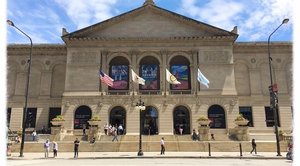
Art Institute of Chicago, ChicagoArt Institute of Chicago Chicago 1 Still Life
Smithsonian American Art Museum, Washington, D.C.Smithsonian American Art Museum Washington, D.C. 1 Summer

Max Weber podle desetiletí: nejlepší dílo každého

Díla podle dekád

Vyberte dekádu, abyste si prohlédli její nejvýznamnějšíjší obraz.

Obrazy autora Max Weber: nejčastější dotazy

Který obraz od Max Weber je nejznámější?Zobrazit odpověď

Na prvním místě je Gauguin Girl (1907), následuje Figures in a Landscape (1911) a Woman Reading (1916).

Kolik bylo Max Weber let, když byl obraz Gauguin Girl namalován?Zobrazit odpověď

Max Weber byl ve věku 26: dílo Gauguin Girl pochází z roku 1907 a Max Weber se narodil v 1881.

Kterých 10 nejlepších obrazů má Max Weber?Zobrazit odpověď

Gauguin Girl, Figures in a Landscape, Woman Reading, untitled (1109), untitled (2416), untitled (5652), untitled (8675), untitled (7238), untitled (833) a The Visit. Rok a muzeum pro každé dílo jsou uvedeny v hodnocení výše.

Kolik děl umělce Max Weber máte v nabídce?Zobrazit odpověď

V našem katalogu je 76 děl umělce Max Weber, datovaných od 1907 do 1944.

Kde jsou uloženy originální obrazy autora Max Weber?Zobrazit odpověď

Primárně v Brooklyn Museum (Brooklyn), Art Institute of Chicago (Chicago) a Smithsonian American Art Museum (Washington, D.C.). Pro úplný seznam se podívejte do tabulky muzeí výše.

Které období se narodily nejznámější obrazy umělce Max Weber?Zobrazit odpověď

V období 1910s: 2 z 66 obrazů zařazených zde pochází z této doby, včetně Figures in a Landscape.

Která jsou nejstarší a nejnovější slavná díla umělce Max Weber?Zobrazit odpověď

Nejstarší na této stránce: Gauguin Girl (1907). Nejnovější: Still Life (1944).

Jakými hlavními motivy jsou obrazy Max Weber?Zobrazit odpověď

Mezi 66 obrazy zařazenými v tomto žebříčku: Nude figures (3), Female figure (2) a Human form (2).

S jakým směrem je spojen(a) Max Weber?Zobrazit odpověď

Cubism, na základě obrazů zařazených na této stránce.

Která originál díla Max Weber se nachází v Brooklyn Museum?Zobrazit odpověď

V muzeu Brooklyn Museum, Brooklyn se nachází 2 z obrazů zařazených v tomto žebříčku, včetně The Visit a The Cellist.

O umělci: Max Weber

Early Life and the Seeds of Modernism

Max Weber, born in Białystok, Poland in 1881, embarked on a journey that would indelibly mark the landscape of American art. His formative years were steeped in the traditions of Orthodox Judaism, a heritage that would later profoundly influence his artistic expression. The family’s emigration to Brooklyn, New York, when Weber was just ten years old, proved pivotal. This relocation thrust him into a vibrant, rapidly changing society—a crucible where Old World roots and New World aspirations collided. It was at the Pratt Institute in Brooklyn that Weber first formally engaged with art, studying under the influential Arthur Wesley Dow. Dow’s unwavering conviction in innovative artistic approaches – rejecting traditional perspective and embracing simplified forms – coupled with his exposure to Japanese aesthetics and connections to Paul Gauguin, ignited within Weber a nascent modernist sensibility. This encounter would prove transformative, shaping his artistic worldview for decades to come.

The Parisian Awakening and Introduction of Cubism

In 1905, Weber ventured to Europe, specifically Paris, the epicenter of avant-garde thought. His initial enrollment at the Académie Julian served merely as a stepping stone; it was his immersion in the city’s artistic milieu that truly propelled him forward. He forged enduring friendships with Henri Rousseau, whose evocative depictions of nature captivated him, and found himself drawn into the orbit of luminaries like Henri Matisse and Pablo Picasso—artists who were bravely dismantling centuries-old conventions of representation. Weber frequented Gertrude Stein's salon, a legendary gathering place for artists, writers, and intellectuals, absorbing the latest currents in poetry and art theory. This exposure to the School of Paris fundamentally altered his artistic trajectory. The influence of Picasso’s fractured planes and Georges Braque’s meticulous geometric constructions became palpable in his early canvases. He experimented with collage techniques, incorporating fragments of printed matter into his compositions—a bold gesture that mirrored the broader intellectual ferment of the era.

Bold Early Works and Critical Reception

Weber's artistic output during this period yielded remarkable results. Notable pieces include *Chinese Restaurant* (1915), a striking depiction of urban life rendered in Cubist fragmentation, demonstrating his masterful grasp of geometric abstraction. However, Weber’s pioneering spirit was met not with universal acclaim but with vehement opposition from segments of the art establishment. The 1911 exhibition at the 291 Gallery, organized by Alfred Stieglitz, served as a watershed moment—and a deeply disheartening one for Weber. Critics leveled accusations of barbarity and vulgarity against his paintings, dismissing them as utterly devoid of artistic merit. The public struggled to comprehend the radical departure from traditional perspective, perceiving it as incomprehensible and unsettling. This uncompromising stance solidified Weber’s reputation as an artist who dared to challenge accepted norms—a courageous defiance that nonetheless resulted in profound personal hardship.

A Return to Figuration and Jewish Heritage

Around 1920, Weber recalibrated his artistic focus, abandoning the rigid constraints of Cubism for a more expressive figurative style. This deliberate shift wasn’t an outright rejection of Modernism but rather a purposeful exploration of new avenues for conveying emotion and spiritual depth. His later canvases frequently depicted scenes from Jewish life—families gathered in intimate domestic settings, rabbis engaged in Talmudic study, and portraits imbued with palpable reverence – reflecting his unwavering connection to his heritage. These paintings were characterized by meticulous detail and subtle tonal gradations, demonstrating Weber’s mastery of traditional techniques while simultaneously embracing a humanist sensibility.

Legacy and Recognition

Weber's contribution to American art history is undeniable. By the 1940s and 50s, his expressionist figurative paintings garnered considerable admiration from fellow artists and critics alike. A monumental retrospective at the Jewish Museum in 1982 cemented his place among the foremost figures of Modern Art, securing his enduring legacy as an artist who bravely championed innovation while simultaneously honoring profound cultural roots. His unwavering conviction in artistic experimentation—combined with a deep empathy for human experience—continues to inspire artists and scholars today.