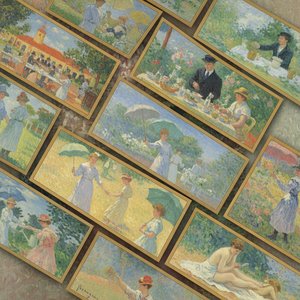
Pierre-Charles Trémolières: An Architect of Light and Illusion
Pierre-Charles Trémolières (1703 – 1739) stands as a fascinating figure within the burgeoning artistic landscape of late Baroque France, particularly notable for his pioneering contributions to interior decorative painting and the creation of moveable artworks—a technique that would foreshadow developments in Impressionism. Born in Cholet, Trémolières’s early life remains somewhat obscure, yet he swiftly established himself as a skilled etcher and painter specializing in transforming spaces with luminous color palettes and intricate illusionistic designs.
- Early Training & Influences: Trémolières received his formative artistic education at the École Royale Supérieure des Beaux-Arts in Paris, absorbing the stylistic precepts of Nicolas Frémiet and Jean Girardin—artists who championed the use of chiaroscuro and atmospheric perspective to heighten realism. These influences undoubtedly shaped his approach to portraying architectural interiors with remarkable fidelity.
- The Benedictine Abbey of Saint-Pierre: Trémolières gained considerable renown for his ambitious undertaking at the Benedictine Abbey of Saint-Pierre Solesmes, where he undertook a monumental project to decorate the abbey’s chapel. This commission demanded an unprecedented level of artistic skill and ingenuity—a testament to his ability to capture the ethereal beauty of monastic life through masterful brushstrokes and innovative compositional strategies.
- Moveable Paintings & Illusionistic Technique: Trémolières distinguished himself from many of his contemporaries by embracing the technique of moveable paintings, a method that involved applying pigment directly onto canvas panels rather than adhering them to walls. This approach allowed for greater flexibility in displaying artworks and facilitated their relocation between venues—a practice that would become increasingly prevalent during the Enlightenment.
- Notable Works: Among Trémolières’s celebrated achievements are reproductions of Botticelli's “The Birth of Venus” and Raphael’s “Comedy,” which exemplify his dedication to faithfully recreating iconic masterpieces. These works demonstrate not only technical prowess but also a profound understanding of artistic symbolism and narrative.
- Legacy & Historical Significance: Trémolières’s work represents an important bridge between Baroque grandeur and the nascent explorations of Impressionism. His pioneering use of moveable paintings foreshadowed the stylistic innovations that would characterize the Romantic era, cementing his place as a visionary artist who anticipated future artistic trends.
Trémolières died in Paris at a young age, leaving behind a legacy of exquisite decorative paintings and an enduring contribution to the history of art. His meticulous attention to detail and masterful manipulation of light continue to inspire admiration among scholars and collectors alike.