Záruka vrácení peněz · 30 dní Doprava po celém světě zdarma
448 429umělecká díla 30 637umělci 4 753muzea 32jazyky
Měna
Jazyk
Ateliér · Založeno 2015 · Paříž, Francie
AllPaintingsStore
allpaintingsstore.com
Můj účet Seznam přání Košík

1567 - 1637

Stručné informace

  • Museums on APS:
    • Státní Ermitáž
    • Státní Ermitáž
    • Státní Ermitáž
    • Státní Ermitáž
    • Státní Ermitáž
  • Died: 1637
  • Art period: Renaissance
  • Top 3 works:
    • Kitchen Scene with the Supper at Emmaus
    • The Kitchen Maid
    • Kitchen Interior With The Parable Of The Rich Man And The Poor Lazarus.
  • Copyright status: Public domain
  • Více informací…

Kvíz o umění

U každé otázky je pouze jedna správná odpověď.

Otázka 1:
Where was Pieter Cornelisz van Rijck born?
Otázka 2:
Who influenced Van Rijck’s artistic style, particularly regarding Italian painters?
Otázka 3:
During which period did Pieter Cornelisz van Rijck spend time in Venice?
Otázka 4:
What type of paintings did Pieter Cornelisz van Rijck primarily create?
Otázka 5:
Pieter Cornelisz van Rijck’s work often depicted scenes from everyday life, such as:

Pieter Cornelisz van Rijck: A Pioneer of Dutch Genre Painting

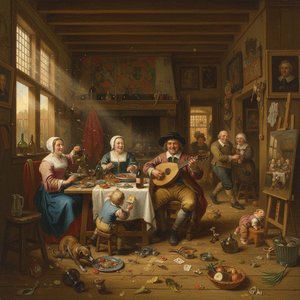
Pieter Cornelisz van Rijck (1567 – c. 1637) stands as a pivotal figure in the Dutch Golden Age, recognized primarily for his masterful depictions of domestic interiors—particularly kitchen scenes—that captured the essence of everyday life with remarkable detail and psychological insight. Unlike many of his contemporaries who focused on grand portraits or mythological subjects, van Rijck dedicated himself to portraying ordinary moments, establishing him as one of the earliest practitioners of genre painting in Holland. This stylistic choice distinguishes him from artists like Floris van Dijck and Jan Steen, whose works similarly explored the realities of domestic life but often leaned towards theatricality and heightened emotion. His artistic journey began in Delft, where he honed his skills under the tutelage of Hendrick Cornelis Boelen, a renowned painter known for his landscapes and portraits. Early influences included the Flemish Baroque tradition, notably the work of Jacob Bassano, whom van Rijck admired greatly and with whom he engaged in spirited discussions about painting techniques and artistic vision. This connection to Bassano’s style is evident in van Rijck's compositions—characterized by a luminous palette, subtle chiaroscuro effects, and an emphasis on capturing atmospheric conditions—reflecting the Venetian aesthetic that was gaining prominence during his formative years. Van Rijck’s career unfolded across several important artistic centers: Delft, Haarlem, and Venice. He secured commissions from prominent patrons like Willem van Rosenburgh and Pieter Pauwelrecht, producing a diverse body of work encompassing portraits, kitchen pieces, and market scenes. Notably, he created “The Kitchen Maid,” a poignant portrayal of poverty and compassion—a scene depicting a wealthy man offering bread to a beggar—which was displayed at the Het Dolhuys (Poor House) in Delft, demonstrating his commitment to social commentary alongside artistic excellence. Houbraken’s biographical sketches further cemented van Rijck's reputation as one of the leading artists of his time, highlighting his influence on younger painters and his contribution to the burgeoning genre of domestic realism. Records indicate that he traveled extensively in Italy between 1588 and 1602, where he studied under Bassano and absorbed the artistic innovations of the Venetian Renaissance. He returned to Haarlem in 1602-1604, continuing his prolific output and establishing himself as a respected member of the Haarlem Guild of Saint Luke. Subsequently, he undertook another journey to Venice in 1605, solidifying his connection to the artistic elite of Europe. His final years were spent in Naples, where he produced several impressive paintings—including “Still Life With Two Figures”—before succumbing to illness around 1637. Pieter Cornelisz van Rijck’s legacy resides not merely in his technical prowess but also in his pioneering role as a genre painter who elevated the depiction of everyday life to an art form. His meticulous observation of detail, combined with his psychological sensitivity and masterful use of light and color, established him as a cornerstone of Dutch Baroque painting and profoundly impacted subsequent generations of artists. He remains a testament to the transformative power of artistic innovation—a quiet genius whose canvases continue to resonate with viewers today.