Záruka vrácení peněz · 100 dní Doprava po celém světě zdarma
646 759umělecká díla 53 420umělci 5 406muzea 32jazyky
Portrét William Blake

William Blake Paintings: The Top 100 Most Famous, Ranked

Aktualizováno říjen 2026 · seřazeno podle našeho skóre popularity (vyhledávání, návštěvy a objednávky u každého díla) · 324 děl umělce William Blake v našem katalogu

Quick answer

The most famous William Blake painting is Prastarý dnešní (1794); the original is in the British Museum, Londýn. Newton and Starý Čas (1794) are numbers two and three. Out of the 324 works by William Blake in our catalogue, these are the 100 most famous, ranked, each with its year and museum, so you can choose the painting to order.

1757 – 1827, Londýn Romantismus Nejvíce děl: Tate Gallery

Top 10 William Blake paintings, ranked

1
Prastarý dnešní (1794) od William Blake

Prastarý dnešní

1794 · Vytěvování leptem · British Museum, Londýn

Pojďte blíž a pozorujte, jak se světlo v této kompozici proplétá. Naše oči se ponořují do nebeského orbu, zářícího žlutého kruhu, který slouží jako sluneční pozadí pro centrální postavu. Z této zlaté sféry se vynořuje starý, svalnatý muž v dynamické, pokrčené póze. Jeho dlouhé, vlající bílé vlasy a vousy zachycují světlo a vytvářejí pocit pohybu proti hluboké černé a tmavě hnědé prázdnotě okolního nebytí. V díle cítíme hluboké napětí, udržované…

2
Newton od William Blake

Newton

Akryl na plátně

Isaac Newton: Více než jen vědec William Blakeho monotyp „Newton“ z roku 1795 (a přepracovaný v roce 1805) je mnohem více, než pouhý portrét slavného vědce. Je to mocný a vrstevnatý obraz, který vyjadřuje hranice rozumu, sílu představivosti a samotnou povahu lidského vnímání. Tato dílo nadále okouzluje diváky po celém světě, vyvolává debaty a nabízí nové perspektivy do jedinečného uměleckého zobrazení Blakeho. Zpočátku se dílo zaměřuje na Newtonovu vědeckou práci,…

3
Starý Čas (1794) od William Blake

Starý Čas

1794 · Akvarel

Mistrovské dílo vizionářského umění Dílo „The Ancient of Days“ (Starý čas) od Williama Blakea je hlubokým a fascinujícím uměleckým projevem, který v sobě nese samotnou podstatu romantismu a vizionářského umění. Toto dílo, vytvořené v roce 1794, sloužilo jako titulní ilustrace k Blakeově proroctví „Europe a Prophecy“. Svůj název si bere z jedné z Božích titulatury v Knize Daniela, což odráží hluboké duchovní a mystické sklony samotného Blakea. Subjekt a kompozice…

4
The Great Red Dragon and the Woman Clothed with Sun od William Blake

The Great Red Dragon and the Woman Clothed with Sun

Acrylic On Canvas · National Gallery of Art, Washington

William Blake’s Great Red Dragon and the Woman Clothed with Sun stands as a monumental achievement in Romantic art—a series of watercolour paintings born from Blake’s fervent engagement with biblical prophecy. Created between 1805 and 1810, these canvases weren't merely decorative; they were meticulously crafted to illuminate the Book of Revelation, embodying Blake’s singular vision of spiritual struggle and divine triumph.

5
Velký červený drak a žena oblečená na slunci (1805) od William Blake

Velký červený drak a žena oblečená na slunci

1805 · Akvarel

A Vision of Cosmic Conflict: William Blake’s “The Great Red Dragon and the Woman Clothed with the Sun” William Blake's 1805 watercolour, *The Great Red Dragon and the Woman Clothed with the Sun*, is a powerful testament to the artist’s unique vision and his place within the Romantic movement. This work isn’t merely an illustration; it’s a vibrant embodiment of spiritual struggle and apocalyptic prophecy drawn directly from the Book…

6
Satan vítězoslavící nad Evou (1795) od William Blake

Satan vítězoslavící nad Evou

1795 · Akryl na papíře

William Blake, postava neustále vybočující z konvenčních proudů své éry, zůstává jedním z nejhlubinnějších a nejvlivnějších umělců a poetů romantické éry. Jeho dílo přesahuje rámec pouhé reprezentace; je to imerzivní cesta do sfér mysticismu, symbolismu a hluboce osobních vizí. Dílo „Satan vítězoslavící nad Evou“, vytvořené v roce 1795 jako kresba perem, stojí jako mocný symbol této umělecké filozofie – pečlivě vypracovaná narace zkoumající témata pokušení, pádu a vrozené duality lidské…

7
Elohim Vytváří Adama (1795) od William Blake

Elohim Vytváří Adama

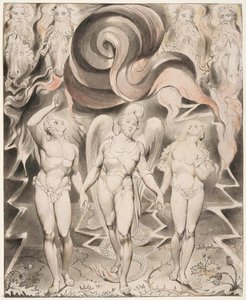
1795 · Akryl na plátně · Tate Gallery, Londýn

„Elohim Vytvářející Adama“ od Viléma Blakea, namalovaná v roce 1795 a nyní uchováváná ve svatyni Tate Gallery v Londýně, je mnohem více než pouhá biblická ilustrace; je to hluboká meditace nad tvorbou, lidského potenciálu v počátcích a samotnou podstatou božské moci. Tento voděbarví mistrovní dílo překračuje hranice svého tématu a stává se oknem do Blakeova intenzivně osobního a vizionářského světa – světa, kde je duchovnost a umělecká tvorba neoddělitelné. Malířka…

8
Satan Watching the Caresses of Adam and Eve (1808) od William Blake

Satan Watching the Caresses of Adam and Eve

1808 · Watercolor · Muzeum umění v Bostonu, Boston

William Blake, a prominent British artist known for his engravings and paintings, created the masterpiece 'Satan Watching the Caresses of Adam and Eve'. This painting is currently housed in the Museum of Fine Arts (Boston, United States) and is an excellent example of Romanticism. At AllPaintingsStore.com, we offer a high-quality reproduction of this painting to add to your art collection.

9
Vítr milenců, Francesca da Rimini a Paolo Malatesta (1824) od William Blake

Vítr milenců, Francesca da Rimini a Paolo Malatesta

1824 · Akryl na plátně · Birmingham Museum and Art Gallery, Birmingham

Dílo Williama Blakea „Vítr milenců, Francesca da Rimini a Paolo Malatesta“, vytvořené v letech 1824–27, není pouhou představou tragické milostné historie; je to viscerální zkoumání vášnivosti, viny a ničivého síly touhy. Toto monumentální plátno, uložené v Birmingham Museum and Art Gallery a měřící působivých 374 x 530 cm, upoutává pozornost nejen svou velikostí, ale i bouřlivou energií, která vyzařuje z jeho ústředních postav. Blake mistrovsky využívá romantickou citlivost a překračuje…

10
Hecate od William Blake

Hecate

Olej na plátně

William Blake’s Hecate: A Vision of the Mystical William Blake, jeden z nejvýznamnějších anglických romantiků 18. století, nebyl jen malíř nebo básník; byl vizionář, jehož díla překračují pouhou reprezentaci a hlouběji se ponořují do říše mytologie, spirituality a lidské psychiky. Jeho obraz *Hecate*, vytvořený mezi lety 1823-1825, je dokonalým příkladem jeho jedinečného uměleckého jazyka a trvalého zájmu o starověké archetypy. Jedná se o komplexní a působivou scénu, která evokuje sílu,…

William Blake paintings ranked 11 to 100

11The Ancient of Days (1827) od William BlakeThe Ancient of Days1827 · Whitworth Art Gallery 12Slunce u jeho východní brány (1820) od William BlakeSlunce u jeho východní brány1820 13Písně nevinnosti (Tituleková stránka) (1825) od William BlakePísně nevinnosti (Tituleková stránka)1825 · Metropolitan Museum of Art 14Milton`s Mysterious Dream (1820) od William BlakeMilton`s Mysterious Dream1820 15Velký červený drak a žena v slunci (1806) od William BlakeVelký červený drak a žena v slunci1806 · Brooklynské muzeum 16Pozdravení od William BlakePozdravení 17El gran dragón rojo y la mujer vestida de sol od William BlakeEl gran dragón rojo y la mujer vestida de sol 18The Great Red Dragon and the Beast from the Sea (1805) od William BlakeThe Great Red Dragon and the Beast from the Sea1805 19Dante and Virgil at the Gates of Hell od William BlakeDante and Virgil at the Gates of Hell 20The Temptation and Fall of Eve (1808) od William BlakeThe Temptation and Fall of Eve1808 21Nebuchadnezzar (1795) od William BlakeNebuchadnezzar1795 · Tate Gallery 22Radostný den nebo Tanec Albiona (1794) od William BlakeRadostný den nebo Tanec Albiona1794 23Adam a Eva spící (1808) od William BlakeAdam a Eva spící1808 · Muzeum umění v Bostonu 24Sestavení Krista (1804) od William BlakeSestavení Krista1804 · Yale Center for British Art 25Dante and Virgil at the Gates of Hell (Illustration to Dante's Inferno) od William BlakeDante and Virgil at the Gates of Hell (Illustration to Dante's Inferno) 26Antaeus setting down Dante and Virgil in the last circle of hell (1827) od William BlakeAntaeus setting down Dante and Virgil in the last circle of hell1827 · National Gallery of Victoria 27The-Blasphemer od William BlakeThe-Blasphemer 28Los vstupuje do hrobu (1804) od William BlakeLos vstupuje do hrobu1804 · Yale Center for British Art 29The Great Red Dragon and the Woman Clothed with the Sun (Rev. 12: 1-4) (1800) od William BlakeThe Great Red Dragon and the Woman Clothed with the Sun (Rev. 12: 1-4)1800 · Brooklynské muzeum 30The Bard, from Gray (1809) od William BlakeThe Bard, from Gray1809 31Poslední večeře (1799) od William BlakePoslední večeře1799 · National Gallery of Art 32The Ghost of a Flea (1820) od William BlakeThe Ghost of a Flea1820 33Antaeus Přenáší Danteho a Vergila od William BlakeAntaeus Přenáší Danteho a Vergila 34The Sun in His Wrath (1820) od William BlakeThe Sun in His Wrath1820 35Satan před Božím trůnem od William BlakeSatan před Božím trůnem 36Inferno, Canto VII, 110-127, The Stygian Lake with angry sinners fighting od William BlakeInferno, Canto VII, 110-127, The Stygian Lake with angry sinners fighting 37Job and his Daughters (1823) od William BlakeJob and his Daughters1823 · Tate Gallery 38Arcangeli, kteří slouží Kristovi (1820) od William BlakeArcangeli, kteří slouží Kristovi1820 39Elisha in the Chamber on the Wall (1820) od William BlakeElisha in the Chamber on the Wall1820 · Tate Gallery 40Isaac Newton (1795) od William BlakeIsaac Newton1795 · Tate Gallery 41Anděl zjevený Zachariášovi (1800) od William BlakeAnděl zjevený Zachariášovi1800 · Metropolitan Museum of Art 42The Wandering Moon (1820) od William BlakeThe Wandering Moon1820 43Christ Nailed to the Cross The Third Hour (1803) od William BlakeChrist Nailed to the Cross The Third Hour1803 44Whirlwind of Lovers od William BlakeWhirlwind of Lovers 45Dante y Virgilio ante el ángel guardián de la puerta del purgatorio od William BlakeDante y Virgilio ante el ángel guardián de la puerta del purgatorio 46Illustration to Milton`s Comus (1820) od William BlakeIllustration to Milton`s Comus1820 47The number of the beast is 666 od William BlakeThe number of the beast is 666Brooklynské muzeum 48The Casting of the Rebel Angels into Hell (1808) od William BlakeThe Casting of the Rebel Angels into Hell1808 49Untitled 8 od William BlakeUntitled 8 50The parable of the wise and foolish virgins (1822) od William BlakeThe parable of the wise and foolish virgins1822 51Andrew, Simon Peter Searching for Christ (1819) od William BlakeAndrew, Simon Peter Searching for Christ1819 52Oberon, Titania and Puck with Fairies Dancing (1786) od William BlakeOberon, Titania and Puck with Fairies Dancing1786 53Kristus jako Odkupitel lidstva (1808) od William BlakeKristus jako Odkupitel lidstva1808 · Muzeum umění v Bostonu 54Panna Maria s Dětinkou od William BlakePanna Maria s DětinkouYale Center for British Art 55Job and his family restored to prosperity od William BlakeJob and his family restored to prosperity 56Satan smiting Job with boils (1826) od William BlakeSatan smiting Job with boils1826 57Glad Day od William BlakeGlad Day 58Tělo Abela nalezené Adamem a Evou od William BlakeTělo Abela nalezené Adamem a Evou 59Job´s evil dreams 2 od William BlakeJob´s evil dreams 2 60The Spirit of Plato (1820) od William BlakeThe Spirit of Plato1820 61Untitled 10 od William BlakeUntitled 10 62Virgilio arrojando a Felipe Argenti de la barca de Flegias od William BlakeVirgilio arrojando a Felipe Argenti de la barca de Flegias 63The fall of Satan od William BlakeThe fall of Satan 64Satan vypouští plágy na Joba od William BlakeSatan vypouští plágy na Joba 65Last Judgement (1808) od William BlakeLast Judgement1808 66Illustration to Milton`s Paradise Lost (1807) od William BlakeIllustration to Milton`s Paradise Lost1807 67Dante tropieza con Bocca degli Abbati od William BlakeDante tropieza con Bocca degli Abbati 68Ugolino tells his cruel history od William BlakeUgolino tells his cruel history 69Job and his daughters 2 od William BlakeJob and his daughters 2 70The vision of Eliphaz 2 od William BlakeThe vision of Eliphaz 2 71The centaurs and the River of Blood od William BlakeThe centaurs and the River of Blood 72Dante y Virgilio se disponen a tomar la barca hacia la ciudad de Dite od William BlakeDante y Virgilio se disponen a tomar la barca hacia la ciudad de Dite 73Behemoth and Leviathan od William BlakeBehemoth and Leviathan 74Job and his family 1 od William BlakeJob and his family 1 75El Ángel que conserva el gran libro de los actos buenos y los malos od William BlakeEl Ángel que conserva el gran libro de los actos buenos y los malos 76Job Confessing his Presumption to God who Answers from the Whirlwind (1803) od William BlakeJob Confessing his Presumption to God who Answers from the Whirlwind1803 · National Gallery of Scotland 77Job´s despair 1 od William BlakeJob´s despair 1 78The hypocrites with Caiaphas od William BlakeThe hypocrites with Caiaphas 79The Book of Job: When the Morning Stars Sang Together (1820) od William BlakeThe Book of Job: When the Morning Stars Sang Together1820 · Morganova knihovna & muzeum 80Job´s sonns and daughters destroyed od William BlakeJob´s sonns and daughters destroyed 81Satan going forth from the presence of the Lord 2 od William BlakeSatan going forth from the presence of the Lord 2 82Jobovy zlé sny 1 od William BlakeJobovy zlé sny 1 83Untitled 11 od William BlakeUntitled 11 84Untitled 14 od William BlakeUntitled 14 85La serpiente de seis pies ataca a Agnelo dei Brunelleschi od William BlakeLa serpiente de seis pies ataca a Agnelo dei Brunelleschi 86The giant Nimrod od William BlakeThe giant Nimrod 87The Sea of Time and Space (1821) od William BlakeThe Sea of Time and Space1821 · Arlington Court 88San Pedro appears to Dante and Beatrice od William BlakeSan Pedro appears to Dante and Beatrice 89Wilson Lowry od William BlakeWilson Lowry 90A Sunshine Holiday (1820) od William BlakeA Sunshine Holiday1820 91Untitled 13 od William BlakeUntitled 13 92Satan before the throne of God 1 od William BlakeSatan before the throne of God 1 93David Hartley od William BlakeDavid Hartley 94Agnelo dei Brunelleschi metamorfoseado por la serpiente od William BlakeAgnelo dei Brunelleschi metamorfoseado por la serpiente 95La Ascensión al purgatorio od William BlakeLa Ascensión al purgatorio 96Satan smiting job with boils 1 od William BlakeSatan smiting job with boils 1 97La ciudad de Dite y el Ángel atravesando la Laguna Estigia od William BlakeLa ciudad de Dite y el Ángel atravesando la Laguna Estigia 98Mirth (1820) od William BlakeMirth1820 99An Allegory of the Spiritual Condition of Man (1811) od William BlakeAn Allegory of the Spiritual Condition of Man1811 · Fitzwilliam Museum 100The Spiritual Form of Nelson guiding Leviathan (1800) od William BlakeThe Spiritual Form of Nelson guiding Leviathan1800

William Blake paintings by period

William Blake paintings by subject

The four most frequent subjects in this ranking, with the top painting for each.

Museums holding William Blake's originals

8 muzea, v nichž je umístěno nejvíce obrazů z této stránky.

Muzea Město Díla autora William Blake Obrazy z tohoto seznamu
Tate Gallery, LondýnTate Gallery Londýn 6 Elohim Vytváří Adama, Nebuchadnezzar, Job and his Daughters
Yale Center for British Art, New HavenYale Center for British Art New Haven 7 Sestavení Krista, Los vstupuje do hrobu, Panna Maria s Dětinkou
Muzeum umění v Bostonu, BostonMuzeum umění v Bostonu Boston 5 Satan Watching the Caresses of Adam and Eve, Adam a Eva spící, Kristus jako Odkupitel lidstva
National Gallery of Art, WashingtonNational Gallery of Art Washington 4 The Great Red Dragon and the Woman Clothed with Sun, Poslední večeře
Metropolitan Museum of Art, New YorkMetropolitan Museum of Art New York 2 Písně nevinnosti (Tituleková stránka), Anděl zjevený Zachariášovi
Brooklynské muzeum, BrooklynBrooklynské muzeum Brooklyn 2 The Great Red Dragon and the Woman Clothed with the Sun (Rev. 12: 1-4), The number of the beast is 666
Fitzwilliam MuseumFitzwilliam Museum 6 An Allegory of the Spiritual Condition of Man
British Museum, LondýnBritish Museum Londýn 3 Prastarý dnešní

William Blake by decade: the top painting of each

Díla podle dekád

Select a decade to see its top painting.

William Blake paintings: common questions

What is the most famous painting by William Blake?Show answer

Prastarý dnešní (1794), British Museum, Londýn, ranks first, followed by Newton and Starý Čas (1794).

What was William Blake's age when Prastarý dnešní was painted?Show answer

William Blake was 37: Prastarý dnešní is dated 1794, and William Blake was born in 1757.

Which are the top 10 William Blake paintings?Show answer

Prastarý dnešní, Newton, Starý Čas, The Great Red Dragon and the Woman Clothed with Sun, Velký červený drak a žena oblečená na slunci, Satan vítězoslavící nad Evou, Elohim Vytváří Adama, Satan Watching the Caresses of Adam and Eve, Vítr milenců, Francesca da Rimini a Paolo Malatesta a Hecate. Year and museum for each are in the ranking above.

How many works by William Blake do you list?Show answer

324 works by William Blake are in our catalogue, dated 1786 to 1827.

Where are the original William Blake paintings kept?Show answer

Mainly in Tate Gallery (Londýn), Yale Center for British Art (New Haven) a Muzeum umění v Bostonu (Boston). See the museum table above for the full list.

Which period produced William Blake's most famous paintings?Show answer

In 1820s: 20 of the 100 paintings ranked here date from that time, including Vítr milenců, Francesca da Rimini a Paolo Malatesta.

Which are the earliest and latest famous William Blake paintings?Show answer

Earliest on this page: Oberon, Titania and Puck with Fairies Dancing (1786). Latest: The Ancient of Days (1827).

What are the main subjects of William Blake's paintings?Show answer

Among the 100 paintings ranked here: Mythology (18), Satan (8) a Spirituality (8).

What medium are most William Blake originals in?Show answer

Acrylic On Canvas, for 31 of the 100 paintings ranked here.

Which movement is William Blake associated with?Show answer

Romantismus, based on the paintings ranked on this page.

Which William Blake originals are at the Tate Gallery?Show answer

The Tate Gallery, Londýn holds 5 of the paintings ranked here, including Elohim Vytváří Adama, Nebuchadnezzar a Job and his Daughters.

Can I order a William Blake reproduction?Show answer

Yes. Every painting on this page can be ordered as a hand-painted oil reproduction or a print. Open the painting, choose the size and place your order.

About the artist: William Blake

William Blake – Visionary Poet & Painter (1757–1827)

William Blake, born in London on November 28, 1757, was a figure perpetually out of step with his time, yet destined to become one of the most celebrated artists and poets of the Romantic Age. His life unfolded against the backdrop of a rapidly changing England—a world grappling with industrialization, political upheaval, and shifting spiritual beliefs. From humble beginnings as the son of a hosier, Blake’s early years were marked by an intensely vivid imagination and a propensity for visionary experiences that would profoundly shape his artistic trajectory. Though largely self-taught in formal academics, he received drawing instruction at a young age, quickly revealing a talent that hinted at the extraordinary path ahead. His apprenticeship with engraver James Basire proved pivotal, providing him not only with technical mastery but also an understanding of printmaking techniques he would later revolutionize. These early influences—the Gothic grandeur of Westminster Abbey, the classical forms of Raphael and Michelangelo—served as foundational elements in his developing aesthetic, though Blake was never one to remain bound by convention.

Early Life & Artistic Training

Blake’s formative years instilled within him a deep fascination with mythology and folklore, alongside an acute sensitivity to visual beauty. Despite lacking formal artistic education, he possessed an innate ability to observe and interpret the world around him—skills honed through meticulous sketching and drawing exercises. His apprenticeship under James Basire, a respected engraver, provided invaluable experience in mastering printmaking techniques, particularly etching—a craft that would become central to his distinctive artistic style. This training exposed him to the established conventions of engraving but simultaneously fueled his desire to forge new paths toward creative expression. The architectural grandeur of Westminster Abbey and the idealized forms of Raphael’s frescoes served as enduring inspirations, shaping his aesthetic sensibilities and informing his artistic vision.

Illuminated Printing: A Revolutionary Technique

Blake's artistic innovation wasn’t merely about subject matter; it resided fundamentally in *how* he created. Dissatisfied with conventional engraving methods—which he viewed as sterile and restrictive—he developed a unique process known as “illuminated printing.” This involved etching both text and illustrations onto copper plates, then painstakingly hand-coloring the resulting prints—a laborious but deeply personal approach that allowed for complete artistic control. This wasn’t simply illustration accompanying poetry; it was an integrated art form where image and verse were inextricably linked, each enhancing the meaning of the other. Blake's belief in the transformative power of imagination underpinned this revolutionary technique. He argued that “the Imagination is the Eye of God,” asserting that true creativity resided in perceiving realities beyond the confines of sensory experience—a conviction that would permeate his entire oeuvre. This method granted him unparalleled freedom to express his inner vision, resulting in prints imbued with vibrant color and symbolic depth unlike anything produced before.

Major Works & Artistic Style

Blake’s artistic output encompassed a remarkable range of mediums—poetry, engravings, watercolors, mezzotints, and drawings—each reflecting his multifaceted intellectual and spiritual interests. His most celebrated works include *Songs of Innocence* (1789) and *Songs of Experience*, paired volumes that explore contrasting perspectives on human nature and morality; *The Marriage of Heaven & Hell* (1793), a provocative prose poem challenging conventional dogma; *Milton* (1804–?11), an ambitious retelling of Milton’s epic poem infused with Blake’s visionary symbolism; and *Jerusalem*, a sprawling prophetic poem envisioning a utopian future rooted in spiritual renewal. His engravings are characterized by a distinctive style—a rejection of linear perspective in favor of flattened planes and stylized figures—that conveys emotion and psychological intensity rather than realistic representation. Blake's use of color was equally innovative, employing bold hues to heighten the symbolic significance of his images and to evoke moods of wonder and terror. He frequently incorporated motifs from mythology and folklore, drawing inspiration from sources as diverse as Dante’s *Divine Comedy* and Hebrew scripture.

Legacy & Influence

Despite facing considerable obscurity during his lifetime—characterized by poverty and rejection by mainstream artistic circles—William Blake's influence on subsequent generations of artists and writers has proven profound. His unwavering commitment to imaginative vision and symbolic expression resonated deeply with the Pre-Raphaelites, who embraced him as a kindred spirit and championed his distinctive aesthetic style. Furthermore, Blake’s ideas continue to inspire thinkers and artists today, particularly those concerned with exploring themes of spirituality, rebellion, and the relationship between art and consciousness. He stands as an enduring testament to the transformative potential of creativity—a visionary artist whose work compels us to confront uncomfortable truths and to embrace the boundless possibilities of human imagination. Blake’s legacy extends beyond his artistic achievements; it resides in his unwavering belief that art can serve as a catalyst for social change and spiritual enlightenment—a conviction that continues to inspire artists and intellectuals worldwide.

Všechna díla od William Blake: 324 →