


1


Aktualizováno listopad 2026 · seřazeno podle našeho skóre popularity (vyhledávání, návštěvy a objednávky u každého díla) · 3 děl umělce Will Gorlitz v našem katalogu
Rychlá odpověď
Nejslavnější obrazem autora Will Gorlitz je Literatus with Fruit (1989); originál se nachází v Národní galerie Kanady, Ottawa. Literatus with Vessel (1989) a Axis Mundi (1995) jsou čísla dvě a tři. Z 3 děl umělce Will Gorlitz v našem katalogu je zde 3 nejznámějších, seřazených podle popularity, s uvedením roku vzniku a muzea, abyste si mohli vybrat obraz k objednání.
Muzeum s největším počtem obrazů na této stránce.
| Muzeum | Město | Díla autora Will Gorlitz | Obrazy z tohoto seznamu |
|---|---|---|---|
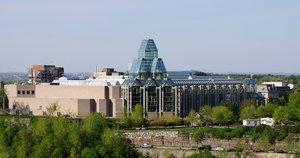 Národní galerie Kanady |
Ottawa | 3 | Literatus with Fruit, Literatus with Vessel, Axis Mundi |
7 let, od 1989 do 1995: takový je časový rozsah obrazů umělce Will Gorlitz s uvedeným datem na této stránce, zobrazených rok po roce.
Vyberte rok a prohlédněte si jeho obrazy.

Literatus with Fruit (1989), Národní galerie Kanady, Ottawa, zaužívá první místo, za nímž následují Literatus with Vessel (1989) a Axis Mundi (1995).
Will Gorlitz byl ve věku 37: dílo Literatus with Fruit pochází z roku 1989 a Will Gorlitz se narodil v 1952.
V našem katalogu je 3 děl umělce Will Gorlitz, datovaných od 1989 do 1995.
Primárně v Národní galerie Kanady (Ottawa). Pro úplný seznam se podívejte do tabulky muzeí výše.
V období 1989: 2 z 3 obrazů zařazených zde pochází z této doby, včetně Literatus with Fruit.
Nejstarší na této stránce: Literatus with Fruit (1989). Nejnovější: Axis Mundi (1995).
V muzeu Národní galerie Kanady, Ottawa se nachází 3 z obrazů zařazených v tomto žebříčku, včetně Literatus with Fruit, Literatus with Vessel a Axis Mundi.
Will Gorlitz was born in 1952 in Buenos Aires, Argentina. His early years were shaped by a move to Winnipeg, Manitoba, when he was six years old. This relocation brought him into a household defined by his Paraguayan father and Mennonite mother. This specific lineage provided a complex cultural backdrop before he ever picked up a brush for professional study.
His formal training took place at the Nova Scotia College of Art and Design in Halifax, where he earned a Bachelor of Fine Arts in 1977. It was during this period of academic rigor that his trajectory shifted. He experienced a decisive transition from an abstract approach to a representational one, a change driven by the influence of his instructor, Paterson Ewen. This shift was not a mere stylistic choice but a fundamental redirection of his visual language.
Will Gorlitz established a permanent presence in the Canadian contemporary painting scene through a career defined by both rigorous practice and academic influence. His early professional years included work as a graphic artist and illustrator for the Canadian Broadcasting Corporation. This period of technical application preceded his transition into higher education, where he began shaping the next generation of practitioners. He served as a sessional instructor at the University of Waterloo before moving into more permanent faculty roles.
His commitment to pedagogy was recognized in 2001 when he received the Distinguished Teacher Award. That same year, he joined the University of Guelph as a Professor of Studio Art, a position he has held while maintaining an active studio practice. His standing within the Canadian art establishment was solidified in 2005 when he was elected as a member of the Royal Canadian Academy of Art. This recognition confirms his status as a central figure in the country's visual discourse.
Will Gorlitz operates through a tension between representational clarity and conceptual disruption. His practice moves between Realism, Surrealism, and Conceptual Art, often utilizing a diverse range of mediums including oil, pastel, ink, lithography, and mixed media. He does not rely on a single mode of expression; instead, he manipulates visual and linguistic systems to challenge how an image is read. By appropriating text and imagery from photography and mass media, he forces a confrontation between the seen object and the systems used to represent it.
This interrogation of representation is evident in his approach to subject matter. In his aspen leaf paintings, he captures the specific colors of the populus tremuloides, translating natural phenomena into a structured visual language. His work frequently addresses the "willfulness of painting," where the physical act of applying pigment becomes as significant as the subject itself. This is seen in his use of irregular, misshapen wood panels that reject the standard rectangular canvas, suggesting that the subject matter cannot be contained by traditional formats.
His compositions often function as a commentary on the tradition of painting. Whether through the use of diptychs that envelop the viewer or the layering of figures and text, the work remains focused on the mechanics of seeing. He uses the medium to bridge the gap between the abstract and the figurative, ensuring the image is never merely a visual object but a site of structural inquiry.
Will Gorlitz’s presence in major Canadian institutions confirms his standing within the contemporary landscape. The Art Gallery of Ontario maintains his works within its permanent collection, providing a physical record of his development. His paintings are not merely archival; they are active components of the national visual discourse. Collectors and scholars find his output anchored in these significant public repositories.
The National Gallery of Canada in Ottawa holds a substantial portion of his output. This collection includes several key pieces that define his mid-career output. Visitors can encounter his 1989 painting Literatus with Vessel and his 1989 painting Literatus with Fruit within these walls. These works demonstrate the specific visual language he established during that period. His 1995 work, Axis Mundi, is also part of this institutional holdings, representing a specific moment in his trajectory.
