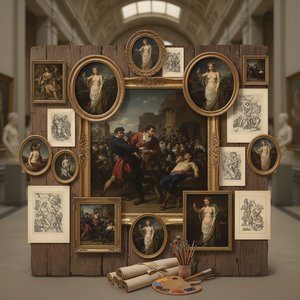
A Living Tapestry of French Identity
To step into the Musée des Archives Nationales is to move beyond the mere observation of artifacts and enter a profound dialogue with time itself. Located in the heart of Paris within the breathtaking Hôtel de Soubise , this institution offers something far more intimate than the static grandeur found in traditional galleries. Here, history is not merely recounted through marble or oil; it is felt through the tangible, ink-stained evidence of a nation’s soul. For the art lover and the historian alike, the museum serves as a sanctuary where the whispers of the past—found in the delicate parchment of the Merovingian era and the bold decrees of the Republic—create a continuous, living narrative of French culture and governance.
The collection is a staggering odyssey spanning over 383 kilometers of physical records, a labyrinthine treasure trove that stretches from the 5th century to the modern day. One cannot help but feel a sense of reverence when encountering the legendary AE I, known as “the Iron Chest.” Within this secure repository lie the very heartbeats of French political evolution: the poignant testament of Napoleon I, which reflects the heavy weight of imperial legacy, and the deeply personal journal of Louis XVI, a document that captures the palpable anxieties of a monarchy on the precipeless brink of revolution. These are not merely papers; they are the raw, unvarnished voices of those who shaped the destiny of Europe, offering an emotional depth that transcends the boundaries of mere archival study.
Architectural Grandeur and Rococo Splendor
The setting of the museum is as much a masterpiece as the documents it protects. The Hôtel de Soubise stands as one of Paris's most exquisite examples of Rococo architecture , a triumph of light, asymmetry, and ornamental grace. As visitors wander through its opulent salons, they are enveloped in an atmosphere of aristocratic splendor that was meticulously reimagined in the early 18th century. The walls themselves tell stories of aesthetic revolution, adorned with breathtaking frescoes by masters such as François Boucher, Charles-Joseph Natoire, and Carle Van Loo . For the interior designer or admirer of classical beauty, the museum’s architecture provides a masterclass in how pastel hues and elaborate ornamentation can create a space that feels both regal and ethereal.
This architectural marvel preserves a rare continuity of Parisian history, maintaining its 14th-century turreted gateway even as its interiors were transformed into a zenith of Rococo elegance. The museum’s journey is also one of visionary preservation; established under the reign of Napoleon III, it was born from a desire to safeguard the collective memory of France. This dedication to curation ensures that every corner of the Hôtel de Soubise —from its grand staircases to its intimate chambers—serves as a stage for the unfolding drama of French history, making the museum a unique destination where the environment and the archive exist in perfect, symbiotic harmony.
The Unparalleled Voice of History
What truly distinguishes the Archives Nationales from any other institution is its refusal to separate the document from the human experience. While other museums might prioritize the aesthetic allure of an object, this museum invites you to engage with the intellectual and political foundations of society. It is a place where one can trace the evolution of rights through foundational constitutions or feel the tension of political intrigue by examining the case files concerning the assassination attempts on Louis XV. This immersive approach transforms the visitor from a passive observer into an active participant in the historical process.
For collectors and enthusiasts of historical narrative, the museum offers a rare opportunity to witness the genesis of modern identity. Whether it is through the maps that charted the expansion of territories or the legal papers that defined the very concept of citizenship, the Archives Nationales provides an unparalleled window into the complexities of French life. It remains a transformative destination, reminding us that the most powerful art is often found in the enduring truth of the written word and the indelible marks left by those who dared to change the world.