


 Se i fuld skala
 Del
Del Del
Del
 Detaljer

 Download
 Lignende værker
 Røntgenundersøgelse
 Diasshow
Woman Sewing
 Oil On Canvas
- WallArt
- Impressionism
 1902
1902- 19th Century
 455.0 x 607.0 cm
 Artizon Museum
 Se mere
Håndlavet oliereproduktion
Håndmalet olie på lærred i din valgte størrelse og ramme, udført efter bestilling af vores kunstnere. ( Skift til print Skift til billede)




P118B $10

P118H $10

P118W $10

P438Z $10

P508JH $12

P508YH $12

P805H $10

P805Z $10

P919BZ $10

P919G $10

P919XJ $10

P959ZH $10

P968JZ $12

W106C $8

W218G $10

W218JH $8

W218Y $10

W307PJ $10

W316G $10

W316PJ $8

W316Y $10

W398PJ $8

W4111J $10

W500HY $15

W500JH $15

W692G $12

W849H $8

W940BG $15

W953PJ $8




Vælg mellem vores forudindstillede størrelser, der matcher kunstværkets originale proportioner.

Du kan indtaste dine egne mål for at passe til en bestemt ramme eller plads. Hvis den valgte størrelse ikke stemmer overens med det originale billedes proportioner, vil vi enten beskære kunstværket eller udvide maleriet med yderligere håndmalede elementer. En digital skitse sendes til din godkendelse, før produktionen påbegyndes.
Bemærk venligst, at forhåndsvisningen på skærmen ikke afspejler den faktiske beskæring eller udvidelse. Kun skitsen vil nøjagtigt vise den endelige komposition.
Selvom specialmål er mulige, anbefaler vi at vælge en dimension fra den foruddefinerede liste for at bevare de originale proportioner.
Efter bestilling vil AllPaintingsStore.com team sende en e-mail til kunden for at få instruktioner og levere et udkast til en skitse.
Levering i hele verden () på 3/4 uger i stedet for de standard 5 uger. (11 august). Ingen kompromiser med kvaliteten.

Gratis ekspresforsendelse til hele verden

Lærred af linned i høj kvalitet

Fuld transportforsikring

Garanti for refusion af told og importafgifter

Garanti for præcis farvegengivelse

60 dages returret (kun ved fabrikationsfejl)

100% Tilfredshedsgaranti

Mængderabat tilgængelig
 Glasmulighed er kun tilgængelig i størrelser under 110 cm

Woman Sewing
Reproduktionsmetode
Størrelse på reproduktion
-


Samlet pris
$ 258
Beskrivelse af kunstværket
A Moment Captured in Thread and Light
In the quietude of a spring afternoon in 1902, Asai Chū captured more than just a domestic task; he immortalized a profound sense of presence. Woman Sewing serves as a breathtaking window into a moment of solitary devotion, where the rhythmic movement of needle and thread becomes a meditation. The subject, believed to be the wife of his apartment building's concierge, sits enveloped in a soft, natural light that seems to emanates from the very fabric of her existence. As she is absorbed in her craft, the viewer is invited into an intimate circle of quietude, feeling the weight of the silence and the gentle warmth of the afternoon sun. It is a portrait that transcends simple documentation, offering instead a soulful exploration of domesticity and the beauty found within the mundane.
The technical mastery displayed in this work reveals Asai Chū’s deep connection to the Impressionist movement. Utilizing oil on canvas, the artist employs muscular and lucid brushstrokes that lend a palpable physicality to the figure. There is a wonderful tension between the precision required to render the delicate task of sewing and the loose, expressive handling of the surrounding foliage. This technique creates a textured surface that breathes with life, suggesting the subtle rustle of leaves and the soft movement of air. The color palette, dominated by muted and earthy tones, evokes a sense of nostalgic melancholy, grounding the piece in a realism that feels both timeless and deeply personal.
The Intersection of East and West
To understand the profound impact of this painting, one must consider the historical landscape from which it emerged. Asai Chū was a pioneer of yōga, or Western-style painting, in Japan, and this work stands as a testament to his successful synthesis of disparate worlds. Having studied under the Italian master Antonio Fontanesi, Asai brought a sophisticated understanding of light, shadow, and European compositional depth back to his homeland. In Woman Sewing, we see the influence of French Impressionism through the soft, diffused lighting and shallow perspective, yet there remains an unmistakable Japanese sensibility—a reverence for the quiet dignity of labor and a focused, contemplative gaze that honors the subject's internal world.
For the discerning collector or interior designer, this masterpiece offers a versatile elegance. Its composition, centered around a singular, compelling figure, provides a powerful focal point for any curated space. The painting’s ability to evoke both intimacy and grandeur makes it an ideal centerpiece for rooms designed for reflection, such as a library, study, or a serene sitting area. Whether viewed as a historical artifact of Japan's modernization or as a pure expression of Impressionist beauty, the artwork radiates a sophisticated warmth that elevates the atmosphere of any environment, inviting all who behold it to pause and find beauty in the stillness.
Lignende kunstværker


Kunstnerens biografi
Asai Chū: Pioneer of Western-Style Painting in Japan
Early Life and Education
- Born: 1856, Chiba City, Japan.
- Asai Chū was born into an ex-samurai class household in Sakura, Kantō region of Japan. His father served as a retainer of the Sakura domain and also acted as principal of the domain school.
- He initially pursued English language studies in Tokyo in 1873 but soon became captivated by the arts.
- In 1876, he enrolled at the Kobubijutsu Gakkō (Technical Fine Arts School), one of the first institutions to offer Western-style art training in Japan.
- Crucially, he studied under Antonio Fontanesi, an Italian artist hired by the Meiji government to introduce oil painting techniques.
Artistic Development and Influences
- Asai Chū’s early work reflected a blend of traditional Japanese aesthetics with newly acquired Western techniques.
- Key Influence: Antonio Fontanesi played a pivotal role in shaping his understanding of oil painting, composition, and light.
- He embraced plein air painting – working outdoors directly from nature – a hallmark of Impressionism.
- A later trip to France (1902-1904) allowed him to immerse himself in the Impressionist school, further refining his style.
Major Achievements and Artistic Contributions
- In 1889, Asai Chū founded the Meiji Bijutsukai (Meiji Art Society), a landmark organization that brought together Western-style painters in Japan.
- He became a professor at the Tokyo School of Fine Arts (now Tokyo University of the Arts) in 1898, contributing to art education.
- Following his return from France, he established the Kansai Bijutsu-in (Kansai Arts Institute) and took a professorship at the Kyoto Kōtō Kōgei Gakkō (Kyoto School of Arts and Crafts).
- Notable Works: Include “Spring Ridge,” “Woman Sewing,” “Morning Sun”, “Le Village de Kotaba” and "Pulling Boat". These paintings showcase his mastery of Impressionistic techniques applied to Japanese landscapes and scenes.
Legacy and Historical Significance
- Asai Chū was instrumental in bridging the gap between traditional Japanese art and Western artistic movements.
- He trained numerous students who went on to become prominent figures in the Japanese art world, including Sōtarō Yasui and Ryuzaburo Umehara.
- He also tutored the celebrated poet Masaoka Shiki in Western art techniques.
- Interestingly, he served as a model for a character in Natsume Sōseki’s novel, *Sanshirō*, highlighting his cultural impact.
- Several of his works have been designated as Important Cultural Properties by the Japanese government's Agency for Cultural Affairs, recognizing their artistic and historical value.
Themes and Style
- Themes: Asai Chū frequently depicted landscapes, village life, and domestic scenes. His work often captures the serene beauty of rural Japan.
- Style: He is known for his Impressionistic style characterized by loose brushwork, a focus on light and atmosphere, and a vibrant color palette.

Asai Chū
1856 - 1907 , Japan
Kort om kunstneren
- Birth Date: 1856
- Birth Place: Chiba City, Japan
- Death Date: 1907
- Influenced:
- Sōtarō Yasui
- Ryuzaburo Umehara
- Masaoka Shiki
- Influenced By: Antonio Fontanesi
- Movement: Yōga (Western-style painting)
- Name: Asai Chū
- Nationality: Japanese
- Notable Works:
- Spring Ridge
- Woman Sewing
- Morning Sun
- Le Village de Kotaba
Relaterede artikler
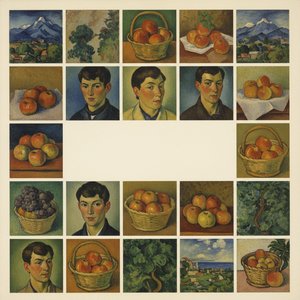
Paul Cézannes 25 Mesterværker: En Kunstnerisk Rejse til Moderne Malerkunst | AllPaintingsStore.dk
Oplev Paul Cézannes 25 mest ikoniske malerier – fra stilleben til landskaber. Lær om impressionismen, hans unikke stil og køb eksklusive kunsttryk på AllPaintingsStore.dk. Find inspiration til din indretning!

Impressionismens Mestre: Top 10 Kunstværker til Dit Hjem – AllPaintingsStore.dk
Oplev impressionismens magi! Dyk ned i top 10 kunstværker af Monet, Renoir & Degas. Lær historierne bag disse ikoniske malerier og find inspiration til din indretning. Museumskvalitet reproduktioner på AllPaintingsStore.com – udforsk samlingen online!

Fleeting Moments & Radiant Light: Exploring the Enduring Legacy of Impressionism
Explore the captivating world of Impressionism! Discover its history, key artists like Monet & Renoir, defining techniques, and lasting impact on modern art. Expert insights for collectors.
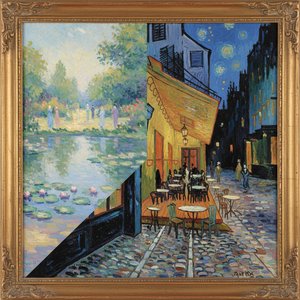
Ud over Lys og Farve: Impressionisme vs. Postimpressionisme for den Kræsne Samler
Dyk ned i impressionismens og postimpressionismens verden med vores ekspertguide. Lær at identificere, vurdere og investere i disse ikoniske kunstretninger. For den kræsne samler.
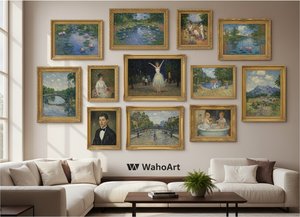
Impressionismens Mestre: Top 10 Kunstværker der Definerede En Æra | AllPaintingsStore
Oplev impressionismens magi! Dyk ned i historierne bag 10 ikoniske malerier af Monet, Degas, Renoir og Van Gogh. Find inspiration til dit hjem med museumskvalitets reproduktioner på AllPaintingsStore.com – din kilde til smuk vægkunst og tidløs dekoration.



