Vladimir Shinkarev: A Visionary of Soviet Surrealism
Vladimir Nikolayevich Shinkarev, born in Saint Petersburg in 1954, is a profoundly influential Russian artist whose work occupies a unique space within both the contemporary and Soviet art landscapes. His career, spanning several decades, is marked by a distinctive style characterized by surrealist imagery, dreamlike atmospheres, and a deep engagement with literature and folklore—elements that have solidified his reputation as one of Russia’s most important artistic voices. Shinkarev's journey began with formal training in geology at Saint Petersburg State University, an unexpected foundation for the intensely imaginative world he would later create on canvas. However, it was his burgeoning interest in art, nurtured through courses at LVHPU named after V.I. Mukhin and the Institute of Painting, Sculpture and Architecture (INZHSA) named after I.Ye. Repin, that truly set him on his artistic path.Shinkarev’s early career gained momentum within the vibrant art scene of Leningrad during the 1980s, culminating in his pivotal involvement with the “Mitki” group – a collective known for its experimental approach to art and its exploration of Russian folklore and mythology. The name "Mitki," derived from the word for "gnomes" or "little men," perfectly encapsulates the group’s whimsical and often unsettling aesthetic. This association proved crucial, establishing Shinkarev as a key figure in Soviet avant-garde art and shaping his artistic identity. The “Mitki” movement, initiated in 1985, wasn't merely an artistic collective; it was a deliberate attempt to challenge the prevailing norms of socialist realism and explore alternative modes of expression.
The World Within: Themes and Techniques
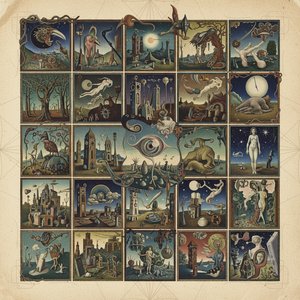
Shinkarev’s paintings are immediately recognizable for their intensely evocative atmosphere. He frequently employs muted color palettes—predominantly grays, browns, and deep blues—to create a sense of melancholy and introspection. His compositions often feature solitary figures or ambiguous scenes that seem to exist on the periphery of reality, inviting viewers into a realm of dreams and anxieties. Recurring motifs include decaying buildings, desolate landscapes, and enigmatic characters, hinting at themes of isolation, loss, and the passage of time. His work is deeply rooted in Russian literature, particularly the works of Dostoevsky and Chekhov, which he frequently references through symbolic imagery and narrative fragments.Technically, Shinkarev’s paintings are characterized by a meticulous attention to detail and a masterful use of texture. He often employs a technique known as “hardboard painting,” utilizing oil paints on rigid boards to achieve a distinctive surface quality—a combination of smoothness and roughness that adds depth and visual interest to his work. His brushwork is deliberate and controlled, creating a sense of stillness and contemplation within each composition.
Notable Projects and Recognition
Throughout his career, Shinkarev has undertaken several significant projects that have further cemented his artistic reputation. In 1997-99, he embarked on “World Literature,” a series of sixteen paintings inspired by classic works of literature—from Homer’s *Iliad* to Kafka's *Transformation*. This ambitious project demonstrated Shinkarev’s deep understanding of literary themes and his ability to translate complex narratives into visual form. His work was exhibited both in Russia and internationally, garnering critical acclaim and establishing him as a respected figure on the global art scene.A particularly noteworthy exhibition, “Gloomy Picture,” held at the “Winery” gallery in 2016, showcased his signature style—a haunting blend of melancholy, symbolism, and dreamlike imagery. The show’s title perfectly captured the essence of Shinkarev's work: a reflection on the grayness of urban life and the lingering shadows of the past. His painting “Lenin Square I,” sold for $64,750 in 2008, stands as a testament to his artistic value and recognition within the contemporary art market.