Der Bildhauer der Emotionen: Das Leben und das Erbe von Guido Mazzoni
Guido Mazzoni, der seinen Zeitgenossen unter dem liebevollen Beinamen Il Modanino bekannt war, gilt als eine der ausdrucksstärksten Figuren der italienischen Renaissance. Um 1450 in Modena, Italien, geboren, war Mazzoni ein Künstler, der die Brücke zwischen der Theatralik höfischer Spektakel und den tiefen, düsteren Abgründen religiöser Hingabe schlug. Seine Karriere wurde nicht allein durch die statische Beständigkeit des Steins definiert, sondern durch eine dynamische Bewegung, die von den Werkstätten Italiens bis zu den königlichen Höfen Frankreichs reichte. In der frühen Phase seiner Entwicklung fand Mazzoni sich im einflussreichen Mäzenatentum der Familie Este wieder, wo er unter dem Meister Francesco Cossa studierte. Diese frühe Begegnung mit dem lebendigen, erzählerischen Stil der Ferrarese-Schule legte den Grundstein für seine Fähigkeit zum visuellen Geschichtenerzählen, die später seine skulpturalen Meisterwerke prägen sollte.
Bevor er zum Meister des Monumentalen wurde, war Mazzonis Kunst im Ephemeren und Spektakulären verwurzelt. Sein anfänglicher Ruhm basierte auf der Kreation theatralischer Masken und aufwendiger Requisiten, die für die prunkvollen Hochzeitsfeierlichkeiten von Federico II. Gonzaga in Ferrara entworfen wurden. Diese Lebensphase ist entscheidend, um seine späteren skulpturalen Errungenschaften zu verstehen; das Geschick, das für die Erschaffung lebensechter, ausdrucksstarker Gesichter für die Bühne erforderlich war, übertrug sich nahtlos auf seine Arbeit mit Ton. Er besaß die einzigartige Fähigkeit, flüchtige Momente menschlicher Regungen einzufangen – ein Talent, das es ihm ermöglichte, selbst den starrsten Materialien eine pulsierende, atmende Lebendigkeit einzuhauchen. Diese Meisterschaft der Ephemera – der Kunst des Vergänglichen – verlieh seinen späteren religiösen Werken eine unvergleichliche psychologische Unmittelbarkeit.
Die Meisterschaft der Terrakotta und die Lamentations-Serien
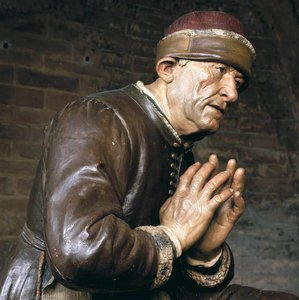
Mazzonis dauerhaftester Beitrag zur westlichen Kunstgeschichte liegt in seiner atemberaubenden Serie polychromer Terrakotta-Lamentationen. Im Gegensatz zu den in seiner Ära üblicheren Marmorskulpturen, die oft nach einer kühlen, idealisierten Perfektion strebten, umarmte Mazzoni die Wärme und Formbarkeit der Terrakotta. Dieses Medium erlaubte es ihm, eine ultrarealistische Textur zu erreichen, welche die Falten schwerer Stoffe, die tränenüberströmte Haut der Trauernden und die viszerale Realität des Schmerzes nachahmen konnte. Seine berühmtesten Werke, wie jene in der Kirche Gesù in Ferrara und der Basilika Sant'Anna dei Lombardi in Neapel, stellen einen Höhepunkt des Renaissance-Realismus dar.
Diese Skulpturengruppen sind weit mehr als bloße religiöse Ikonen; sie sind immersive, theatralische Erlebnisse. In diesen Compianto-Szenen modellierte Mazzoni akribisch Figuren, die um den Leichnam Christi versammelt sind, wobei er jedem Gesicht einen eigenen, individualisierten Kummer verlieh. Ein bemerkenswertes Merkmal dieser Arbeiten ist die Integration der Porträtkunst; er fügte oft die Ähnlichkeiten seiner Auftraggeber, wie Federico II. Gonzaga und dessen Familienmitglieder, direkt in die Trauernde Menge ein. Diese Technik verwischte die Grenze zwischen dem Sakralen und dem Weltlichen und lud den Betrachter ein, am göttlich-tragischen Geschehen teilzuhaben. Der Einsatz der Polychromie – das Auftragen von Farbe auf den Ton – verstärkte diesen Realismus zusätzlich und schuf eine lebensechte Präsenz, die den umgebenden Raum förmlich zu beherrschen schien.
Ein transnationales Erbe
Der Lebensweg Mazzonis spiegelt die umfassendere Bewegung des Renaissance-Talents über europäische Grenzen hinweg wider. Seine Reise führte ihn durch die kulturellen Zentren von Bologna und Neapel und brachte ihn schließlich an den französischen Hof. Diese internationale Präsenz ermöglichte es seinem Stil, ein breiteres Publikum zu beeinflussen, indem er die italienische emotionale Intensität mit dem aufkeimenden Interesse am Naturalismus Nordeuropas verband. Seine Fähigkeit, seine Fertigkeiten anzupassen – von der feinen Erstellung höfischer Requisiten bis zur monumentalen Ausführung religiöser Dramatik – sicherte ihm seine Bedeutung in verschiedensten künstlerischen Landschaften.
Letztendlich liegt die Bedeutung Guido Mazzonis in seinem tiefen Verständnis für menschliche Empathie. Während sich viele seiner Zeitgenossen auf die mathematischen Proportionen und die strukturelle Harmonie der Hochrenaissance konzentrierten, priorisierte Mazzoni die psychologische Tiefe seiner Motive. Er fing das rohe, unverfälschte Wesen der Trauer ein und machte das Göttliche durch das Prisma menschlichen Leidens zugänglich. Sein Werk bleibt ein Zeugnis für die Macht der Kunst, als Spiegel der Seele zu fungieren, und hinterlässt ein Vermächtnis aus Terrakotta-Figuren, die die Herzen all jener, die sie betrachten, weiterhin bewegen und berühren.
Fragen & Antworten
Wo und wann wurde Guido Mazzoni geboren?
Guido Mazzoni wurde im Jahr 1450 in Modena geboren.
Wo kann ich alle Kunstwerke von Guido Mazzoni durchstöbern?
Alle Werke von Guido Mazzoni auf diese Webseite können auf der Alle Kunstwerke-Seite des Künstlers durchstöbert werden.
Woher kommt Guido Mazzoni?
Guido Mazzoni wurde in Italien geboren.