30 Tage Geld-zurück-Garantie Weltweit kostenlose Lieferung
448.429Kunstwerke 30.637Künstlerinnen und Künstler 4.753Museen 32Sprache
Währung
Sprache
Atelier · Seit 2015 · Paris, Frankreich
AllPaintingsStore
allpaintingsstore.com
Mein Konto Wunschliste Warenkorb Sell Your Art

Kai-Christian Bruhn

Kurzbiografie

  • Works on APS: 2
  • Born: 1970, Hamburg, Deutschland
  • Copyright status: Under copyright
  • Nationality: Deutschland
  • Mehr Details anzeigen
  • Museums on APS:
    • American Research Center in Ägypten
    • American Research Center in Ägypten
    • American Research Center in Ägypten
    • American Research Center in Ägypten
    • American Research Center in Ägypten
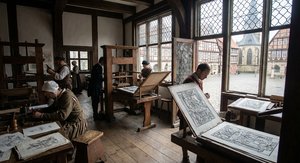
  • Top-ranked work: Monastic Cells
  • Art period: Zeitgenössische Kunst
  • Top 3 works:
    • Monastic Cells
    • Monastic Cells

Kunst-Quiz

Jede Frage hat nur eine richtige Antwort.

Frage 1:
Wie wurde Kai-Christian Bruhn bekannt?
Frage 2:
Wo wurde Kai-Christian Bruhn geboren?
Frage 3:
Für welchen bedeutenden Fund ist Kai-Christian Bruhn besonders anerkannt?
Frage 4:
An welcher Universität unterrichtet sich Kai-Christian Bruhn derzeit?
Frage 5:
Was ist eine besondere Eigenschaft von Kai-Christians künstlerischem Stil?

Kai-Christian Bruhn: Bridging Archaeology and Artistic Vision

Kai-Christian Bruhn is a German computational archaeologist whose fascination with the intersection of science and art has yielded remarkable results. Born in Hamburg in 1970, his academic pursuits at Mainz University of Applied Sciences combined with an innate artistic sensibility have propelled him to become a celebrated figure both within the scientific community and as a distinctive artist recognized for his evocative depictions of monastic cells. Early Life & Education: Bruhn’s formative years were marked by a keen interest in history and mathematics, laying the groundwork for his future career path. From a young age, he demonstrated an exceptional aptitude for spatial reasoning—a skill that would prove invaluable to his later work in geoinformatics and archaeological research. He pursued his undergraduate studies at Mainz University of Applied Sciences with unwavering dedication, earning a bachelor’s degree in geodesy and surveying before embarking on doctoral research focused on applying cutting-edge analytical tools to unravel the mysteries of ancient sites. Computational Archaeology: His doctorate specializing in geoinformatics cemented his position as a leader in this burgeoning field. He leveraged sophisticated geospatial modeling techniques—combining satellite imagery, LiDAR data, and archaeological excavation records—to reconstruct landscapes and analyze settlement patterns with unprecedented detail. This groundbreaking contribution to archaeological research underscored the transformative potential of integrating computational methods into humanities scholarship. The Discovery That Launched His Artistic Career: Bruhn’s fame gained international attention following the sensational discovery of a colossal Ramses II statue in Egypt—a monumental undertaking that demanded meticulous planning and collaborative effort. The sheer scale of the project, coupled with the logistical challenges involved in transporting and reconstructing the statue, provided Bruhn with firsthand experience of tackling complex undertakings—insights that would profoundly influence his artistic approach. He recognized that translating intricate data into visually compelling artworks required a deep understanding of both scientific principles and aesthetic considerations. Monastic Cells Series: Bruhn’s artistic output centers around a series of paintings titled “Monastic Cells,” which explore the architectural spaces of medieval monasteries. These works are characterized by a deliberate restraint in color palette—primarily muted hues of ochre, umber, and ivory—and textured surfaces that evoke the tactile qualities of stone and plaster. He painstakingly recreates these cells with remarkable accuracy and sensitivity to light and shadow, striving to capture not only their physical dimensions but also the atmosphere of contemplation and spiritual devotion that permeated monastic life. His technique utilizes digital painting techniques, blending meticulous observation with artistic intuition. Historical Significance & Legacy: Kai-Christian Bruhn’s work stands apart in its ability to bridge the gap between scientific inquiry and artistic creativity. He exemplifies the potential for interdisciplinary collaboration to yield transformative results—a testament to his conviction that profound insights can emerge from unexpected combinations of knowledge. His “Monastic Cells” series serves as a powerful reminder that beauty and understanding are inextricably linked, demonstrating how art can illuminate aspects of history and culture that might otherwise remain hidden. He continues to inspire scholars and artists alike with his unwavering commitment to exploring the connections between science and aesthetics—a legacy destined to endure for generations to come.