30 Tage Geld-zurück-Garantie Weltweit kostenlose Lieferung
448.429Kunstwerke 30.637Künstlerinnen und Künstler 4.753Museen 32Sprache
Währung
Sprache
Atelier · Seit 2015 · Paris, Frankreich
AllPaintingsStore
allpaintingsstore.com
Mein Konto Wunschliste Warenkorb

Meister der Elisabethenplatten

Kurzbiografie

  • Top 3 works:
    • The Saint Elizabeth’s Day Flood, Master of the St Elizabeth Panels, c. 1490 - c. 1495
    • The Saint Elizabeth’s Day Flood, Master of the St Elizabeth Panels, c. 1490 - c. 1495
    • Saint Elizabeth of Hungary Tending the Sick in Marburg, Death of St Elizabeth, inner right wing of an altarpiece made for the Grote Kerk in Dordrecht, Master of the St Elizabeth Panels, c. 1490 - c. 1495
  • Nationality: Niederlande
  • Born: Niederlande

Kunst-Quiz

Jede Frage hat nur eine richtige Antwort.

Frage 1:
Frage 1:
Frage 2:
Frage 2:
Frage 3:
Frage 3:
Frage 4:
Frage 4:
Frage 5:
Frage 5:

The Master of the St Elizabeth Panels: A Visionary Painter of Delft

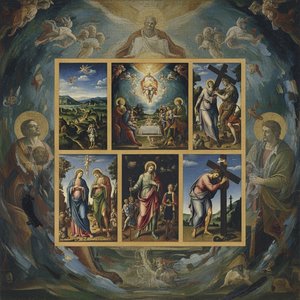
The identity of the artist known as “the Master of the St Elizabeth Panels” remains shrouded in mystery, a testament to the challenges faced by art historians reconstructing the lives and careers of figures from the early Renaissance. Active primarily in Delft during the late 15th century, this craftsman produced a single monumental altarpiece – *The Saint Elizabeth’s Day Flood* – that cemented his reputation as one of the most innovative painters of his time and continues to fascinate scholars today. Born sometime around 1460-1470 in Delft, Netherlands, little is known about his personal life beyond documented records pertaining to his craft guild membership. He was a member of Sint Jansgilde, Delft’s prominent guild for painters and sculptors, suggesting a disciplined artistic upbringing focused on mastering traditional techniques alongside embracing experimentation. While no portraits exist, stylistic analysis points towards a Dutch origin – likely influenced by the burgeoning humanist spirit spreading across Europe – and hints at connections to Flemish artistic circles, reflecting the dynamic cultural exchange of the period. Despite the paucity of biographical details, his dedication to Sint Jansgilde underscores the importance of guild patronage in fostering artistic talent during this era. The altarpiece itself—commissioned for St James Church in Levoča, Slovakia—represents a pivotal moment in Netherlandish art history. Executed circa 1490-1495, it depicts not only Saint Elizabeth’s Day Flood – a devastating event that threatened Dordrecht with inundation – but also the broader narrative of divine providence safeguarding the city. The outer panels showcase a dramatic depiction of the breach of the dike on the right, rendered with meticulous detail and conveying palpable terror; conversely, the left panel portrays Dordrecht as untouched by disaster, illuminated by an ethereal light symbolizing God’s protection. This masterful juxtaposition of fear and faith exemplifies the artistic sensibilities of the time and distinguishes “the Master”'s work from many of his contemporaries who adhered to more rigid stylistic conventions. What distinguishes this work from its counterparts is undeniably its distinctive painterly style. Unlike many artists of the era who prioritized meticulous realism—a hallmark of Flemish painting—“the Master” championed loose brushwork—a technique pioneered by Jan van Eyck—that prioritized expressive gesture and tonal variation over precise detail. This approach allowed him to capture the emotional intensity of the scene with remarkable effectiveness, conveying both the horror of the flood and the serenity of faith. The artist’s use of color is equally noteworthy; muted hues dominate the composition, creating a sense of solemn grandeur and reinforcing the spiritual themes at play. He skillfully employed atmospheric perspective—a technique borrowed from Flemish masters—to heighten the dramatic impact of the scene and imbue it with an aura of otherworldly beauty. The influence of Flemish painting on “the Master”'s style cannot be overstated. Artists like Rogier van der Weyden had already established a precedent for portraying biblical narratives with psychological depth and emotional nuance. However, "the Master" transcended mere imitation, forging his own unique artistic voice while simultaneously engaging with the prevailing stylistic trends. His contribution to Delft’s artistic landscape is undeniable; he stands as a beacon of innovation within a period characterized by conservative artistic practices. The Saint Elizabeth Panels are not merely aesthetically pleasing objects; they embody the intellectual and spiritual fervor of the Renaissance, reflecting humanist ideals concerning human experience and divine grace. Furthermore, the altarpiece's depiction of Dordrecht—a city grappling with existential threats—serves as a powerful reminder of faith’s resilience in times of adversity. Today, it remains a celebrated masterpiece, studied extensively by art historians and inspiring artists across generations. Its legacy continues to resonate, demonstrating the enduring power of artistic vision to capture both the drama of human history and the sublime beauty of divine revelation.