The Genesis of Oil: Van Eyck and the Pursuit of Verisimilitude Flemish painting Flemish painting flourished from the early 15th century until the 17th century, gradually becoming distinct from the painting of the rest of the Low Countries, especially...
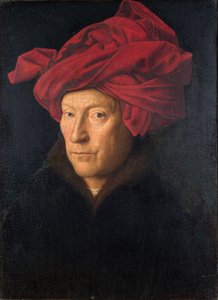
To understand the weight of Flemish tradition, one must first look to the quiet, luminous surfaces of the fifteenth century. Before the grand theatricality of later eras, there was a profound devotion to the visible world, a desire to capture the very texture of existence through a burgeoning mastery of oil. The pioneers of this period, often called the Flemish Primitives, transformed the medium from a mere tool into a vessel for light itself. By layering thin, transparent glazes, they achieved a depth that egg temperra could never permit, allowing light to travel through the paint and reflect off the underlying layers to create a soft, inner glow.
This technical precision found its peak in the hands of Jan van Eyck. His work does not merely represent objects; it interrogates them. In his compositions, a single bead of water or the heavy fold of a velvet robe carries a weight of reality that feels almost tactile. This meticulousness was not an end in itself but a way to honor the divine through the accurate depiction of creation. The ability to render the sheen of metal and the translucency of skin established a standard of realism that would haunt European art for centuries, setting a foundation of technical excellence upon which every subsequent Flemish master would build.
The Symbolic Realm: Hieronymus Bosch and the Expansion of Narrative
The Enigmatic World of Hieronymus Bosch Hieronymus Bosch, a name synonymous with fantastical imagery and moral allegory, remains one of the most compelling and elusive figures in art history. Born around 1450 in 's-Hertogenbosch, Netherlands, little ...
While the Van Eyck brothers sought the clarity of daylight, other voices in the Flemish tradition found their strength in the twilight of the imagination. Hieronymus Bosch emerged from a family of painters, yet he moved away from the literal toward a deeply personal, symbolic realm. His canvases are populated by hybrid creatures and unsettling landscapes that defy easy categorization. Here, the precision of the Flemish technique is applied not to the familiar, but to the fantastic, using the same meticulous detail found in naturalistic works to render the most grotesque and surreal visions.
The influence of medieval marginalia—those bizarre illustrations found in illuminated manuscripts—is evident in his depictions of beasts and demons. Bosch used the established language of Flemish painting to explore themes of sin, temptation, and the fragility of human morality. His work demonstrates that the technical skill of the region was not limited to mere imitation of nature; it could also be used to construct complex, allegorical worlds that challenged the viewer's perception of reality.
The Antwerp Nexus: The Rise of the Flemish Baroque and Rubens
Oil Sketch for High Altarpiece, St Bavo, Ghent: A Window into Rubens’s Baroque Vision The Oil Sketch for High Altarpiece, St Bavo, Ghent, offered by AllPaintingsStore.com, is more than just a depiction of a religious scene; it's an intimate glimpse into the c...
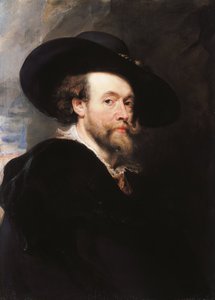
By the sixteenth and seventeenth centuries, the artistic center had shifted toward Antwerp, a city that became an economic and artistic stronghold. Following the Spanish recapture of Antwerp in 1585, the Southern Netherlands entered a period of intense cultural production under the Flemish Baroque. This era was defined by a move away from the static precision of the Primitives toward a more energetic, monumental style. At the heart of this movement was Peter Paul Rubens, a painter who studied the classical antiquity of Italy and brought a new sense of scale and drama to the North.
Rubens’s work, such as his oil sketches for the High Altarpiece in St Bastro, Ghent, reveals the genesis of a monumental vision. His technique utilized broad, confident brushstrokes layered to create rich textures and a palpable sense of volume. He sought to evoke profound spiritual experiences through a palette that embraced movement and emotional intensity. This period marked a transition where the meticulousness of the past met a new, muscular approach to composition, forever changing the trajectory of European art.
Dynamic Compositions: Technical Innovations in Light and Movement
Oil painting is a painting method involving the procedure of painting with pigments combined with a drying oil as the binder. It has been the most common technique for artistic painting on canvas, wood panel, or copper for several centuries. The adva...
The Baroque era introduced a fascination with the interplay of light and shadow, often referred to as chiaroscuro, to heighten drama. Unlike the even, clear lighting of the fifteenth century, Baroque masters used light to direct the eye and create tension. This was achieved through sophisticated applications of oil painting, such as the scumble technique—applying an opaque coating thinly to allow underlying paint to shine through for atmospheric effects like fog or clouds.
This era also saw a mastery of the "fat over lean" principle, ensuring that each additional layer contained more oil than the one below to prevent cracking. This allowed for much thicker, more textured applications of paint, known as impasto, which added a physical dimension to the light. The result was a style where figures seemed to emerge from deep shadows, imbued with a palpable energy that made the scenes feel as though they were unfolding in real-time before the viewer.
Specialization and Collaboration: The Guild System and the Antwerp School
The Antwerp School was a school of artists active in Antwerp, first during the 16th century when the city was the economic center of the Low Countries, and then during the 17th century when it became the artistic stronghold of the Flemish Baroque und...
The prosperity of Antwerp fostered a unique environment of professional specialization. Rather than every artist attempting to master every subject, the guild system encouraged masters to focus on specific niches. This led to the rise of "animaliers," such as Frans Snyders, who specialized in dynamic animal scenes, and Jan Brueghel the Elder, who was admired for his landscapes and small cabinet paintings.
This culture of specialization necessitated frequent collaboration. It was common for Rubens to paint the central figures of a large-scale work while inviting specialists like Snyders to execute the animals or flora. This collaborative approach ensured that each element of a complex composition reached the highest possible standard of technical execution. The resulting works were often a symphony of different hands, all working toward a unified, monumental effect that reflected the economic and artistic vitality of the Antwerp School.
The Legacy of Tradition: From Early Netherlandish Precision to Baroque Grandeur
--- title: Flemish Painting and Northern Schools url: https://www.museodelprado.es/en/the-collection/flemish-painting hostname: museodelprado.es sitename: Museo del Prado date: 2026-09-30 --- [The Garden of Earthly Delights Triptych](https://www.muse...
The trajectory of Flemish art is one of continuous refinement and expansion. It began with the quiet, disciplined observation of the natural world by the Flemish Primitives and evolved into the sweeping, emotional dramas of the Baroque. While the subjects changed—from the religious devotion of Van Eyck to the secular, festive scenes of David Teniers the Younger—the underlying commitment to technical excellence remained constant.
The legacy of these masters is found in their enduring influence on European portraiture, landscape, and still life. The precision of the early masters provided the vocabulary, while the Baroque artists provided the eloquence. Today, this tradition survives not only in museums like the Prado or the Royal Museum of Fine Arts Antwerp but also in the continued appreciation for the physical depth and material truth that only hand-painted oil on canvas can provide. For those seeking to bring this historical weight into a modern space, AllPaintingsStore.com offers high-quality reproductions that respect these classical techniques and traditions.
Από την επιβλεπόμενη ομάδα της AllPaintingsStore.com
Ο Πιερ Πολ Ρούμπενς: Ένας Βαρόκος δεινός! Δυναμικές σύνθεσεις, έντονα χρώματα & εμβληματικές δημιουργίες όπως η «Κατάβαση από τον Σταυρό». Ανακαλύψτε τη ζωή & την τέχνη του.
Embark on a journey through the exquisite precision of Flemish Art. Discover the pioneering oil techniques, profound symbolism, and luminous realism that define the Northern Renaissance masters in this expert guide for art enthusiasts.
Ανακαλύψτε τους 10 κορυφαίους πίνακες της Ολλανδικής Μπαρόκ – Rembrandt, Vermeer & άλλοι. Ιστορίες τέχνης, τεχνικές και έμπνευση για διακόσμηση σπιτιού. Βρείτε την ιδανική αναπαραγωγή πίνακα στο AllPaintingsStore.gr
Step into the surreal world of Hieronymus Bosch. Explore 25 iconic Northern Renaissance masterpieces, from symbolic demons to divine landscapes. Find inspiration and museum-quality art reproductions for your collection. Discover all masterpieces on AllPaintingsStore.com.
Explore the dramatic brilliance of the Flemish Baroque movement. Discover how masters like Peter Paul Rubens utilized chiaroscuro and dynamic composition to redefine art history through light, shadow, and unparalleled emotion.
AConcierge του AtelierΣυνδεδεμένος · απαντά σε λεπτό
Γεια σας! Μπορώ να σας βοηθήσω στην επιλογή ενός έργου τέχνης, στην παρακολούθηση μιας παραγγελίας ή στην απάντηση ερωτήσεων σχετικά με την εγγύηση. Πώς μπορώ να σας φανώ χρήσιμος;


 Flemish Artistry: From the Meticulous Realism of Van Eyck to the Baroque Drama of Rubens
 Franco-Flemish 15Th Century
 Oil Sketch for High Altarpiece, St Bavo, Ghent
 Oil painting