Εγγύηση επιστροφής χρημάτων · 100 ημέρες Δωρεάν Παγκόσμια Αποστολή
646.759έργα τέχνης 53.420καλλιτέχνες 5.406μουσεία 32Γλώσσες
Πορτρέτο του Ζωρζ Μπρακ

Shop the 100 Most Famous Ζωρζ Μπρακ Paintings

Ενημερωμένο Οκτώβριος 2026 · κατάταξη βάσει του σκορ δημοφιλίας μας (αναζητήσεις, επισκέψεις και παραγγελίες για κάθε έργο) · 700 έργα του Ζωρζ Μπρακ στον κατάλογό μας

Quick answer

Η Μαντολίνα (1910) is Ζωρζ Μπρακ's best-known painting; the original belongs to the Tate Gallery, Λονδίνο. Άνθρωπος με Κιθάρα (1914) ranks second, Οίκοι στην Λ'Εστακέ third. Our catalogue has 700 works by Ζωρζ Μπρακ; here are the 100 most famous, ranked, with the year and museum of each, to help you pick the one to order.

1882 – 1963, Αρζαντέιγ Κουβισμός Περισσότερα έργα: The Phillips Collection

Ζωρζ Μπρακ: the 10 top-ranked paintings

1
Η Μαντολίνα (1910) του Ζωρζ Μπρακ

Η Μαντολίνα

1910 · Άνθρακα και λάδι σε καμβά · Tate Gallery, Λονδίνο

Η Μαντολίνα του Ζωγράφος Γιώργος Βρακάς: Ένας Πυρήνας της Ανάλυσης Κουβισμού Η Μαντολίνα του Γιώργου Βρακά είναι ένα έργο τέχνης που ξεχωρίζει για την πρωτοποριακή του προσέγγιση στην καλλιτεχνική έκφραση και αποτελεί κομβικό σημείο στην ιστορία της σύγχρονης τέχνης. Ζωγραφισμένη το 1910, αυτή η ορυκτή εικόνα ενός μουσικού οργάνου δεν είναι απλώς μια αναπαράσταση του αντικειμένου αλλά μια βαθιά διερεύνηση της μορφής, της αντίληψης και της ίδιας της διαδικασίας παρακολούθησης.…

2
Άνθρωπος με Κιθάρα (1914) του Ζωρζ Μπρακ

Άνθρωπος με Κιθάρα

1914 · Άνθρακα και λάδι σε καμβά

Man with a Guitar: A Fragmented Portrait of Modernity Georges Braque’s “Man with a Guitar” (1914) isn't merely a depiction of a musician; it’s a profound and unsettling exploration of perception, form, and the very nature of representation. This pivotal work, born from the crucible of Analytical Cubism, stands as a cornerstone of modern art, inviting viewers to confront a world fractured into geometric planes and multiple viewpoints – a…

3
Οίκοι στην Λ'Εστακέ του Ζωρζ Μπρακ

Οίκοι στην Λ'Εστακέ

Άνθρακα και λάδι σε καμβά

Το έργο “Houses At L’Estaque” του Georges Braque, ένα ορόσημο της πρωτο-κουβισμού, μας καλεί σε μια βαθιά εξερεύνηση της μεσογειακής γης και των εσωτερικών μας αντιλήψεων για τον χώρο. Αυτό το έργο, ζωγραφισμένο το 1908, δεν είναι απλώς μια απεικόνιση ενός παραθαλάσσιου χωριού, αλλά μια διαλεκτική προσπάθεια να αποδοθεί η πολυπλοκότητα της αντίληψης και η αμφιλεγόμενη σχέση μεταξύ πραγματικότητας και αναπαράστασης. Η L’Estaque, ένα μικρό χωριό κοντά στη Μαρσέιλη, αποτέλεσε…

4
Η Χώρα της Νορμανδίας (1909) του Ζωρζ Μπρακ

Η Χώρα της Νορμανδίας

1909 · Άνθρακα και λάδι σε καμβά · Art Institute of Chicago, Σικάγκο

Ένα Αριστούργημα Κυβιστικής Καινοτομίας Το έργο «Πορτ του Νόρμανδίας» του Georges Braque (1909) αποτελεί ένα μαγνητικό δείγμα της πρώιμης Κυβισμού, αναδεικνύοντας την πρωτοποριακή προσέγγιση του καλλιτέχνη στη μορφή και την προοπτική. Αυτό το ζωντανό αριστούργημα αποτυπώνει την ουσία μιας πολυσύχναστης σκηνής σε ένα λιμάνι μέσα από διακεκομμένα σχήματα και τολμηρές γραμές, προσκαλώντας τους θεατές σε έναν κόσμο όπου η παράδοση συναντά την καινοτομία. Δυναμική Σύνθεση και Ζωντανές Χρωματικές Αρמוнії Η…

5
Η Γυναίκα που Διαβάζει (1911) του Ζωρζ Μπρακ

Η Γυναίκα που Διαβάζει

1911 · Άνθρακα και λάδι σε καμβά

Ένα Αριστούργημα Κουβιστικής Καινοτομίας Το έργο «Η Γυναίκα που Διαβάζει» του Georges Braque (1911) αποτελεί ένα μαγνητικό δείγμα της πρώιμης Κουβισμού, μιας επαναστατικής κίνησης που ανατρέψε την τέχνη παγκοσμίως. Αυτή η περίτεχνη σύνθεση αναδεικνύει την απόλυτη δεξιοτεχνία του Braque στη μορφή και την προοπτική, προσκαλώντας τους θεατές να εξερευνήσουν την αποσπασματική ομορφιά της σύγχρονης ζωής. Θέμα και Σύνθεση Το έργο απεικονίζει μια γυναίκα απόλυτα αφοσιωμένη στην ανάγνωση, αν και η…

6
Βιολίνι και Πινέλο (1910) του Ζωρζ Μπρακ

Βιολίνι και Πινέλο

1910 · Άνθρακα και λάδι σε καμβά · Solomon R. Guggenheim Museum, Νέα Υόρκη

Εξερευνώντας το Θέμα και τη Σύνθεση Αυτό το μαγευτικό έργο παρουσιάζει μια δυναμική σκηνή σι allgemeinen ζωγραφικής, η οποία πιθανότατα περιλαμβάνει μουσικά όργανα, όπως ένα βιολί και μια παλέτα, τοποθετημένα με έναν αποσπασματικό και αφηρημένο τρόπο. Η σύνθεση καλεί τους θεατές να εξερευνήσουν μια πολυεπίπεδη αλληλεπίδραση σχημάτων, όπου οικεία αντικείμενα αποδομούνται σε γεωμετρικά πλάγια. Το θέμα γιορτάζει τη μουσική και καλλιτεχνική δημιουργία, συμβολίζοντας την αρμονία, τη δημιουργικότητα και την αλληλεξάρτηση…

7
Ο Μουσικός (1918) του Ζωρζ Μπρακ

Ο Μουσικός

1918 · Άνθρακα και λάδι σε καμβά

Το έργο "Ο Μουσικός" του Γκώργου Βράμπ, ολοκληρωμένο το 1918, δεν είναι απλώς μια απεικόνιση ενός μουσικού ορισμού, αλλά μια δυναμική καινοτομία στην έκφραση της τέχνης. Σε έναρξη της ζωτικής του περιόδου, ο Βράμπ, σε συνεργασία με τον Πικάσο, ανατρέπει τις παραδοσιακές αντιλήψεις για την αναπαράσταση, εισάγοντας μια ατμοσφαιρική προσέγγιση που συνδυάζει την ένταση της ζωγραφικής με την ανάλυση των γεωμετρικών σχημάτων. Η σύνθεση είναι έναρξη μιας νέας εποχής στην…

8
Το Ντουέτο (Le Duo) (1937) του Ζωρζ Μπρακ

Το Ντουέτο (Le Duo)

1937 · Άνθρακα και λάδι σε καμβά · Κέντρο Πομπιντού, Παρίσι

Μια Συμφωνία Γεωμετρίας και Χάρης Στην ησυχία του 1937, ο Georges Braque κατάφερε να αιχμαλωτίσει κάτι παραπάνω από μια απλή μουσική στιγμή· κατάφερε να αποτυπώσει την ίδια την ουσία ενός αρμονικού διαλόγου. Το The Duet (Le Duo) προσκαλεί τον θεατή σε ένα οικείο καταφύγιο, όπου δύο μορφές συνδέονται με τον ρυθμικό παλμό ενός πιάνου. Με την πρώτη ματιά, η σκηνή εμφανίζεται ως μια τρυφερή εικόνα συντροφικότητας, κι όμως κάτω από…

9
Γυναίκα με κιθάρα (1913) του Ζωρζ Μπρακ

Γυναίκα με κιθάρα

1913 · Ακρυλικά πάνω σε καμβά

A Revolutionary Fusion: Exploring Braque’s *Woman with a Guitar* (1913) Georges Braque's *Woman with a Guitar*, painted in 1913, stands as a pivotal work bridging the vibrant energy of Fauvism and the groundbreaking innovations of Cubism. This isn’t merely a depiction of a musician; it’s a radical deconstruction of form and perception that irrevocably altered the course of modern art. The painting exemplifies Braque's unique ability to synthesize artistic influences,…

10
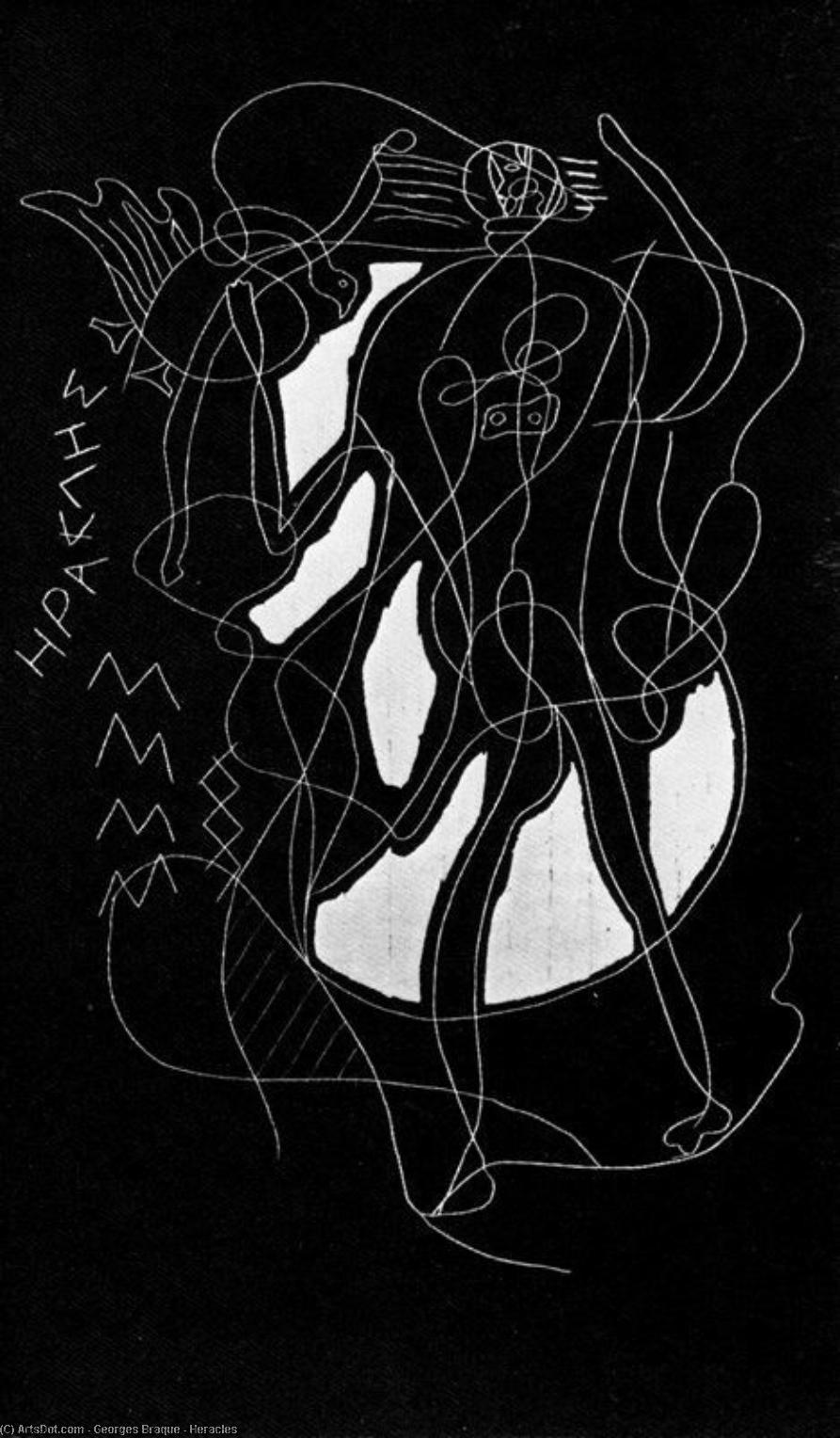
Heracles του Ζωρζ Μπρακ

Heracles

Lithograph

The Deconstruction of Heroism In the dawn of the twentieth century, Georges Braque embarked on a visual revolution that would forever alter the trajectory of modern art. His work, Heracles, stands as a profound testament to this era of radical reimagining. Executed around 1910, this monochrome lithograph does not merely recount the legendary exploits of the Greek hero; instead, it embodies the very essence of Cubism’s departure from traditional representation.…

Ζωρζ Μπρακ, ranks 11 to 100

11Σπίτια στο L'Estaque, Μουσείο Τέχνης Βέρν (1908) του Ζωρζ ΜπρακΣπίτια στο L'Estaque, Μουσείο Τέχνης Βέρν1908 12Violin and candlestick (1910) του Ζωρζ ΜπρακViolin and candlestick1910 13Ο Κόλπος, Les Lecques (1906) του Ζωρζ ΜπρακΟ Κόλπος, Les Lecques1906 · Κέντρο Πομπιντού 14Guitar and Sheet Music (1919) του Ζωρζ ΜπρακGuitar and Sheet Music1919 15Viaduct at L_Estaque (1908) του Ζωρζ ΜπρακViaduct at L_Estaque1908 16Άνδρας με κιθάρα (1911) του Ζωρζ ΜπρακΆνδρας με κιθάρα1911 · MoMA - Museum of Modern Art 17Still-life with Guitar (Still-life with Mandolin) (1912) του Ζωρζ ΜπρακStill-life with Guitar (Still-life with Mandolin)1912 · Museo del Novecento 18Still life with harp and violin (1911) του Ζωρζ ΜπρακStill life with harp and violin1911 19Fox του Ζωρζ ΜπρακFox 20Violin and pitcher, Kunstmuseum Basel (1910) του Ζωρζ ΜπρακViolin and pitcher, Kunstmuseum Basel1910 21The Clarinet Valse (1912) του Ζωρζ ΜπρακThe Clarinet Valse1912 22Στολιστικό ζωγραφικό με άρπα και βιολί (1912) του Ζωρζ ΜπρακΣτολιστικό ζωγραφικό με άρπα και βιολί1912 23Large nude (1908) του Ζωρζ ΜπρακLarge nude1908 24Still-Life Le Jour (1929) του Ζωρζ ΜπρακStill-Life Le Jour1929 25Το Μετρονόμιο (1909) του Ζωρζ ΜπρακΤο Μετρονόμιο1909 · Statens Museum For Kunst 26Bottle, Glass, and Newspaper (1914) του Ζωρζ ΜπρακBottle, Glass, and Newspaper1914 27Plums, Pears, Nuts and Knife (1926) του Ζωρζ ΜπρακPlums, Pears, Nuts and Knife1926 · The Phillips Collection 28L'Estaque (1906) του Ζωρζ ΜπρακL'Estaque1906 29Bottle and Fishes (1910) του Ζωρζ ΜπρακBottle and Fishes1910 30Still Life with Guitar (1935) του Ζωρζ ΜπρακStill Life with Guitar1935 31Still Life with Grapes (1918) του Ζωρζ ΜπρακStill Life with Grapes1918 32Δύο Πουλιά (1955) του Ζωρζ ΜπρακΔύο Πουλιά1955 · Tel Aviv Museum of Art 33Fruitdish and Glass (1912) του Ζωρζ ΜπρακFruitdish and Glass1912 34Still Life: The Table (1928) του Ζωρζ ΜπρακStill Life: The Table1928 35Portrait of a Woman (1911) του Ζωρζ ΜπρακPortrait of a Woman1911 36Still Life with a Guitar (1919) του Ζωρζ ΜπρακStill Life with a Guitar1919 37Fruit Dish, Ace of Clubs (1913) του Ζωρζ ΜπρακFruit Dish, Ace of Clubs1913 38Leaves in color of light (1953) του Ζωρζ ΜπρακLeaves in color of light1953 39Portuguese (1911) του Ζωρζ ΜπρακPortuguese1911 40Persephone του Ζωρζ ΜπρακPersephone 41Landscape του Ζωρζ ΜπρακLandscape 42At Sunset, Bird XVI (1958) του Ζωρζ ΜπρακAt Sunset, Bird XVI1958 43Το Γυάλι με τα Λιλιά του Ζωρζ ΜπρακΤο Γυάλι με τα Λιλιά 44Nature Morte (1926) του Ζωρζ ΜπρακNature Morte1926 · Art Gallery of Hamilton 45Dead nature του Ζωρζ ΜπρακDead nature 46Still life with fruit bowl, bottle and mandolin (Nature morte au compotier, bouteille et mandoline) (1930) του Ζωρζ ΜπρακStill life with fruit bowl, bottle and mandolin (Nature morte au compotier, bouteille et mandoline)1930 · Kunstsammlung Nordrhein-Westfalen 47Fruit on a Tablecloth with a Fruitdish, Paris P (1925) του Ζωρζ ΜπρακFruit on a Tablecloth with a Fruitdish, Paris P1925 48Still Life on a Table Gillette (1914) του Ζωρζ ΜπρακStill Life on a Table Gillette1914 49Portrait of a woman 1 του Ζωρζ ΜπρακPortrait of a woman 1 50Big Nude (1908) του Ζωρζ ΜπρακBig Nude1908 51Still Life with a Violin (1911) του Ζωρζ ΜπρακStill Life with a Violin1911 52Factory of Rio Tinto in the L'estanque του Ζωρζ ΜπρακFactory of Rio Tinto in the L'estanque 53Ceiling: The Birds (1953) του Ζωρζ ΜπρακCeiling: The Birds1953 54Seated woman 1 του Ζωρζ ΜπρακSeated woman 1 55Guitar ''Program statue d'epouvante'' (1913) του Ζωρζ ΜπρακGuitar ''Program statue d'epouvante''1913 56Λεμόνια, Πιθάκια και Κωμπότι (1927) του Ζωρζ ΜπρακΛεμόνια, Πιθάκια και Κωμπότι1927 · The Phillips Collection 57Little Bay at La Ciotat (also known as Cove at La Ciotat) (1907) του Ζωρζ ΜπρακLittle Bay at La Ciotat (also known as Cove at La Ciotat)1907 · Κέντρο Πομπιντού 58Ceiling: The Birds (1953) του Ζωρζ ΜπρακCeiling: The Birds1953 59Μελέτη για την οροφή του Λούβρου του Ζωρζ ΜπρακΜελέτη για την οροφή του Λούβρου 60Churth at Carrieres Saint-Denis (1909) του Ζωρζ ΜπρακChurth at Carrieres Saint-Denis1909 61The Round Table (1929) του Ζωρζ ΜπρακThe Round Table1929 62Glass, Pipe and Playing Cards (1918) του Ζωρζ ΜπρακGlass, Pipe and Playing Cards1918 · Des Moines Art Center 63Landscape at L'Estaque (1907) του Ζωρζ ΜπρακLandscape at L'Estaque1907 64Yellow Seacoast του Ζωρζ ΜπρακYellow Seacoast 65Still Life with Glass, Dice, Newspaper and Playing Card (1913) του Ζωρζ ΜπρακStill Life with Glass, Dice, Newspaper and Playing Card1913 · Art Institute of Chicago 66Pedestal Table (1913) του Ζωρζ ΜπρακPedestal Table1913 67Still Life with Grapes and Clarinet (1927) του Ζωρζ ΜπρακStill Life with Grapes and Clarinet1927 · The Phillips Collection 68Woman with a Mandolin (1910) του Ζωρζ ΜπρακWoman with a Mandolin1910 69Χαρτιά και Ζάρια (1914) του Ζωρζ ΜπρακΧαρτιά και Ζάρια1914 · Museo Nacional Centro de Arte Reina Sofía 70White Bird του Ζωρζ ΜπρακWhite Bird 71Port of La Ciotat (1907) του Ζωρζ ΜπρακPort of La Ciotat1907 72Tithonos του Ζωρζ ΜπρακTithonos 73Bottle (1914) του Ζωρζ ΜπρακBottle1914 74Still Life with a Pair of Banderillas (1911) του Ζωρζ ΜπρακStill Life with a Pair of Banderillas1911 75A Table Grise του Ζωρζ ΜπρακA Table Grise 76Violin and Glass (1913) του Ζωρζ ΜπρακViolin and Glass1913 · Kunstmuseum Basel 77Nature Morte a la Guitare (1938) του Ζωρζ ΜπρακNature Morte a la Guitare1938 78Saint-Pol Roux του Ζωρζ ΜπρακSaint-Pol Roux 79The Violin Valse (1913) του Ζωρζ ΜπρακThe Violin Valse1913 80Viaduct At L'estaque. Le Viadue De L'estaque του Ζωρζ ΜπρακViaduct At L'estaque. Le Viadue De L'estaque 81untitled του Ζωρζ Μπρακuntitled 82Homage To J.S. Bach του Ζωρζ ΜπρακHomage To J.S. Bach 83untitled (928) του Ζωρζ Μπρακuntitled (928) 84The Painter and His Model (1939) του Ζωρζ ΜπρακThe Painter and His Model1939 85embattled head του Ζωρζ Μπρακembattled head 86Pitchet, Glass And Lemons του Ζωρζ ΜπρακPitchet, Glass And Lemons 87untitled (3508) του Ζωρζ Μπρακuntitled (3508) 88L'Estaque (1906) του Ζωρζ ΜπρακL'Estaque1906 89Terrace Of Hotel Mistral του Ζωρζ ΜπρακTerrace Of Hotel Mistral 90Still Life with Ace of Hearts (1914) του Ζωρζ ΜπρακStill Life with Ace of Hearts1914 91The large trees του Ζωρζ ΜπρακThe large trees 92The Chariot II του Ζωρζ ΜπρακThe Chariot II 93Head Of A Woman του Ζωρζ ΜπρακHead Of A Woman 94The Studio (III) (1949) του Ζωρζ ΜπρακThe Studio (III)1949 95Landscape at L'Estaque (1906) του Ζωρζ ΜπρακLandscape at L'Estaque1906 96The Bottle of Rum (1914) του Ζωρζ ΜπρακThe Bottle of Rum1914 97The Birds (1953) του Ζωρζ ΜπρακThe Birds1953 98untitled (9288) του Ζωρζ Μπρακuntitled (9288) 99Girl with a Cross (1911) του Ζωρζ ΜπρακGirl with a Cross1911 · Μουσείο Τέχνης Κίμπελ 100Guitar and Still Life on a Guéridon (1922) του Ζωρζ ΜπρακGuitar and Still Life on a Guéridon1922

Ζωρζ Μπρακ paintings by period

Cubist Synthesis

1911 – 1914 · 4 έργα σε αυτή τη λίστα

Ζωρζ Μπρακ paintings by subject

The four most frequent subjects in this ranking, with the top painting for each.

Museums holding Ζωρζ Μπρακ's originals

Τα 8 μουσεία που φιλοξενούν το μεγαλύτερο μέρος των έργων σε αυτήν τη σελίδα.

Μουσεία Πόλη Έργα του Ζωρζ Μπρακ Πάτρια από αυτή τη λίστα
The Phillips Collection, Ουάσιγκτον, D.C.The Phillips Collection Ουάσιγκτον, D.C. 11 Plums, Pears, Nuts and Knife, Λεμόνια, Πιθάκια και Κωμπότι, Still Life with Grapes and Clarinet
Κέντρο Πομπιντού, ΠαρίσιΚέντρο Πομπιντού Παρίσι 4 Το Ντουέτο (Le Duo), Ο Κόλπος, Les Lecques, Little Bay at La Ciotat (also known as Cove at La Ciotat)
Art Institute of Chicago, ΣικάγκοArt Institute of Chicago Σικάγκο 5 Η Χώρα της Νορμανδίας, Still Life with Glass, Dice, Newspaper and Playing Card
Statens Museum For Kunst, ΚόπενημαγκςStatens Museum For Kunst Κόπενημαγκς 8 Το Μετρονόμιο
Kunstmuseum Basel, ΒασιλείαKunstmuseum Basel Βασιλεία 5 Violin and Glass
Kunstsammlung Nordrhein-Westfalen, ΝτούσσελντορφKunstsammlung Nordrhein-Westfalen Ντούσσελντορφ 2 Still life with fruit bowl, bottle and mandolin (Nature morte au compotier, bouteille et mandoline)
Tate Gallery, ΛονδίνοTate Gallery Λονδίνο 1 Η Μαντολίνα
Solomon R. Guggenheim Museum, Νέα ΥόρκηSolomon R. Guggenheim Museum Νέα Υόρκη 1 Βιολίνι και Πινέλο

Top Ζωρζ Μπρακ painting by decade

Έργα ανά δεκαετία

Select a decade to see its top painting.

What to know about Ζωρζ Μπρακ paintings

Which famous Ζωρζ Μπρακ painting tops the ranking?Show answer

Η Μαντολίνα (1910), Tate Gallery, Λονδίνο, ranks first, followed by Άνθρωπος με Κιθάρα (1914) and Οίκοι στην Λ'Εστακέ.

How old was Ζωρζ Μπρακ in the year of Η Μαντολίνα?Show answer

Ζωρζ Μπρακ was 28: Η Μαντολίνα is dated 1910, and Ζωρζ Μπρακ was born in 1882.

Which Ζωρζ Μπρακ paintings make the top 10?Show answer

Η Μαντολίνα, Άνθρωπος με Κιθάρα, Οίκοι στην Λ'Εστακέ, Η Χώρα της Νορμανδίας, Η Γυναίκα που Διαβάζει, Βιολίνι και Πινέλο, Ο Μουσικός, Το Ντουέτο (Le Duo), Γυναίκα με κιθάρα και Heracles. Year and museum for each are in the ranking above.

How many Ζωρζ Μπρακ works does your catalogue list?Show answer

700 works by Ζωρζ Μπρακ are in our catalogue, dated 1906 to 1958.

Where can the originals of Ζωρζ Μπρακ's famous paintings be seen?Show answer

Mainly in The Phillips Collection (Ουάσιγκτον, D.C.), Κέντρο Πομπιντού (Παρίσι) και Art Institute of Chicago (Σικάγκο). See the museum table above for the full list.

In which years did Ζωρζ Μπρακ paint the top-ranked works?Show answer

In 1910s: 37 of the 100 paintings ranked here date from that time, including Η Μαντολίνα.

Which famous Ζωρζ Μπρακ paintings are the earliest and the latest?Show answer

Earliest on this page: Ο Κόλπος, Les Lecques (1906). Latest: At Sunset, Bird XVI (1958).

What are Ζωρζ Μπρακ's most frequent subjects?Show answer

Among the 100 paintings ranked here: Geometric forms (21), Geometric (12) και Braque (12).

Which medium did Ζωρζ Μπρακ use most often?Show answer

Oil On Canvas, for 49 of the 100 paintings ranked here.

Which art movement is Ζωρζ Μπρακ part of?Show answer

Κουβισμός, based on the paintings ranked on this page.

Which Ζωρζ Μπρακ paintings are held by the The Phillips Collection?Show answer

The The Phillips Collection, Ουάσιγκτον, D.C. holds 3 of the paintings ranked here, including Plums, Pears, Nuts and Knife, Λεμόνια, Πιθάκια και Κωμπότι και Still Life with Grapes and Clarinet.

Ζωρζ Μπρακ: life and career

Early Life, Family and Training

Georges Braque was born in Argenteuil, France, in 1882. His early years were spent in Le Havre, France, within a household defined by the practicalities of decoration and color. Growing up in a family of house painters and decorators, he was immersed in the tactile realities of his trade from a young age. This upbringing provided a foundation of technical craftsmanship that would later inform his approach to the canvas.

Before pursuing the fine arts, he followed the established path of his kin by apprenticing as a house painter and decorator. This period of manual labor instilled in him a specific understanding of materials and the physical properties of surfaces. Such practical training offered a grounded perspective on how pigments interact with different textures, a sensibility that would eventually distinguish his later experiments with materiality.

The transition from trade to formal study took him to Paris in 1902. It was there that he continued his studies at the Académie Humbert, seeking to refine his innate inclinations through academic discipline. This period of formal instruction provided the necessary structure for his developing vision, bridging the gap between the manual application of paint and the intellectual pursuit of composition.

The Fauvist Period and Cézanne's Influence

The early years of Braque's career were shaped by the lingering shadows of Impressionism and Post-Impressionism. His initial explorations sought to capture the fleeting qualities of light and atmosphere, yet a deeper structural hunger began to emerge. By 1905, he turned toward the principles of Fauvism, embracing a more intense and non-naturalistic use of color to convey emotion. This period was marked by a departure from mere observation, as he began to prioritize the expressive power of the palette over the literal depiction of his subjects.

This newfound coloristic freedom found a necessary anchor in the work of Paul Cézanne. Braque found himself drawn to the way Cézanne utilized firm structures and a deliberate approach to color to organize the visual field. It was this intersection of Fauvist color and Cézannian geometry that would define his transition into a more radical mode of seeing. He sought to reconcile the emotional intensity of his colors with a sense of architectural permanence.

The results of this synthesis are visible in his 1908 work, Houses at L'Estaque. In this piece, the landscape is no longer a collection of soft impressions but a series of colorful, tilted planes and geometric shapes. The influence of Cézanne is unmistakable here, as the terrain is reduced to its essential volumes. He began to dismantle the traditional perspective of the landscape, replacing it with a fragmented, structured reality that prioritized the underlying form of the world.

The Development of Cubism

Between 1907 and 1914, Paris became the site of a profound visual restructuring through the collaboration of Georges Braque and Pablo Picasso. This partnership moved beyond the emotional intensity of Fauvism toward a more cerebral investigation of form. They developed Analytical Cubism, a method that dissected objects into fragmented geometric shapes. Rather than attempting to replicate the illusion of three-dimensional space, they sought to represent the totality of an object by presenting multiple viewpoints simultaneously. This approach stripped away traditional perspective, replacing it with a complex arrangement of planes and lines.

By about 1912, the movement underwent a significant transition into Synthetic Cubism. This phase moved away from the dissection of forms and toward the construction of new images through the assembly of diverse elements. Braque was a primary innovator in this shift, having created the first papier collé by attaching wallpaper to a drawing. This act of gluing physical materials onto the surface challenged the boundaries of the canvas, asserting the painting as an autonomous object rather than a window into another world. His work during this period focused on the relationship between representation and the tangible reality of the materials used.

Technique and Artistic Innovation

Braque’s approach to the canvas was defined by a restless curiosity regarding the physical properties of his materials. He moved beyond the traditional boundaries of oil painting by introducing elements that challenged the illusion of depth. By incorporating real-world materials such as newspaper clippings, wallpaper, and fabric, he disrupted the singular perspective of the picture plane. This experimentation led to the development of papier collé, a method of pasting paper that allowed him to integrate the textures of everyday life directly into his compositions. He sought to bridge the gap between the painted image and the tangible object.

His technical repertoire was marked by a tactile, almost sculptural sensibility. He frequently blended pigments with sand to alter the surface texture, creating a grit that caught the light in unexpected ways. To further manipulate the viewer's perception of space and materiality, he experimented with copying the visual patterns of wood grain and marble. This was not merely a decorative choice but a way to explore how different surfaces interact with light and form. He also utilized stenciled letters on his works, a technique that added a layer of graphic dimension and helped anchor the composition within a modern, legible reality.

War and Stylistic Evolution

The outbreak of World War I in 1914 brought a sudden, violent interruption to the intellectual rigor of the Cubist movement. Braque was called up for military service, a period that would fundamentally alter both his physical well-being and his creative temperament. In 1915, he sustained a serious head wound in the trenches, an injury that resulted in temporary blindness and required a trepanation to recover his sight. This brush with darkness forced a shift in his perception. The rigid, analytical structures that had defined his earlier years began to soften, replaced by a more personal and lyrical approach to his subjects.

Upon his return from the war, the strict geometric constraints of his previous collaboration with Picasso were no longer his sole concern. His style evolved to incorporate elements of classical composition, seeking a sense of balance and harmony that felt more grounded in the physical world. He moved away from the purely intellectual dissection of form, embracing a more nuanced and contemplative way of seeing. His work became less about the fragmentation of space and more about the quiet, serene atmosphere of the objects themselves.

Key Works and Notable Pieces

The trajectory of Braque's career is marked by specific compositions that signal his shifts in thought and technique. In 1908, Houses at L'Estaque emerged, utilizing colorful, tilted planes and geometric shapes that reflected a departure from traditional perspective. This period of experimentation continued into 1910 with Violin and Palette, a work that utilized paper and mixed media to study how color interacts with form. By 1911, his focus moved toward the dissection of space in Man with a Guitar, a piece that exemplifies the analytical approach he developed alongside his contemporaries.

As his methods evolved, the introduction of new materials changed the texture of his canvases. The 1912 work Fruit Dish and Glass demonstrated the transition into a style where recognizable subject matter was reincorporated through the use of collage. Even after the disruptions of war, his output maintained a connection to his earlier investigations. The Musician, created in 1918, reflects a period of personal transition, while his much later 1955 painting, Two Birds, shows a continued interest in the fundamental properties of his chosen subjects.

Legacy and Enduring Impact

By the time of his death on August 31, 1963, Georges Braque had fundamentally altered the understanding of how we perceive and represent the world. As a co-founder of the Cubism movement, he helped dismantle the long-held reliance on traditional perspective, replacing it with a fragmented, multi-dimensional reality. His work moved beyond mere imitation of nature, seeking instead to capture the essence of objects through a rigorous study of form and space. This shift forced a permanent change in the visual language of the twentieth century.

His influence on subsequent generations of artists remains immeasurable. By introducing papier collé and integrating everyday materials into his compositions, he bridged the gap between the canvas and the tangible world. This innovation challenged the boundaries of what a painting could be, paving the way for future explorations into texture and materiality. Even as his style evolved toward more lyrical and serene themes in his later years, the structural integrity of his Cubist foundations remained a constant presence in his output.

Όλα τα 700 έργα του Ζωρζ Μπρακ →