Εγγύηση επιστροφής χρημάτων · 100 ημέρες Δωρεάν Παγκόσμια Αποστολή
646.759έργα τέχνης 53.420καλλιτέχνες 5.406μουσεία 32Γλώσσες
Πορτρέτο του Ουίλλιαμ Μπλέηκ

Ουίλλιαμ Μπλέηκ Paintings: The Top 100 Most Famous, Ranked

Ενημερωμένο Οκτώβριος 2026 · κατάταξη βάσει του σκορ δημοφιλίας μας (αναζητήσεις, επισκέψεις και παραγγελίες για κάθε έργο) · 324 έργα του Ουίλλιαμ Μπλέηκ στον κατάλογό μας

Quick answer

The most famous Ουίλλιαμ Μπλέηκ painting is Ο Αρχαίος των Ημερών (1794); the original is in the Βρετανικό Μουσείο, Λονδίνο. Νέωντον and Η Πρώτη Ημέρα Του Θεού (1794) are numbers two and three. Out of the 324 works by Ουίλλιαμ Μπλέηκ in our catalogue, these are the 100 most famous, ranked, each with its year and museum, so you can choose the painting to order.

1757 – 1827, Λονδίνο Ρομαντισμός Περισσότερα έργα: Tate Gallery

Top 10 Ουίλλιαμ Μπλέηκ paintings, ranked

1
Ο Αρχαίος των Ημερών (1794) του Ουίλλιαμ Μπλέηκ

Ο Αρχαίος των Ημερών

1794 · Εβόλιση · Βρετανικό Μουσείο, Λονδίνο

Πλησιάστε για να παρατηρήσετε τον τρόπο με τον οποίο το φως συμπεριφέρεται μέσα σε αυτή τη σύνθεση. Βρισκόμαστε μπροστά σε μια ουράνια σφαίρα, έναν λαμπερό κίτρινο κύκλο που λειτουργεί ως ένας ηλιοφάνηςฉάδα για την κεντρική φιγούρα. Από αυτή την χρυσή σφαίρα, αναδύεται ένας ηλικιωμένος, μυώδης άνδρας σε μια δυναμική, σκυφτή στάση. Τα μακριά, κυματιστά λευκά του μαλλιά και η περιφέρειά του αλληλεπιδρούν με το φως, δημιουργώντας μια αίσθηση κίνησης πάνω…

2
Νέωντον του Ουίλλιαμ Μπλέηκ

Νέωντον

Ακρυλικά πάνω σε καμβά

Το έργο του William Blake, “Newton” (1795/1805), δεν είναι απλώς ένας πίνακας που απεικονίζει τον διάσημο επιστήμονα Isaac Newton. Είναι μια βαθιά και πολυεπίπεδη δήλωση σχετικά με τα όρια της λογικής, τη δύναμη της φαντασίας και τη φύση της ανθρώπινης αντίληψης. Η εικόνα παρουσιάζει έναν εντυπωσιακό πίνακα του Νεύτωνα, απεικονισμένο σε μια σκηνή που θυμίζει υποβρύχιο βασίλειο ή το βάθος του διαστήματος – ο επιστήμονας είναι λυγερός και κατακλυσμένος από…

3
Η Πρώτη Ημέρα Του Θεού (1794) του Ουίλλιαμ Μπλέηκ

Η Πρώτη Ημέρα Του Θεού

1794 · Ακουαρέλα

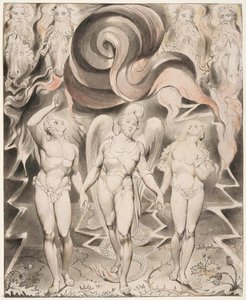
Ένα Αριστούργημα Οραματικής Τέχνης Το έργο «Η Αρχαία των Ημερών» του William Blake αποτελεί ένα βαθύ και μαγευτικό αριστούργημα που ενσαρκώνει την ουσία του Ρομαντισμού και της οραματικής τέχνης. Δημιουργήθηκε το 1794, αυτό το έργο λειτουργεί ως εξώφυλλο για το προφητικό έργο του Blake, «Ευρώπη μια Προφητεία». Το ίδιο ονομάζεται από έναν από τους τίτλους του Θεού στο Βιβλίο Δανιήλ, αντανακλώντας τις βαθιές πνευματικές και μυστηριάζουσες τάσεις του καλλιτέχνη. Θέμα…

4
The Great Red Dragon and the Woman Clothed with Sun του Ουίλλιαμ Μπλέηκ

The Great Red Dragon and the Woman Clothed with Sun

Acrylic On Canvas · Εθνική Πινακοθήκη Τέχνης, Ουάσινγκτον

William Blake’s Great Red Dragon and the Woman Clothed with Sun stands as a monumental achievement in Romantic art—a series of watercolour paintings born from Blake’s fervent engagement with biblical prophecy. Created between 1805 and 1810, these canvases weren't merely decorative; they were meticulously crafted to illuminate the Book of Revelation, embodying Blake’s singular vision of spiritual struggle and divine triumph.

5
Η Μεγάλη Κόκκινη Δράκου και Η Γυναίκα Ενδύτη της Αυγής (1805) του Ουίλλιαμ Μπλέηκ

Η Μεγάλη Κόκκινη Δράκου και Η Γυναίκα Ενδύτη της Αυγής

1805 · Ακουαρέλα

Αναδυχή της Κουβαριστικής Πλάσης του Βίλλιαμ Μπλέικ και η Αποτύπωση του Κατακλυσμού Η κούβαριστική πλάση του Βίλλιαμ Μπλέικ, *Το Μεγάλο Δράκο και Η Γυναίκα Ενδύτη της Αυγής*, αποτελεί μια εντυπωσιακή μαρτυρία της μοναδικής καλλιτεχνικής οπτικής του καλλιτέχνη και τη θέση του στην ρομαντική κίνηση τέχνης. Δεν πρόκειται απλώς για μια απεικόνιση αλλά για ζωντανή εκφύλιση της πνευματικής πάλης και προφητείας κατακλυσμού που προέρχεται από το βιβλίο του Αποκαλυπτικού Βιβλίου. Το…

6
Σατανάς να πανηγουρητεύει πάνω από την Εύη (1795) του Ουίλλιαμ Μπλέηκ

Σατανάς να πανηγουρητεύει πάνω από την Εύη

1795 · Ακρυλικά πάνω σε χαρτί

William Blake, a figure perpetually adrift from the conventional currents of his era, remains one of the most profoundly influential artists and poets of the Romantic Age. His work transcends mere representation; it's an immersive journey into realms of mysticism, symbolism, and deeply personal visions. “Satan Exulting over Eve,” created in 1795 as a pen drawing, stands as a potent emblem of this artistic philosophy – a meticulously crafted narrative…

7
Η Έλωΐμ Δημιουργεί τον Άδη (1795) του Ουίλλιαμ Μπλέηκ

Η Έλωΐμ Δημιουργεί τον Άδη

1795 · Ακρυλικά πάνω σε καμβά · Tate Gallery, Λονδίνο

Το έργο του William Blake, το "Elohim Creating Adam", ζωγραφισμένο το 1795 και σήμερα βρίσκεται στα προσκεφάλαια της Τεχνικής Ακαδημίας του Λονδίνου, είναι πολύ περισσότερο από μια βιβλική απεικόνιση – είναι μια βαθιά μελέτη για τη δημιουργία, την αναδυόμενη ανθρώπινη δυνατότητα και τη φύση της θεϊκής δύναμης. Αυτό το έργο τέχνης σε υλικά χρώματα ξεπερνά τον ίδιο του τον αντικειμενισμό, μετατρέποντας ένα παράθυρο στον έντονα προσωπικό και οραματικό κόσμο του…

8
Satan Watching the Caresses of Adam and Eve (1808) του Ουίλλιαμ Μπλέηκ

Satan Watching the Caresses of Adam and Eve

1808 · Ακουαρέλα · Μουσείο Τέχνης Βοστώνης, Μπόσττον

William Blake, a prominent British artist known for his engravings and paintings, created the masterpiece 'Satan Watching the Caresses of Adam and Eve'. This painting is currently housed in the Museum of Fine Arts (Boston, United States) and is an excellent example of Romanticism. At AllPaintingsStore.com, we offer a high-quality reproduction of this painting to add to your art collection.

9
Ο Στροβιλισμός των Εραστών, Francesca da Rimini και Paolo Malatesta (1824) του Ουίλλιαμ Μπλέηκ

Ο Στροβιλισμός των Εραστών, Francesca da Rimini και Paolo Malatesta

1824 · Ακρυλικά πάνω σε καμβά · Birmingham Museum and Art Gallery, Μπέρμινγκχαμ

William Blake's "The Lovers’ Whirlwind, Francesca da Rimini and Paolo Malatesta," painted in 1824-27, isn’t merely a depiction of a tragic love story; it’s a visceral exploration of passion, guilt, and the destructive power of desire. Housed within the Birmingham Museum and Art Gallery, this monumental canvas—measuring an impressive 374 x 530 cm—commands attention not just for its scale but for the turbulent energy radiating from its central figures. Blake…

10
Η Εκάτη του Ουίλλιαμ Μπλέηκ

Η Εκάτη

Άνθρακα και λάδι σε καμβά

Η Αινιγματική Ομορφιά της "Ηκάτης" του Γουίλιαμ Μπλέικ Η “Ηκάτη” (Hecate) του Γουίλιαμ Μπλέικ, ένα έργο που γεννά ερωτήματα και προκαλεί βαθιά σκέψη, δεν είναι απλώς μια απεικόνιση της ελληνίδας θεάς. Είναι μια οπτική παράδοση, μια ψυχολογική εξερεύνηση και μια μαρτυρία για την ιδιαίτερη καλλιτεχνική γλώσσα ενός από τους σημαντικότερους Ρομαντικών καλλιτέχνης. Δημιουργημένη μεταξύ 1823-1825, η “Ηκάτη” μας προσκαλεί σε ένα ταξίδι μέσα στον κόσμο των μυστηρίων, της μεταμόρφωσης και…

Ουίλλιαμ Μπλέηκ paintings ranked 11 to 100

11The Ancient of Days (1827) του Ουίλλιαμ ΜπλέηκThe Ancient of Days1827 · Whitworth Art Gallery 12Ο Ήλιος στις Ανατολικές 그اته του (1820) του Ουίλλιαμ ΜπλέηκΟ Ήλιος στις Ανατολικές 그اته του1820 13Ύμνοι της Αμαρτίας (Σελίδα τίτλου) (1825) του Ουίλλιαμ ΜπλέηκΎμνοι της Αμαρτίας (Σελίδα τίτλου)1825 · Μετροπολιτικό Μουσείο Τέχνης 14Milton`s Mysterious Dream (1820) του Ουίλλιαμ ΜπλέηκMilton`s Mysterious Dream1820 15Η Μεγάλη Κόκκινη Δράκος και η Γυναίκα Βραχοειδής με τον Ήλιο (1806) του Ουίλλιαμ ΜπλέηκΗ Μεγάλη Κόκκινη Δράκος και η Γυναίκα Βραχοειδής με τον Ήλιο1806 · Μητροπολιτικό Μουσείο Τέχνης 16Η Ανάσταση του Ουίλλιαμ ΜπλέηκΗ Ανάσταση 17El gran dragón rojo y la mujer vestida de sol του Ουίλλιαμ ΜπλέηκEl gran dragón rojo y la mujer vestida de sol 18The Great Red Dragon and the Beast from the Sea (1805) του Ουίλλιαμ ΜπλέηκThe Great Red Dragon and the Beast from the Sea1805 19Dante and Virgil at the Gates of Hell του Ουίλλιαμ ΜπλέηκDante and Virgil at the Gates of Hell 20The Temptation and Fall of Eve (1808) του Ουίλλιαμ ΜπλέηκThe Temptation and Fall of Eve1808 21Ναβουκουνόδορ (1795) του Ουίλλιαμ ΜπλέηκΝαβουκουνόδορ1795 · Tate Gallery 22Χαρούμενη Ημέρα ή Ο Χορός του Άλμπιον (1794) του Ουίλλιαμ ΜπλέηκΧαρούμενη Ημέρα ή Ο Χορός του Άλμπιον1794 23Ο Αδάμ και η Εύα Κοιμώμενοι (1808) του Ουίλλιαμ ΜπλέηκΟ Αδάμ και η Εύα Κοιμώμενοι1808 · Μουσείο Τέχνης Βοστώνης 24Η Κατάβαση του Χριστού (1804) του Ουίλλιαμ ΜπλέηκΗ Κατάβαση του Χριστού1804 · Yale Center for British Art 25Dante and Virgil at the Gates of Hell (Illustration to Dante's Inferno) του Ουίλλιαμ ΜπλέηκDante and Virgil at the Gates of Hell (Illustration to Dante's Inferno) 26Antaeus setting down Dante and Virgil in the last circle of hell (1827) του Ουίλλιαμ ΜπλέηκAntaeus setting down Dante and Virgil in the last circle of hell1827 · Εθνική Πινακοθήκη της Βικτώριας 27The-Blasphemer του Ουίλλιαμ ΜπλέηκThe-Blasphemer 28Ο Λος μπαίνοντας στον τάφο (1804) του Ουίλλιαμ ΜπλέηκΟ Λος μπαίνοντας στον τάφο1804 · Yale Center for British Art 29The Great Red Dragon and the Woman Clothed with the Sun (Rev. 12: 1-4) (1800) του Ουίλλιαμ ΜπλέηκThe Great Red Dragon and the Woman Clothed with the Sun (Rev. 12: 1-4)1800 · Μουσείο Μπρούκλιν 30The Bard, from Gray (1809) του Ουίλλιαμ ΜπλέηκThe Bard, from Gray1809 31Το Τελευταίο Δείπνο (1799) του Ουίλλιαμ ΜπλέηκΤο Τελευταίο Δείπνο1799 · Εθνική Πινακοθήκη Τέχνης 32The Ghost of a Flea (1820) του Ουίλλιαμ ΜπλέηκThe Ghost of a Flea1820 33Αντάεος Αφήνει τον Δάντε και τον Βεργίλη του Ουίλλιαμ ΜπλέηκΑντάεος Αφήνει τον Δάντε και τον Βεργίλη 34The Sun in His Wrath (1820) του Ουίλλιαμ ΜπλέηκThe Sun in His Wrath1820 35Ο Σατανάς ενώπιον του θρόνου του Θεού του Ουίλλιαμ ΜπλέηκΟ Σατανάς ενώπιον του θρόνου του Θεού 36Inferno, Canto VII, 110-127, The Stygian Lake with angry sinners fighting του Ουίλλιαμ ΜπλέηκInferno, Canto VII, 110-127, The Stygian Lake with angry sinners fighting 37Job and his Daughters (1823) του Ουίλλιαμ ΜπλέηκJob and his Daughters1823 · Tate Gallery 38Angels Ministering to Christ (1820) του Ουίλλιαμ ΜπλέηκAngels Ministering to Christ1820 39Elisha in the Chamber on the Wall (1820) του Ουίλλιαμ ΜπλέηκElisha in the Chamber on the Wall1820 · Tate Gallery 40Isaac Newton (1795) του Ουίλλιαμ ΜπλέηκIsaac Newton1795 · Tate Gallery 41Η Εφαρμογή του Αγγέλου στον Ζαχαρία (1800) του Ουίλλιαμ ΜπλέηκΗ Εφαρμογή του Αγγέλου στον Ζαχαρία1800 · Μετροπολιτικό Μουσείο Τέχνης 42The Wandering Moon (1820) του Ουίλλιαμ ΜπλέηκThe Wandering Moon1820 43Ο Χριστός σταυρωμένος στην Τρίτη Ώρα (1803) του Ουίλλιαμ ΜπλέηκΟ Χριστός σταυρωμένος στην Τρίτη Ώρα1803 44Whirlwind of Lovers του Ουίλλιαμ ΜπλέηκWhirlwind of Lovers 45Dante y Virgilio ante el ángel guardián de la puerta del purgatorio του Ουίλλιαμ ΜπλέηκDante y Virgilio ante el ángel guardián de la puerta del purgatorio 46Illustration to Milton`s Comus (1820) του Ουίλλιαμ ΜπλέηκIllustration to Milton`s Comus1820 47The number of the beast is 666 του Ουίλλιαμ ΜπλέηκThe number of the beast is 666Μουσείο Μπρούκλιν 48The Casting of the Rebel Angels into Hell (1808) του Ουίλλιαμ ΜπλέηκThe Casting of the Rebel Angels into Hell1808 49Untitled 8 του Ουίλλιαμ ΜπλέηκUntitled 8 50The parable of the wise and foolish virgins (1822) του Ουίλλιαμ ΜπλέηκThe parable of the wise and foolish virgins1822 51Andrew, Simon Peter Searching for Christ (1819) του Ουίλλιαμ ΜπλέηκAndrew, Simon Peter Searching for Christ1819 52Oberon, Titania and Puck with Fairies Dancing (1786) του Ουίλλιαμ ΜπλέηκOberon, Titania and Puck with Fairies Dancing1786 53Ο Χριστός ως ο Ελπιδωτός του Ανθρώπου (1808) του Ουίλλιαμ ΜπλέηκΟ Χριστός ως ο Ελπιδωτός του Ανθρώπου1808 · Μουσείο Τέχνης Βοστώνης 54Παρθένα και Παιδί του Ουίλλιαμ ΜπλέηκΠαρθένα και ΠαιδίYale Center for British Art 55Job and his family restored to prosperity του Ουίλλιαμ ΜπλέηκJob and his family restored to prosperity 56Satan smiting Job with boils (1826) του Ουίλλιαμ ΜπλέηκSatan smiting Job with boils1826 57Glad Day του Ουίλλιαμ ΜπλέηκGlad Day 58Το Σώμα του Αβέλ που Βρέθηκε από τον Αδάμ και την Εύη του Ουίλλιαμ ΜπλέηκΤο Σώμα του Αβέλ που Βρέθηκε από τον Αδάμ και την Εύη 59Job´s evil dreams 2 του Ουίλλιαμ ΜπλέηκJob´s evil dreams 2 60The Spirit of Plato (1820) του Ουίλλιαμ ΜπλέηκThe Spirit of Plato1820 61Untitled 10 του Ουίλλιαμ ΜπλέηκUntitled 10 62Virgilio arrojando a Felipe Argenti de la barca de Flegias του Ουίλλιαμ ΜπλέηκVirgilio arrojando a Felipe Argenti de la barca de Flegias 63The fall of Satan του Ουίλλιαμ ΜπλέηκThe fall of Satan 64Ο Σατανάς εκχύλνει τις πληγές πάνω στον Ιώβ του Ουίλλιαμ ΜπλέηκΟ Σατανάς εκχύλνει τις πληγές πάνω στον Ιώβ 65Last Judgement (1808) του Ουίλλιαμ ΜπλέηκLast Judgement1808 66Illustration to Milton`s Paradise Lost (1807) του Ουίλλιαμ ΜπλέηκIllustration to Milton`s Paradise Lost1807 67Dante tropieza con Bocca degli Abbati του Ουίλλιαμ ΜπλέηκDante tropieza con Bocca degli Abbati 68Ugolino tells his cruel history του Ουίλλιαμ ΜπλέηκUgolino tells his cruel history 69Job and his daughters 2 του Ουίλλιαμ ΜπλέηκJob and his daughters 2 70The vision of Eliphaz 2 του Ουίλλιαμ ΜπλέηκThe vision of Eliphaz 2 71The centaurs and the River of Blood του Ουίλλιαμ ΜπλέηκThe centaurs and the River of Blood 72Dante y Virgilio se disponen a tomar la barca hacia la ciudad de Dite του Ουίλλιαμ ΜπλέηκDante y Virgilio se disponen a tomar la barca hacia la ciudad de Dite 73Behemoth and Leviathan του Ουίλλιαμ ΜπλέηκBehemoth and Leviathan 74Job and his family 1 του Ουίλλιαμ ΜπλέηκJob and his family 1 75El Ángel que conserva el gran libro de los actos buenos y los malos του Ουίλλιαμ ΜπλέηκEl Ángel que conserva el gran libro de los actos buenos y los malos 76Job Confessing his Presumption to God who Answers from the Whirlwind (1803) του Ουίλλιαμ ΜπλέηκJob Confessing his Presumption to God who Answers from the Whirlwind1803 · Εθνική Πινακαθήκη της Σκωτίας 77Job´s despair 1 του Ουίλλιαμ ΜπλέηκJob´s despair 1 78The hypocrites with Caiaphas του Ουίλλιαμ ΜπλέηκThe hypocrites with Caiaphas 79The Book of Job: When the Morning Stars Sang Together (1820) του Ουίλλιαμ ΜπλέηκThe Book of Job: When the Morning Stars Sang Together1820 · Βιβλιοθήκη Pierpont Morgan 80Job´s sonns and daughters destroyed του Ουίλλιαμ ΜπλέηκJob´s sonns and daughters destroyed 81Satan going forth from the presence of the Lord 2 του Ουίλλιαμ ΜπλέηκSatan going forth from the presence of the Lord 2 82Κακοί εφιάλτες του Ιωβ 1 του Ουίλλιαμ ΜπλέηκΚακοί εφιάλτες του Ιωβ 1 83Untitled 11 του Ουίλλιαμ ΜπλέηκUntitled 11 84Untitled 14 του Ουίλλιαμ ΜπλέηκUntitled 14 85La serpiente de seis pies ataca a Agnelo dei Brunelleschi του Ουίλλιαμ ΜπλέηκLa serpiente de seis pies ataca a Agnelo dei Brunelleschi 86The giant Nimrod του Ουίλλιαμ ΜπλέηκThe giant Nimrod 87The Sea of Time and Space (1821) του Ουίλλιαμ ΜπλέηκThe Sea of Time and Space1821 · Arlington Court 88San Pedro appears to Dante and Beatrice του Ουίλλιαμ ΜπλέηκSan Pedro appears to Dante and Beatrice 89Wilson Lowry του Ουίλλιαμ ΜπλέηκWilson Lowry 90A Sunshine Holiday (1820) του Ουίλλιαμ ΜπλέηκA Sunshine Holiday1820 91Untitled 13 του Ουίλλιαμ ΜπλέηκUntitled 13 92Satan before the throne of God 1 του Ουίλλιαμ ΜπλέηκSatan before the throne of God 1 93David Hartley του Ουίλλιαμ ΜπλέηκDavid Hartley 94Agnelo dei Brunelleschi metamorfoseado por la serpiente του Ουίλλιαμ ΜπλέηκAgnelo dei Brunelleschi metamorfoseado por la serpiente 95La Ascensión al purgatorio του Ουίλλιαμ ΜπλέηκLa Ascensión al purgatorio 96Satan smiting job with boils 1 του Ουίλλιαμ ΜπλέηκSatan smiting job with boils 1 97La ciudad de Dite y el Ángel atravesando la Laguna Estigia του Ουίλλιαμ ΜπλέηκLa ciudad de Dite y el Ángel atravesando la Laguna Estigia 98Mirth (1820) του Ουίλλιαμ ΜπλέηκMirth1820 99An Allegory of the Spiritual Condition of Man (1811) του Ουίλλιαμ ΜπλέηκAn Allegory of the Spiritual Condition of Man1811 · Fitzwilliam Museum 100The Spiritual Form of Nelson guiding Leviathan (1800) του Ουίλλιαμ ΜπλέηκThe Spiritual Form of Nelson guiding Leviathan1800

Ουίλλιαμ Μπλέηκ paintings by period

Ουίλλιαμ Μπλέηκ paintings by subject

The four most frequent subjects in this ranking, with the top painting for each.

Museums holding Ουίλλιαμ Μπλέηκ's originals

Τα 8 μουσεία που φιλοξενούν το μεγαλύτερο μέρος των έργων σε αυτήν τη σελίδα.

Μουσεία Πόλη Έργα του Ουίλλιαμ Μπλέηκ Πάτρια από αυτή τη λίστα
Tate Gallery, ΛονδίνοTate Gallery Λονδίνο 6 Η Έλωΐμ Δημιουργεί τον Άδη, Ναβουκουνόδορ, Job and his Daughters
Yale Center for British Art, New HavenYale Center for British Art New Haven 7 Η Κατάβαση του Χριστού, Ο Λος μπαίνοντας στον τάφο, Παρθένα και Παιδί
Μουσείο Τέχνης Βοστώνης, ΜπόσττονΜουσείο Τέχνης Βοστώνης Μπόσττον 5 Satan Watching the Caresses of Adam and Eve, Ο Αδάμ και η Εύα Κοιμώμενοι, Ο Χριστός ως ο Ελπιδωτός του Ανθρώπου
Εθνική Πινακοθήκη Τέχνης, ΟυάσινγκτονΕθνική Πινακοθήκη Τέχνης Ουάσινγκτον 4 The Great Red Dragon and the Woman Clothed with Sun, Το Τελευταίο Δείπνο
Μετροπολιτικό Μουσείο Τέχνης, Νέα ΥόρκηΜετροπολιτικό Μουσείο Τέχνης Νέα Υόρκη 2 Ύμνοι της Αμαρτίας (Σελίδα τίτλου), Η Εφαρμογή του Αγγέλου στον Ζαχαρία
Μουσείο Μπρούκλιν, ΠροβηγκιονΜουσείο Μπρούκλιν Προβηγκιον 2 The Great Red Dragon and the Woman Clothed with the Sun (Rev. 12: 1-4), The number of the beast is 666
Fitzwilliam MuseumFitzwilliam Museum 6 An Allegory of the Spiritual Condition of Man
Βρετανικό Μουσείο, ΛονδίνοΒρετανικό Μουσείο Λονδίνο 3 Ο Αρχαίος των Ημερών

Ουίλλιαμ Μπλέηκ by decade: the top painting of each

Έργα ανά δεκαετία

Select a decade to see its top painting.

Ουίλλιαμ Μπλέηκ paintings: common questions

What is the most famous painting by Ουίλλιαμ Μπλέηκ?Show answer

Ο Αρχαίος των Ημερών (1794), Βρετανικό Μουσείο, Λονδίνο, ranks first, followed by Νέωντον and Η Πρώτη Ημέρα Του Θεού (1794).

What was Ουίλλιαμ Μπλέηκ's age when Ο Αρχαίος των Ημερών was painted?Show answer

Ουίλλιαμ Μπλέηκ was 37: Ο Αρχαίος των Ημερών is dated 1794, and Ουίλλιαμ Μπλέηκ was born in 1757.

Which are the top 10 Ουίλλιαμ Μπλέηκ paintings?Show answer

Ο Αρχαίος των Ημερών, Νέωντον, Η Πρώτη Ημέρα Του Θεού, The Great Red Dragon and the Woman Clothed with Sun, Η Μεγάλη Κόκκινη Δράκου και Η Γυναίκα Ενδύτη της Αυγής, Σατανάς να πανηγουρητεύει πάνω από την Εύη, Η Έλωΐμ Δημιουργεί τον Άδη, Satan Watching the Caresses of Adam and Eve, Ο Στροβιλισμός των Εραστών, Francesca da Rimini και Paolo Malatesta και Η Εκάτη. Year and museum for each are in the ranking above.

How many works by Ουίλλιαμ Μπλέηκ do you list?Show answer

324 works by Ουίλλιαμ Μπλέηκ are in our catalogue, dated 1786 to 1827.

Where are the original Ουίλλιαμ Μπλέηκ paintings kept?Show answer

Mainly in Tate Gallery (Λονδίνο), Yale Center for British Art (New Haven) και Μουσείο Τέχνης Βοστώνης (Μπόσττον). See the museum table above for the full list.

Which period produced Ουίλλιαμ Μπλέηκ's most famous paintings?Show answer

In 1820s: 20 of the 100 paintings ranked here date from that time, including Ο Στροβιλισμός των Εραστών, Francesca da Rimini και Paolo Malatesta.

Which are the earliest and latest famous Ουίλλιαμ Μπλέηκ paintings?Show answer

Earliest on this page: Oberon, Titania and Puck with Fairies Dancing (1786). Latest: The Ancient of Days (1827).

What are the main subjects of Ουίλλιαμ Μπλέηκ's paintings?Show answer

Among the 100 paintings ranked here: Mythology (18), Blake (16) και Spirituality (8).

What medium are most Ουίλλιαμ Μπλέηκ originals in?Show answer

Acrylic On Canvas, for 31 of the 100 paintings ranked here.

Which movement is Ουίλλιαμ Μπλέηκ associated with?Show answer

Ρομαντισμός, based on the paintings ranked on this page.

Which Ουίλλιαμ Μπλέηκ originals are at the Tate Gallery?Show answer

The Tate Gallery, Λονδίνο holds 5 of the paintings ranked here, including Η Έλωΐμ Δημιουργεί τον Άδη, Ναβουκουνόδορ και Job and his Daughters.

Can I order a Ουίλλιαμ Μπλέηκ reproduction?Show answer

Yes. Every painting on this page can be ordered as a hand-painted oil reproduction or a print. Open the painting, choose the size and place your order.

About the artist: Ουίλλιαμ Μπλέηκ

Early Life, Family and Training

William Blake was born on November 28, 1757, in London, England. He was raised in a household above his father’s hosier shop at 28 Broad Street. His parents, James Blake and Catherine Wright Armitage Blake, provided a stable environment during a period of significant social change in the city. While his upbringing was marked by the modest means of a tradesman's family, his early years were defined by a singular, intense imagination that often manifested in visions, such as seeing angels in the branches of a tree during childhood walks.

Formal training began at the age of ten when he was enrolled at Henry Pars' drawing school. This early instruction provided the technical foundation for a career that would eventually move beyond simple sketching. By the age of 14, the necessity of practical work led him into a seven-year apprenticeship under the engraver James Basire. This period was essential to his development, as it introduced him to the rigorous mechanics of printmaking and the physical properties of metal and acid.

During his apprenticeship, Blake spent significant time sketching the tombs at Westminster Abbey. The Gothic architecture and the weathered stone of these monuments left a lasting impression on his aesthetic sensibilities. These studies allowed him to internalize the forms of the past, which he would later reinterpret through his own unique lens. His training was not merely a pursuit of craft, but a deep immersion into the visual language of history and structure.

Technique and Artistic Innovation

Blake’s creative process was defined by a restless desire to merge the written word with the visual image. He moved beyond the standard commercial engravings of his era to develop a unique method of relief etching for his illuminated books. This technique involved applying an acid-resistant varnish to copper plates, allowing him to etch both text and illustration into a single, integrated form. This method was not merely a technical choice but a spiritual one; he claimed the process was revealed to him through a visionary experience following the death of his brother, Robert. Working alongside his wife, Catherine, who assisted in the printing and coloring, he managed the entire production from the initial etching to the final stitching of the books.

His aesthetic was a deliberate departure from the rigid rules of his contemporaries. He rejected the traditional use of linear perspective, which sought to mimic the physical world, in favor of a more emotive and symbolic representation of space. This flattening of the visual field allowed him to prioritize the internal logic of his visions over the constraints of naturalism. To bring these visions to life, he frequently employed watercolors and tempera paints, applying color by hand to the printed sheets to achieve a specific, personal texture. His work was a labor of both hand and spirit, often produced in the quiet of his London home.

Key Works and Major Publications

The early output of his career began with the publication of Poetical Sketches in 1783. This initial collection of verse was followed by his most widely recognized lyrical achievements: Songs of Innocence in 1789 and Songs of Experience in 1794. These works established a recurring tension in his writing, exploring the contrast between a state of untainted childhood and the corruption of adult reality. Between 1790 and 1793, he produced The Marriage of Heaven and Hell, a provocative work that challenged established moral and religious doctrines through prose and verse.

His engagement with the political turbulence of his era found expression in his prophetic books. He produced America, a Prophecy in 1793 and Europe, a Prophecy in 1794, works that reflected the revolutionary spirit of the time. These publications were not merely texts but integrated visions where the etched image and the written word functioned as a single entity. His later years were marked by expansive, complex projects that required years of sustained effort.

The later stages of his life saw the development of massive, intricate cycles. He worked on the Milton series between 1804 and 1808, and his final major undertaking, Jerusalem, occupied him from 1804 until 1820. These works represent the culmination of his lifelong attempt to construct a private mythology, one that sought to reconcile the human spirit with the divine through a highly personal symbolic language.

Patrons, Workshop and Commissions

The financial reality of Blake’s life was often a struggle for stability. For much of his career, he earned a living as a journeyman engraver, taking on commercial work to sustain himself. In about 1784, he attempted to establish a more permanent professional footing by setting up a print shop alongside James Parker, a friend and former fellow apprentice. This venture, however, did not provide the lasting security he required. Instead, his livelihood frequently depended on the steady support of a few dedicated patrons, most notably Thomas Butts, whose patronage offered a vital lifeline to the artist's more personal pursuits.

His professional geography shifted as his circumstances changed. Between 1800 and 1803, Blake moved to the coastal town of Felpham. During this period, he lived and worked under the patronage of William Hayley. This time in Felpham provided a temporary reprieve from the urban pressures of London, allowing him to focus on his complex series of works. Even as he navigated the demands of commissions, his work remained deeply tied to the specific needs of those who supported his vision, often balancing the practical requirements of engraving for others with the private labor of his own illuminated printing.

Legacy and Enduring Influence

During his lifetime, Blake’s vision was often met with misunderstanding, his work frequently dismissed as the product of an eccentric or unstable mind. He lived a life of relative obscurity, often struggling for financial stability while working as an engraver. Yet, the very qualities that marginalized him in the early nineteenth century eventually secured his place as a pivotal figure in the Romantic movement. His insistence on the primacy of the imagination over the constraints of reason provided a blueprint for those who would later seek to break from traditional academic structures.

The impact of his singular style eventually reached beyond his immediate circle. The Pre-Raphaelite Brotherhood embraced him as a kindred spirit, finding common ground in his rejection of Neoclassical conventions. As the decades passed, his influence moved through the Symbolist and Modernist movements, finding resonance in their shared interest in subjective experience and spiritual depth. He did not merely illustrate poems; he constructed a private mythology that continues to provide a source of inspiration for poets, painters, and thinkers across various disciplines.

  • The Tyger
  • The Lamb
  • London
  • Jerusalem

Where to See the Works Today

The physical remnants of Blake’s vision are scattered across several major institutions, reflecting the global reach of his influence. In London, the Tate Gallery holds six of his works, including the significant 1795 depiction of Isaac Newton. This collection offers a substantial look at the technical precision he applied to his engravings and the way he translated complex spiritual concepts into visual form.

Across the Atlantic, his presence is felt in several prominent American collections. The Yale Center for British Art in New Haven maintains four works, such as the 1804 print of Los Entering the Grave. Meanwhile, the Museum of Fine Arts in Boston also holds four pieces, including his 1808 study of Adam and Eve Sleeping. These holdings allow for a comparative study of his development from a commercial engraver to a creator of independent, illuminated volumes.

His reach extends even further to the Southern Hemisphere. The National Gallery of Victoria in Melbourne contains one work, an 1827 piece titled Antaeus setting down Dante and Virgil in the last circle of hell. This single presence in Australia highlights the enduring international interest in his peculiar, highly personal mythology.

Όλα τα 324 έργα του Ουίλλιαμ Μπλέηκ →