Impressionism vs. Post-Impressionism: An Expert Guide to Selecting the Perfect Era for Your Art Collection
Master the nuances of Impressionism vs. Post-Impressionism with our expert guide. Learn to distinguish fleeting light from bold emotion to curate a sophisticated collection of museum-quality, hand-painted oil reproductions for your home or commercial space.
The Essence of Impressionism: Capturing Light and the Fleeting Moment
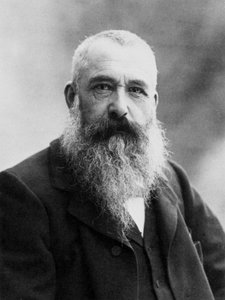
To step into the world of Impressionism is to witness a profound rebellion against the rigid, shadowed confines of the 19th-century Academy. This movement, born in the vibrant streets and sun-drenched gardens of France, sought to shatter the artificiality of studio life by venturing outdoors. Masters such as Claude Monet and Pierre-Auguste Renoir became obsessed with the ephemeral dance of light—the way a single sunbeam might traverse a lily pond or how the atmosphere shifts during a quiet afternoon in Cagnes-sur-Mer. Their mission was not to replicate reality with photographic precision, but to record a subjective visual experience. Through the use of en plein air techniques, they captured the transient nature of time itself. In works like Renoir’s La Poste at Cagnes, one does not merely see a rural scene; one feels the warmth of the sun on stone and the shimmering texture of light filtering through foliage. For the discerning collector, Impressionism offers a window into a world of luminous, broken brushstrokes and a celebration of the beauty found in the ordinary, momentary glance.
The Post-Impressionist Evolution: Structure, Emotion, and Bold Expression
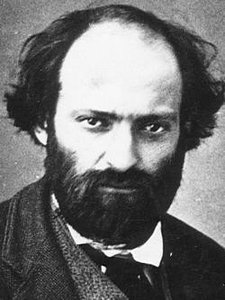
As the nineteenth century progressed, a seismic shift occurred within the art world, as the initial liberation provided by Impressionism began to face its own creative limitations. While the Impressionists succeeded in capturing the fleeting moment, many artists felt that this focus on light lacked structural permanence and emotional depth. This tension birthed Post-Impressionism, a movement that did not reject the vibrant palette of its predecessor but rather sought to move beyond mere representation toward a deeper, more visceral understanding of expression. Artists like Paul Cézanne, often regarded as the father of this era, introduced a sense of geometric order and enduring form. In his captivating still life, Peaches, Pervs and Grapes, we see a departure from the transient; instead, there is a deliberate use of structured forms and bold textures that ground the composition. Post-Impressionism became a playground for exploring the subjective and the symbolic, where color was no longer just a tool for naturalism but a vehicle for raw emotion and psychological resonance.
Key Technical Differences: From En Plein Air Naturalism to Subjective Form
Understanding the technical divergence between these two eras is essential for anyone looking to curate a meaningful collection. The Impressionist technique is characterized by short, visible brushstrokes and the application of pure pigment side-by-side, allowing the viewer’s eye to blend colors optically. This creates a sense of luminosity and movement, perfect for depicting water, sky, and atmosphere. In contrast, Post-Impressionism often employs more deliberate, heavy applications of paint. The works of Theo van Rysselberghe, such as Olive Trees near Nice, demonstrate how the movement began to distort and exaggerate forms to prioritize emotional impact over accuracy. While an Impressionist painting might feel like a soft, hazy memory of a summer day, a Post-Impressionist piece often possesses a palpable weight and texture. This era introduced more structured compositions and a wider range of experimental styles, including Neo-Impressionism and Symbolism, which utilized color and line to convey ideas that exist far beyond the visible spectrum of light.
Curating Your Space: Choosing Between Transient Light and Enduring Impact
For the art enthusiast or the professional decorator, selecting between these two movements is a decision between the transient and the enduring. An Impressionist collection brings an air of tranquility, softness, and light into a room, making it ideal for creating serene, airy environments such as hotel lounges or residential sunrooms. The delicate hues and shimmering reflections can dissolve the boundaries between an interior space and the natural world. Conversely, Post-Impressionism offers a bolder, more dramatic presence. Its emphasis on structure, saturated color, and emotional intensity makes it a powerful choice for corporate boardrooms or modern galleries where a sense of strength and permanence is desired. Whether you are drawn to the ethereal dreamscapes of Monet’s Water Lilies or the robust, textured landscapes of the Post-Impressionists, the choice depends on whether you wish your walls to whisper of fleeting beauty or speak of profound, lasting impact.
Professional Sourcing: Integrating Masterpiece Reproductions into Commercial and Private Collections
In the realm of large-scale procurement—whether for hospitality chains, corporate offices, or private estates—the ability to source high-quality, museum-grade reproductions is a vital logistical advantage. At AllPaintingsStore.com, we specialize in providing professional-grade oil reproductions that bridge the gap between historical significance and modern accessibility. We do not utilize computer-generated prints; instead, our skilled artists hand-paint each piece on 100% cotton canvas using high-quality oils to ensure a deep tonal range and authentic texture. For procurement managers and decorators, our service offers the reliability of a structured workflow: from digital mockups for complex commissions to pre-shipment photo approval, ensuring every work meets exact specifications. With options for custom sizing, various framing finishes, and efficient global shipping via DHL or FedEx, we provide the operational excellence required to furnish sophisticated spaces with the timeless elegance of the Great Masters.
Explore the world of Claude Monet, the Impressionist master renowned for capturing fleeting light and color through iconic landscapes like Water Lilies & Haystacks.
Discover Paul Cézanne (1839-1906): Post-Impressionist pioneer bridging Impressionism & Cubism. Explore geometric forms, still lifes & his lasting impact on modern art. #Cezanne #PostImpressionism
Explore the profound revolution of Post-Impressionism. Delve into the history, techniques, and emotional depth of masters like Van Gogh and Seurat. Discover how to transform your space with museum-quality, hand-painted oil reproductions of these iconic masterpieces.
Journey through the vibrant colors and emotive brushwork of Post-Impressionism. From Van Gogh to Cézanne, explore the stories behind 10 iconic masterpieces. Find museum-quality art reproductions and decor inspiration at AllPaintingsStore.com. Discover all masterpieces on AllPaintingsStore.com
Dive into the high-energy revolution of Post-Impressionism. Discover how masters like Cézanne and Van Gogh traded fleeting light for bold colors and raw emotion, forever recharging modern art with the vibrant, structural intensity that defines today's most iconic visual aesthetics.
Embark on a sensory journey through the light of Impressionism. Discover the revolutionary beauty of Monet, Renoir, and Van Gogh through our museum-quality, hand-painted oil reproductions and bespoke custom commissions designed for the discerning art lover.
Journey through the Museum of Fine Arts, Boston, exploring 25 iconic masterpieces. From Impressionist gems to classical wonders, discover the stories behind these timeless works and find museum-quality art reproductions for your space. Explore the full collection online at AllPaintingsStore.com.