The Departure from Renaissance Restraint: The Rise of Baroque
The transition from the Renaissance to the Baroque period marked a fundamental shift in how artists approached the canvas and the viewer. Where the Renaissance sought balance, mathematical proportion, and a sense of calm stability, the Baroque era embraced tension and complexity. This was not a rejection of classical training, but rather an evolution of it. Artists began to move away from the idealized, static figures of the previous century to find a more visceral way of communicating truth.
In the late 16th century, the Catholic Church recognized the power of art to inspire devotion and loyalty. This led to a period of great artistic and cultural change across Europe, as commissions flowed to artists who could evoke immediate emotional responses. The goal was no longer just to represent a scene, but to make the viewer feel the weight of the moment. This shift in purpose changed the very nature of composition, moving from the closed, self-contained circles of the High Renaissance to the open, expansive, and often turbulent arrangements that define the Baroque.
Chiaroscuro: The Strategic Use of Light and Shadow
One of the most defining technical achievements of this era is the mastery of chiaroscuro. This technique uses strong contrasts between light and dark to model three-dimensional forms and create a sense of volume. By selectively illuminating a subject against a deep, dark background, painters could direct the viewer's eye with surgical precision. This was not merely a decorative choice; it was a tool for psychological depth.
Consider the way light interacts with a subject in the works of the Spanish masters. In Diego Velázquez’s The Dwarf Francisco Lezcano, the light does not simply fall upon the figure; it defines the physical presence and the dignity of the subject through a careful modulation of tone. This use of light creates a sense of atmosphere that feels tangible. It is a technique that relies on the physical properties of oil paint, where layers of pigment are built up to catch the light, creating a depth that a flat print can never replicate.
Emotional Resonance: Capturing the Human and the Divine
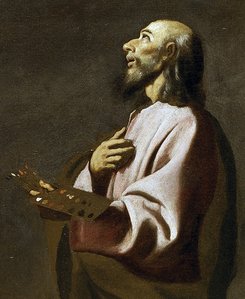
The Baroque period was an era of intense feeling. Artists sought to bridge the gap between the earthly and the divine by depicting religious and mythological subjects with profound human emotion. This was particularly evident in the works of Francisco de Zurbarán, whose paintings often possess a quiet, intense gravity. In his depiction of St Agatha, the emotional weight is felt through the subject's expression and the solemnity of the composition.
This intensity was a primary tool for the Counter-Reformation, as the Church used art to provoke a sense of awe and spiritual connection. Whether it was the suffering of Christ on the Cross or the ecstasy of a saint, the objective was to bypass the intellect and speak directly to the soul. This focus on the visceral experience of faith ensured that art was not just something to be looked at, but something to be felt.
Dynamic Movement: The Breaking of Static Composition
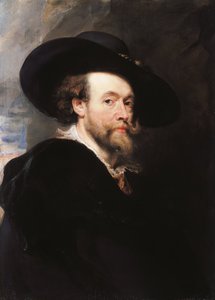
Movement is the heartbeat of Baroque art. Unlike the balanced, pyramidal compositions of the Renaissance, Baroque works often utilize diagonal lines and twisting forms to suggest action and energy. This sense of motion can be seen in the muscular vitality of Peter Paul Rubens’ figures, such as those in The Drunken Hercules. The bodies seem to push against the boundaries of the frame, creating a sense of life that is in constant flux.
This dynamism is not limited to painting; it extends into the very structure of sculpture. The concept of the figura serpentina—an ascending spiral arrangement of the body—allowed sculptors to create works that changed as the viewer moved around them. This forced a multi-angle engagement with the art, breaking the tradition of a single, fixed viewpoint and replacing it with a more immersive, theatrical experience.
Architectural Theatricality: Scale and the Manipulation of Space
Explore San Carlo ai Catinari in Rome! A 17thC Baroque church boasting stunning art & architecture in Sant'Eustachio. Discover its hidden history & beauty!
The Baroque sensibility reached its zenith in the architecture of the 17th century, where the goal was to create a sense of grandeur and theatricality. In Rome, the Church of San Carlo ai Catinari serves as a prime example, utilizing dramatic curves and the interplay of concave and convex forms to manipulate the perception of space. Architecture became a way to direct the movement of the faithful and to overwhelm the senses through scale and ornament.
This architectural drama often worked in tandem with the interior decorations. The use of elaborate stucco work and massive frescoes was designed to blur the lines between the physical building and the painted heavens. This integration of the arts—architecture, sculpture, and painting—created a unified environment that felt both monumental and alive, a characteristic that would eventually influence the design of palaces and churches across the globe, from Spain to the Americas.
The Physicality of Paint: Texture and the Mastery of Oil
To truly appreciate the Baroque, one must consider the physical substance of the medium itself. The era was defined by a sophisticated understanding of oil paint, utilizing rich, layered applications to achieve a wide range of textures. This technique, often involving visible brushwork, allowed artists to render the specific qualities of skin, fabric, and stone with a high level of realism.
The tactile nature of these works is what distinguishes a hand-painted oil from a modern reproduction. A true oil painting possesses a depth of tone and a surface texture—often referred to as impasto—that interacts with the light in the room. This physical presence is why collectors continue to seek out these works; they are not merely images, but objects with a tangible history. At AllPaintingsStore.com, we honor this tradition by providing high-quality, hand-painted reproductions that respect the original brushwork and the complex tonal ranges required to bring these historical moments to life.
Explore the dramatic world of Baroque portraiture. Discover how masters used chiaroscuro and light to evoke profound emotion during the Counter-Reformation. A definitive guide for art enthusiasts seeking to understand the power of 17th-century masterpieces.
Explore the breathtaking tension of Baroque Classicism. Discover how 17th-century masters reconciled dramatic emotion with classical order through light, shadow, and divine grandeur in this expert art history guide for true connoisseurs.
AConserje del AtelierEn línea · responde en un minuto
¡Hola! Puedo ayudarte a elegir una obra de arte, realizar el seguimiento de un pedido o resolver tus dudas sobre la garantía. ¿En qué puedo ayudarte hoy?


 The Dwarf Francisco Lezcano
 Christ on the Cross
 The Drunken Hercules
 San Carlo ai Catinari