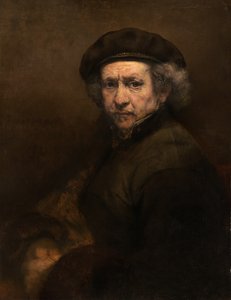
Dutch Golden Age painting is the painting of the Dutch Golden Age, a period in Dutch history roughly spanning the 17th century, during and after the later part of the Eighty Years' War (1568–1648) for Dutch independence. The new Dutch Republic was th...
To understand the seventeenth century in the Netherlands is to witness a profound departure from the grand, idealized narratives of Southern Europe. While the Italian and Flemish traditions often sought to overwhelm with celestial splendor and muscular movement, the Dutch masters turned their gaze toward the terrestrial. The era was defined by a shift in focus, moving away from the monumental religious icons of the Catholic tradition toward the intimate, the domestic, and the maritime. This was not a lack of ambition, but rather a redirection of it—a way to find the extraordinary within the ordinary.
The historical echo of this period lies in the very structure of the Dutch Republic itself. Following the break with Spanish influence and the rise of a prosperous merchant class, the art market underwent a radical transformation. The scarcity of large-scale church commissions necessitated a new kind of painting: smaller, more specialized works that could reside within the homes of the burgeoning bourgeoisie. This period saw the proliferation of distinct genres, from the quietude of landscape to the meticulous detail of still life. It was an age where the flicker of a single candle in a darkened room held as much narrative weight as the most complex historical allegory.
Sculpting with Light: The Technical Rigor of Chiaroscuro
The Composition of Shadow and Light In this black and white depiction of Rembrandt van Rijn's Descent from the Cross by Torch Light , a group of twelve figures gathers around a central cross. The scene is defined by a stark contrast between deep blac...
At the heart of this movement lies a technical discipline that transcends mere decoration. Chiaroscuro, the deliberate use of strong contrasts between light and dark, became the primary tool for creating volume and presence on a flat surface. It is a method of modeling, where light does not simply illuminate a subject but actively carelves it out of the surrounding gloom. By strategically placing bright highlights against deep, receding shadows, artists could suggest three-dimensional weight, making skin, cloth, and wood feel palpably real to the viewer.
This technical mastery finds its most extreme expression in tenebrism, where the darkness becomes a dominant force, pushing the subject into a sharp, theatrical focus. We see this tension clearly in works such as Descent from the Cross by Torch Light. Here, the light source appears to originate from within the group itself, casting sharp illumination on certain faces and limbs while leaving much of the background in total darkness. This method directs the eye with surgical precision toward the central figures, emphasizing the physical strain and emotional gravity of the scene. The shadows are not empty spaces; they are thick, velvety atmospheres that provide the necessary weight for the light to act upon.
Early Life and Apprenticeship: The Foundations of a Master Wikipedia: Rembrandt Rembrandt Harmenszoon van Rijn (; Dutch: [ˈrɛmbrɑnt ˈɦɑrmə(n)ˌsoːɱ vɑn ˈrɛin] ; 15 July 1606 – 4 October 1669), mononymously known as Rembrandt, was a Dutch Golden Age pa...
No name is more inextricably linked to this manipulation of shadow than Rembrandt van Rijn. For Rembrandt, light was never merely an external phenomenon; it was a psychological instrument. His approach to chiarosclyro went beyond simple contrast to achieve what can be described as sculpting with light. In his hands, the darkness is never truly empty. It is a textured, breathing space that presses against the illuminated flesh of his subjects, creating an intense sense of intimacy and tension.
The historical echo of Rembrandt’s technique can be found in his ability to use light to reveal the internal state of his subjects. In his portraits and biblical scenes, he allowed certain features—a furrowed brow or a glint in the eye—to emerge from the gloom, inviting a private dialogue between the viewer and the sitter. This was not the polished, idealized light of the Renaissance, but a rugged, honest illumination that embraced the imperfections of the human condition. His later works, marked by personal loss and financial hardship, reflect a move toward even more somber, introspective themes, where the shadows seem to deepen in resonance with his own lived experience.
From Altarpieces to Ateliers: The Rise of Secular Realism
The Legacy of a Golden Age Master In the vibrant, bustling heart of seventeenth-century Amsterdam, where the canals reflected the prosperity of a rising maritime power, Lodewijk van der Helst emerged as a significant voice in the Dutch Golden Age. Bo...
The transition from the grand religious narratives of the past to the secular realism of the Dutch Golden Age represents one of the most significant shifts in art history. As Calvinism discouraged religious imagery in churches, artists were forced to innovate, finding new ways to imbue everyday scenes with meaning. This led to a flourishing of genre painting—scenes of daily life that captured the dignity of the common person and the quiet beauty of domesticity.
This shift is mirrored in the career of artists like Lodewijk Van Der Helst, who emerged from the prestigious lineage of his father, Bartholomeus. While he maintained the technical precision required for high-status portraiture, his work reflects the evolving social hierarchy of the Dutch Republic. The focus moved toward capturing the wealth, status, and character of the era's prominent figures through a lens of realistic detail. This period established a new hierarchy of genres where landscapes, still lifes, and portraits became the primary vehicles for artistic expression, setting a standard for realism that would influence European art for centuries.
Material Truth: Texture, Light, and the Physical World
A Masterpiece of Shadow and Soul In the quiet, dramatic interplay of light and shadow, Rembrandt van Rijn’s “A Lady and Gentleman in Black” emerges as a profound testament to the Dutch Golden Age. Painted in 1633, this work is far more than a mere po...
The true power of Dutch Baroque painting lies in its tactile reality. The masters of this era possessed an extraordinary ability to render the physical properties of the world around them. One can observe the sheen of silk, the cold weight of metal, or the soft glow of skin with a clarity that feels startlingly immediate. This was achieved through a meticulous layering of paint and a sophisticated understanding of how light interacts with different surfaces.
This commitment to material truth is evident in the works of Johannes Vermeer, whose use of pointillé—small dots of light—created a luminous effect on textures like bread or cloth. Similarly, in the portraits of the era, the heavy weight of a dark doublet or the crispness of a linen cuff are rendered with such precision that the viewer can almost feel the fabric. This focus on texture was not merely about technical display; it was about grounding the subject in a tangible, recognizable world, ensuring that even the most spiritual or allegorical scenes possessed a sense of physical presence.
The Dutch Golden Age (Dutch: Gouden Eeuw [ˈɣʌudən ˈeːu, ˈɣʌudə ˈʔeːu]) was a period in the history of the Netherlands which roughly lasted from 1588, when the Dutch Republic was established, to 1672, when the Rampjaar occurred. During this period, th...
While the Dutch Golden Age reached its zenith in the mid-seventeenth century, its influence remains a foundational element of the Western canon. The techniques developed during this period—the mastery of chiaroscuro, the elevation of genre painting, and the pursuit of psychological depth—continue to inform how we perceive light and shadow in art today. The era proved that profound meaning does not require grand scale or mythological subjects; it can be found in the quietest corner of a room or the most weathered face.
The legacy of this period is preserved not just in museums, but in the very way we approach the concept of realism. The works of the Dutch masters remind us that art is at its most potent when it observes the world with an honest eye, finding majesty in the humble and tragedy in the triumphant. As we look back upon this era of unprecedented prosperity and artistic innovation, we find a visual language that remains as vital and resonant today as it was in the bustling streets of seventeenth-century Amsterdam.
For those seeking to bring the profound atmosphere of the Old Masters into contemporary spaces, AllPaintingsStore.com offers high-quality, hand-painted oil reproductions. Our artists specialize in capturing the precise textures and dramatic lighting characteristic of the Dutch Baroque, providing professional-grade solutions for collectors and interior designers alike.
¡Descubre a Bartholomeus van der Helst (1613-1670), un maestro retratista de la Edad de Oro holandesa, famoso por sus elegantes representaciones de la élite de Ámsterdam y sus …
Explore the dramatic mastery of the Dutch Baroque era. Discover how masters like Rembrandt used chiaroscuro to transform everyday life into timeless art. An expert guide for collectors and enthusiasts seeking to understand the profound interplay of light and shadow.
Sumérgete en el claroscuro de Rembrandt van Rijn. Explora las 25 obras maestras del Barroco que definieron una era con su luz y emoción. Encuentra reproducciones de calidad museo para tu colección o decoración. ¡Descubre todas las obras maestras en AllPaintingsStore.com!
AConserje del AtelierEn línea · responde en un minuto
¡Hola! Puedo ayudarte a elegir una obra de arte, realizar el seguimiento de un pedido o resolver tus dudas sobre la garantía. ¿En qué puedo ayudarte hoy?


 Dutch Golden Age painting
 Descent from the Cross by Torch Light
 Rembrandt van Rijn: A Life Illuminated – Exploring the Master of Light, Shadow, and Human Emotion
 Lodewijk Van Der Helst
 A Lady and Gentleman in Black
 Dutch Golden Age