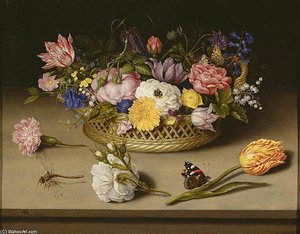
El legado de la elegancia floral: La vida de Ambrosius Bosschaert II
Bajo la luz dorada del siglo XVII neerlandés, un periodo definido por una prosperidad sin igual y un refinamiento artístico excepcional, el nombre de Ambrosius Bosschaert II emergió como un maestro de lo efímero. Nacido en 1609 en Arnemuiden, cerca de Middelburg, estaba destinado a habitar un mundo donde la delicada belleza de la naturaleza se capturaba con precisión científica y gracia poética. Como miembro de la ilustre dinastía Bosschaert, su propia existencia estaba entrelazada con la tradición del bodegón floral. No se limitaba a pintar flores; él curaba momentos de perfección botánica, asegurando que el florecimiento fugaz de un tulipán o la suave curva de una rosa perduraran mucho después de que los pétalos físicos se hubieran marchitado.
Los cimientos de su arte se forjaron dentro de los confines íntimos del taller familiar. Bajo la mirada vigilante y experta de su padre, Ambrosius Bosschaert I, y de su tío, Balthasar van der Ast, el joven artista desarrolló un dominio inigualable del detalle y la textura. Esta crianza inmersiva le permitió heredar un vocabulario especializado de forma y color; sin embargo, estaba lejos de ser un mero imitador. Si bien su formación temprana se centró en la meticulosa exactitud botánica característica de su linaje, su desarrollo posterior reveló una comprensión sofisticada de la atmósfera. Trascendió la simple documentación, infundiendo sus composiciones con una sensación de profundidad y drama que respondía a los gustos evolutivos de la Edad Dorada holandesa.
Maestría de la luz y el detalle botánico
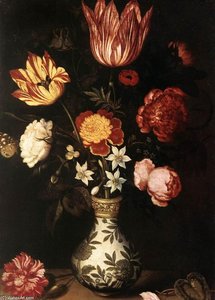
Contemplar una obra de Bosschaert II es adentrarse en un reino donde la luz y la sombra ejecutan una danza silenciosa y cautivadora. Su técnica estaba profundamente arraigada en las tradiciones manieristas transmitidas por sus mentores, pero él dotó a estas estructuras de una luminosidad única. A menudo utilizaba composiciones compactas dispuestas sobre fondos oscuros y enigmáticos, una elección que permitía que sus sujetos emergieran con una claridad sorprendente. Mediante la aplicación magistral del claroscuro, esculpía los pétalos de los lirios y las superficies aterciopeladas de los tulipanes, creando una experiencia táctil para el espectador.
Su paleta era un estudio de contrastes armoniosos. Empleaba con frecuencia tonos apagados —grises suaves, marrones terrosos y azules profundos— para proporcionar un escenario sombrío a los blancos brillantes, amarillos vibrantes y rosas delicados de sus sujetos florales. Este equilibrio cuidadoso evitaba que la riqueza de los colores abrumara la composición, guiando en su lugar el ojo a través de un viaje visual cuidadosamente orquestado. Cada pincelada cumplía un propósito, ya fuera capturar la cualidad translúcida de una gota de rocío o la sutil decadencia en el borde de una hoja, recordando al observador el tema de la vanitas: la naturaleza transitoria de la vida y la belleza.
Una huella imborrable en el bodegón neerlandés
Aunque su vida fue trágicamente breve, terminando en Utrecht en 1645, el impacto de Ambrosius Bosschaert II permanece grabado en la historia del arte europeo. Su capacidad para combinar el rigor científico de la ilustración botánica con la resonancia emocional de las bellas artes ayudó a definir el cenit del género del bodegón neerlandés. Navegó por un complejo periodo de transición artística, tendiendo un puente entre los arreglos rígidos y estructurados de la generación de su padre y los estilos más fluidos y atmosféricos que vendrían después.
La importancia histórica de su obra reside en su naturaleza dual: es tanto un registro de las maravillas botánicas de su época como una profunda meditación sobre la belleza y la mortalidad. Sus obras maestras, tales como Flores en un jarrón de cristal, continúan cautivando tanto a coleccionistas como a historiadores, sirviendo como ventanas a un mundo perdido de elegancia. A través de su mano meticulosa, las flores efímeras del siglo XVII recibieron una inmortalidad permanente y asombrosa.
Preguntas y respuestas
¿Puedo explorar las obras de Ambrosius Bosschaert II por espectro de color?
El Índice de color de Ambrosius Bosschaert II organiza las obras del artista por colores.
¿Puedo explorar las obras de Ambrosius Bosschaert II por paleta de colores?
La página Por paletas de colores agrupa las obras de Ambrosius Bosschaert II según sus paletas de colores.
¿En qué ciudad y país nació Ambrosius Bosschaert II?
Ambrosius Bosschaert II nació en Arnemuiden, Países Bajos.