Una vida forjada en el crisol de la revolución
La vida de Auguste de Forbin (1777–1841) fue un tapiz dramático tejido con los hilos de la nobleza, la tragedia y una profunda transformación política. Nacido bajo el esplendor aristocrático del Château La Roque-d’Anthéron en Provenza, los primeros años de Forbin estuvieron marcados por una extraordinaria precocidad; se dice que poseía la habilidad de dibujar incluso antes de haber dominado el arte de la escritura. Este talento innato fue nutrido a través de un vínculo vitalicio con su contemporáneo, François Marius Granet, una amistad que serviría como piedra angular para su evolución artística compartida. Sin embargo, la tranquilidad de su crianza noble se vio destrozada por los violentos temblores de la Revolución Francesa. Durante la insurrección de Lyon en 1793, Forbin sufrió la devastadora pérdida tanto de su padre, el Marqués de Pont-à-Mousson, como de su tío. Este temprano encuentro con la mortalidad y la agitación política dejó una marca indeleble en su psique, infundiendo una sensibilidad hacia la naturaleza efímero del poder y la inevitable decadencia incluso de las estructuras más grandiosas.
A pesar de las sombras proyectadas por la pérdida personal, el ascenso de Forbin dentro del mundo del arte parisino fue nada menos que meteórico. El Directorio le proporcionó la puerta definitiva al prestigio: el ingreso en el legendario estudio de Jacques-Louis David. Dentro de este santuario neoclásico, Forbin absorbió la rigurosa disciplina y la precisión formal que definían la estética dominante de la época. Colaborando estrechamente con Granet, refinó una técnica que equilibraba los ideales estructurados del Neoclasicismo con un Romanticismo emergente y conmovedor. Su viaje no fue meramente un estudio académico, sino una peregrinación física a través del corazón de la civilización clásica, notablemente durante sus viajes transformadores a Roma en 1804. En la vibrante e intelectual atmósfera de la sociedad romana, Forbin se sumergiya en la grandeza de la antigüedad, un periodo que informaría para siempre el peso espiritual e histórico de sus composiciones posteriores.
La visión romántica: Paisajes de memoria y decadencia
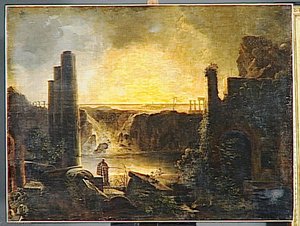
A medida que su estilo maduraba, la obra de Forbin comenzó a trascender la mera representación topográfica, moviéndose hacia una exploración profundamente emotiva de lo sublime. Sus lienzos se convirtieron en ventanas a un mundo donde la historia y la naturaleza convergían en momentos de una melancolía conmovedora. En obras maestras como “Vue de Cazzafani, dans l'île de Chypre”, Forbin utilizó una mezcla magistral de realismo y abstracción evocadora para capturar el paso implacable del tiempo. Estos paisajes rara vez eran solo escenarios; eran encuentros viscerales con los fantasmas de eras pasadas, donde las ruinas desmoronadas servían como metáforas de la fragilidad de la ambición humana. Su capacidad para representar la textura de la decadencia —la forma en que la luz cae sobre la piedra erosionada o cómo las sombras se aferran a los muros antiguos— le permitió comunicar un sentido de pérdida que resonó profundamente con la fascinación del movimiento romántico por lo efímero.
Esta preocupación por la narrativa histórica y la grandeza espiritual es quizás más evidente en sus representaciones del Levante y la Tierra Santa. En obras como “Vue de Jérusalem, prise de la vallée de Josaphat”, pintada en 1825, Forbin construyó cuadros meticulosamente elaborados que buscaban capturar el peso sagrado de la ciudad antigua. A través de un uso sofisticado de la luz y la composición, invitaba a los espectadores a contemplar la intersección entre lo divino y lo terrenal. Ya fuera pintando las ruinas bañadas por el sol de Ascalón o los tranquilos claustros de Aix-en-Provence, la pincelada de Forbin permaneció profundamente informada por su formación temprana bajo David, pero estaba infundida con una nueva y agitada energía que buscaba encontrar la belleza en los restos de la historia.
El legado de un conservador y anticuario
Más allá del lienzo, Auguste de Forbin ocupó una posición de inmensa importancia cultural dentro del Estado francés. Su pericia como anticuario y su profundo conocimiento de la estética clásica lo llevaron a suceder al gran Vivant Denon como conservador del Musée du Louvre y otros museos franceses vitales. En esta capacidad, no era simplemente un guardión de objetos, sino un protector del patrimonio nacional, navegando las complejas responsabilidades de gestionar una de las colecciones más significativas del mundo durante un periodo de intensa transición política. Su carrera, que entrelazó el servicio militar, las misiones diplomáticas y la administración de museos, refleja la naturaleza multifacética de un intelectual atrapado entre las demandas pragmáticas de la era napoleónica y las búsquedas idealistas de la época romántica.
La importancia histórica de Forbin reside en su capacidad para tender puentes entre mundos dispares:
- Síntesis estilística: Logró fusionar con éxito la precisión lineal y disciplinada del Neoclasicismo davidiano con la profundidad emotiva y atmosférica del Romanticismo.
- Gestión cultural: Como conservador, desempeñó un papel fundamental en la formación del compromiso del público con el arte clásico e histórico dentro del Louvre.
- Profundidad temática: Su obra sigue siendo una profunda meditación sobre los temas de la memoria, el paso del tiempo y el poder perdurable de las ruinas.
Preguntas y respuestas
¿Dónde y cuándo nació Auguste de Forbin?
Auguste de Forbin nació en Laroche-d'Anthéron en 1777.
¿Dónde se pueden explorar las obras de Auguste de Forbin clasificadas por tema?
La página Índice temático organiza las obras de Auguste de Forbin por temática.
¿Dónde puedo ver las obras de Auguste de Forbin en orden cronológico?
Las obras de Auguste de Forbin pueden verse en orden cronológico en la página de Cronología de obras del artista.