El Ter Borch Moderno: El Mundo Luminoso de Florent Willems
En el gran tapiz del arte europeo del siglo XIX, donde muchos pintores buscaban romper con la tradición ante el advenimiento del impresionismo y el realismo, Florent Joseph Marie Willems eligió un camino diferente y más nostálgico. Nacido en Lieja en 1823, Willems no se limitó a observar la historia; le devolvió la vida. A menudo referido con el evocador apodo de “el Ter Borch moderno”, este maestro belga poseía una capacidad asombrosa para trascender su propia época, transportando a los espectadores a la edad de oro del barroco holandés y flamenco. Su obra sirve como un puente a través de los siglos, recreando meticulosamente las atmósferos íntimas y bañadas por la luz de maestros como Gerard Ter Borch y Gabriel Metsu, con una precisión que se siente tanto atemporal como profundamente personal.
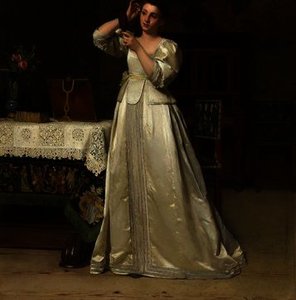
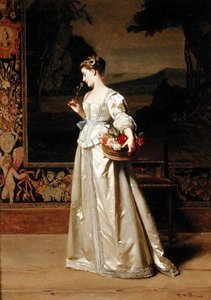
La trayectoria artística de Willems estuvo profundamente arraigada en la disciplina de la restauración y el estudio de los Grandes Maestros. Si bien su formación formal tuvo lugar en la Academia de Malinas, gran parte de su verdadera educación provino del trabajo silencioso y minucioso de copiar y restaurar lienzos antiguos. Este contacto íntimo con las texturas del pasado le permitió dominar el sutil juego de luces y sombras —el claroscuro— que define la estética barroca. Sus primeros años en Bruselas, trabajando como restaurador de arte para el marchante Héris, le proporcionaron un laboratorio técnico único, donde aprendió a representar el brillo pesado del satén, la delicada translucidez del encaje y el peso rugoso del terciopelo con un realismo tan sorprendente que sus contemporáneos apenas podían creer que estaban contemplando obras contemporáneas.
Una Vida de Elegancia y Reconocimiento
El ascenso de Willems estuvo marcado por una serie de encuentros y triunfos prestigiosos que consolidaron su reputación en toda Europa. Su talento fue reconocido de manera notablemente temprana; con solo dieciocho años, captó la atención de Hamilton Seymour, el embajador inglés ante el rey belga, quien le encargó un gran retrato familiar. Este éxito temprano allanó el camino para su debut en el Salón de Bruselas en 1842, donde obras como “Una fiesta musical” y “Un interior de una sala de guardia del siglo XVII” señalaron de inmediato la llegada de un maestro de la pintura de género. El propio rey belga Leopoldo I se convirtió en un admirador, adquiriendo su obra y situando a Willems dentro de los más altos círculos del mecenazgo artístico.
A medida que su carrera progresaba, Willems se trasladó a París, una ciudad que se convertiría en el escenario de su mayor reconocimiento internacional. Durante el Segundo Imperio Francés, florecieron sus evocadoras escenas de intimidad doméstica. Su capacidad para capturar los momentos tranquilos y dignos de la vida —una mujer contemplándose en un espejo, una carta siendo leída bajo una luz suave o una escena doméstica serena— resonó profundamente en la élite parisina. Este período de su vida no solo estuvo marcado por el crecimiento artístico, sino también por honores significativos, incluyendo el rango de Caballero de la Legión de Honor francesa y la prestigiosa Cruz de Caballero en la Orden de Leopoldo de Bélgica. Su estudio en París sirvió incluso como un centro creativo, acogiendo a otros luminarios belgas como Alfred Stevens, quien fue influenciado por el magistral enfoque de Willems al representar a las mujeres en entornos de interiores.
El Legado del Renacimiento Barroco
La importancia histórica de Florent Willems reside en su papel como guardián de la excelencia clásica. Aunque no buscó revolucionar la temática de su tiempo, su virtuosismo técnico aseguró que los valores estéticos del siglo XVII permanecieran vibrantes y relevantes en el siglo XIX. Sus pinturas son más que meras imitaciones; son reinterpretaciones con alma que celebran la belleza perdurable de la luz, la textura y la conexión humana. A través de su pincel, los mundos desaparecidos de los maestros holandeses y flamencos fueron resucitados, ofreciendo un sentido de continuidad y gracia a una era de cambios rápidos.
Hoy en día, las obras de Willems continúan cautivando tanto a coleccionistas como a historiadores, preservadas en museos y galerías de todo el mundo como testimonio de su destreza. Su legado se define por varios pilares artísticos fundamentales:
- Maestría Técnica: Una capacidad inigualable para representar diversos materiales, desde el lustre de la seda hasta el acabado mate de la madera envejecida.
- Devoción Estilística: Un compromiso de por vida con los principios estéticos del barroco holandés y flamenco, específicamente con las obras de Ter Borch y Metsu.
- Realismo Atmosférico: La creación de espacios íntimos y psicológicamente resonantes mediante el uso sofisticado de la luz y la sombra.
- Continuidad Histórica: Actuar como un vínculo vital entre las tradiciones clásicas del siglo XVII y los refinados gustos de los salones europeos del siglo XIX.
Preguntas y respuestas
¿Con qué otros nombres se conoce a Florent Joseph Marie Willems?
Florent Joseph Marie Willems también es conocido por los nombres Florent Joseph Marie Willems.
¿Qué obras de Florent Joseph Marie Willems son las más vistas?
Las estadísticas sobre las obras de Florent Joseph Marie Willems están disponibles en la página de Estadísticas del artista.
¿Cómo puedo encontrar obras de Florent Joseph Marie Willems sobre un tema específico?
Para encontrar obras de Florent Joseph Marie Willems sobre un tema específico, utilice la página de Por palabras clave del artista, que agrupa las obras por palabras clave.