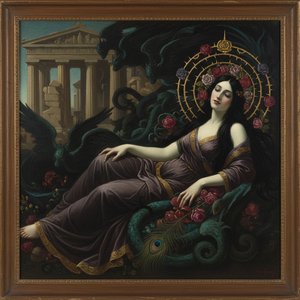
Un maestro del florecimiento barroco: la vida y el legado de Franz Werner von Tamm
En el grandioso y teatral tapiz de la era barroca, pocos artistas capturaron la delicada tensión entre la belleza fugaz y la grandeza perdurable con tanta maestría como Franz Werner von Tamm. Nacido en la industriosa ciudad de Hamburgo en 1658, la trayectoria de von Tamm fue una de profundo movimiento, una odisea nómada que le permitió entrelazar las meticulosas tradiciones del norte de Europa con las sensibilidades dramáticas y bañadas por el sol de Italia y el esplendor imperial de Austria. Su vida sirve como una crónica vibrante de una época en la que las fronteras artísticas eran fluidas, y el intercambio de ideas a través de las naciones dio origen a algunas de las imágenes más exquisitas de la historia del arte occidental.
Los primeros años de von Tamm en Alemania le proporcionaron una base riguro de formación, al estudiar bajo las capaces manos de Dietrich von Sosten y Johann Joachim Pfeiffer. Sin embargo, fue su migración a Roma en 1685 lo que verdaderamente encendería su espíritu creativo. Dentro de la ciudad eterna, se vio inmerso en un círculo cosmopolita de artistas flamencos, notablemente bajo la guía del legendario Carlo Maratta. Este periodo de aprendizaje romano fue transformador; le permitió infundir su formación septentrional con la elegancia clásica y la luz dramática características del barroco italiano. Fue durante este tiempo cuando se unió a los prestigiosos Bentvueghels —la sociedad de artistas holandeses y flamencos en Roma—, adoptando el evocador apodo de "Dapper", un nombre que quizás aludía a la precisión y vitalidad presentes en sus estudios botánicos.
El arte del bodegón y la caza
Contemplar un lienzo de von Tamm es entrar en un mundo donde cada pétalo, cada gota de rocío y cada sombra poseen un peso significativo. El artista se hizo célebre por su capacidad para elevar el bodegón de una mera decoración a una profunda meditación sobre la naturaleza. Influenciado fuertemente por el maestro flamenco David de Coninck, von Tamm desarrolló un estilo que mezclaba el realismo meticuloso con una cierta opulencia barroca. Sus composiciones a menudo presentaban exuberantes arreglos florales y frutas abundantes, situados en ocasiones ante el fondo de jarrones antiguos o relieves clásicos, creando un diálogo entre la vida efímera de una flor y la permanencia de la piedra.
Más allá de la quietud de sus estudios florales, von Tamm poseía una versatilidad notable, destacando en el género más vigoroso de las escenas de caza. Inspirándose en las obras de Frans Snyders y Jan Fyt, capturó la energía pura de la persecución y el esplendor anatómico de los animales con una técnica que era a la vez robusta y refinada. Su paleta, caracterizada frecuentemente por colores algo oscuros y pesados junto a una aplicación de pintura espesa y expresiva, otorgaba a sus piezas de caza un sentido de peso y drama que recordaba a Giovan Battista Ruoppolo. Esta capacidad para pivotar desde la delicada intimidad de una sola flor hasta la acción trepidante de una cacería en el bosque consolidó su reputación como un talento verdaderamente polifacético.
Esplendor imperial y años finales en Viena
La trayectoria de la carrera de von Tamm alcanzó su cenit cuando se trasladó hacia el corazón del Sacro Imperio Romano Germánico. Tras un periodo en Passau, llegó a Viena, donde sus talentos fueron reconocidos por los más altos escalafones de la sociedad. Su nombramiento como pintor de cámara de la corte imperial no fue solo un hito profesional, sino un testimonio de su capacidad para satisfacer los sofisticados gustación de los Habsburgo. En la capital vienesa, su obra evolucionó una vez más, moviéndose hacia un estilo que evocaba la luminosa y refinada elegancia de Jan van Huysum.
Al establecerse en su papel dentro del círculo imperial, la influencia de von Tamm continuó expandiéndose por la comunidad artística. No fue solo un creador, sino también un educador que transmitió su conocimiento a la siguiente generación, incluyendo a su alumno Pietro Navarra. Su legado se define por esta integración fluida de diversas tradiciones europeas:
- La base alemana: Un enfoque disciplinado del detalle y la precisión botánica.
- La influencia romana: La infusión de la composición clásica y el dramático claroscuro.
- El espíritu flamenco: Un aprecio por la abundancia, la textura y la energía de la naturaleza.
- La culminación vienesa: Una elegancia cortesana y refinada que definió la estética del barroco tardío.
Preguntas y respuestas
¿Dónde se pueden explorar las obras de Franz Werner Von Tamm clasificadas por tema?
El Índice temático de Franz Werner Von Tamm es una página que organiza las obras del artista según sus temas.
¿Qué obras de Franz Werner Von Tamm son las más vistas?
Las estadísticas sobre las obras de Franz Werner Von Tamm están disponibles en la página de Estadísticas del artista.
¿Dónde puedo ver las obras de Franz Werner Von Tamm organizadas por atmósfera?
La página de Rincón de emociones del artista muestra las obras de Franz Werner Von Tamm organizadas según su atmósfera.