Giovanni Paolo Panini: Architect of Roman Dreams
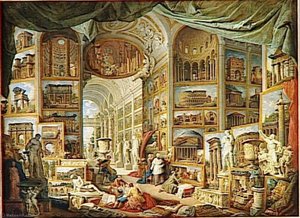
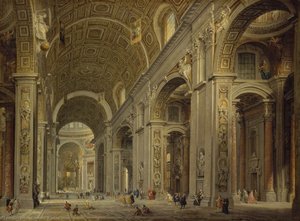
Giovanni Paolo Panini (1691–1765) stands as one of the most distinctive figures in 18th-century Italian art, a painter whose singular vision—particularly his mastery of *vedutismo*—transformed the depiction of Rome into an immersive experience of architectural fantasy. Unlike many artists of his era who sought to faithfully reproduce the city’s grandeur, Panini embraced a daring approach that blended observation with imagination, creating panoramas imbued with a palpable sense of theatrical drama and timeless beauty. His legacy continues to inspire artists today, cementing his place as a pivotal innovator in landscape painting and architectural representation.Early Training and Influences: Shaping a Vision
Panini’s artistic education began in Piacenza, where he studied under Giuseppe Natali and Andrea Galluzzi—artists who instilled in him the foundational principles of Baroque composition and disegno (drawing). Crucially, his formative years coincided with an encounter with Francesco Galli-Bibiena, whose theatrical designs profoundly impacted Panini's aesthetic sensibilities. Galli-Bibiena’s mastery of perspective and illusionistic space served as a guiding force, shaping Panini’s technique and fostering his fascination with creating convincing representations of depth and atmosphere—a characteristic that would define his distinctive style. This early exposure to stagecraft foreshadowed Panini’s later preoccupation with architectural fantasies, demonstrating the interconnectedness of artistic influences across disciplines.The Rise of Vedutismo: Reimagining Rome's Ruins
Panini ascended to fame as a decorator of palaces—a profession that allowed him to hone his skills in fresco painting and develop an unparalleled understanding of architectural design. His commissions included opulent interiors for noble residences, showcasing his meticulous attention to detail and his ability to evoke grandeur through skillful use of color and texture. However, Panini’s artistic breakthrough arrived with his embrace of *vedutismo*, a genre that would propel him to international renown. Rejecting the conventions of topographical painting—which aimed for precise accuracy—Panini sought instead to capture the spirit of Rome by reconstructing its ruins in fantastical landscapes. He skillfully combined elements from different structures into single compositions, creating scenes that celebrated Rome’s architectural heritage while simultaneously acknowledging its inevitable decay. This innovative technique—often referred to as *capriccio*—became Panini's signature style and distinguishes him from his contemporaries.A Master of Perspective: The Panini Projection
Panini’s groundbreaking contribution to artistic technique was the development of what is now known as “the Panini projection.” Unlike earlier methods that relied on mathematical calculations, Panini devised a system for representing wide-angle views with remarkable accuracy—a feat achieved through careful observation and intuitive understanding. This projection allowed artists to convincingly depict panoramic landscapes, capturing the grandeur of Rome’s vistas with unprecedented realism. It became an indispensable tool for architectural renderings and landscape painting, influencing generations of artists who followed Panini's lead. His meticulous attention to perspective exemplifies his dedication to mastering the visual arts and underscores his role as a pioneer in artistic innovation.Legacy and Influence: An Enduring Vision
Panini’s influence extended far beyond his own lifetime—he taught at the Accademia di San Luca and the Académie de France in Rome, shaping the artistic sensibilities of aspiring painters and architects alike. His style resonated with artists like Hubert Robert and Antonio Joli, inspiring them to explore similar approaches to landscape painting and architectural representation. Today, Panini’s paintings continue to captivate audiences worldwide—particularly his monumental views of Rome, which offer a glimpse into the aesthetic ideals of the Enlightenment era. Examining his masterful use of perspective, his imaginative compositions, and his evocative depictions of ruins allows us to appreciate not only his technical skill but also his profound understanding of how art can convey emotion and capture the essence of place—a legacy that secures Panini’s enduring position as one of Italy's greatest artistic visionaries.Preguntas y respuestas
¿Puedo explorar las obras de Giovanni Paolo Panini por tema?
El Índice temático de Giovanni Paolo Panini es una página que organiza las obras del artista según sus temas.
¿De dónde es Giovanni Paolo Panini?
Giovanni Paolo Panini nació en Italia.
¿Existe una cronología de las obras de Giovanni Paolo Panini?
Las obras de Giovanni Paolo Panini pueden verse en orden cronológico en la página de Cronología de obras del artista.