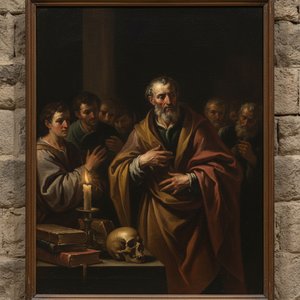
El Arquitecto del Esplendor Real
Isidro González Velázquez se erige como una figura fundamental en el gran tapiz de la arquitectura española, encarnando el legado perdurable de una de las dinastías artísticas más ilustres de España. Nacido en Madrid en 1765, su propia existencia estuvo impregnada de la búsqueda de la excelencia estética. Creció en un linaje donde el arte no era simplemente una profesión, sino una vocación familiar; su padre, Antonio González Veláez, fue un célebre pintor al servicio de Carlos III, mientras que su abuelo Pablo y sus tíos Luis y Alejandro fueron igualmente renombrados escultores y pintores. Este entorno, rebosante de los ecos de la maestría creativa, moldeó profundamente la trayectoria de Isidro, infundiéndole una sensibilidad única que logró tender un puente entre la precisión estructural de un arquitecto y el delicado dibujo de un grabador.
Su viaje formal hacia el corazón del Neoclasicismo español comenzó en la prestigiosa Real Academia de Bellas Artes de San Fernando en Madrid. Fue en estos salones sagrados donde estudió bajo la guía de Mariano Salvador Domínguez Berruguete, un mentor que le ayudó a navegar la transición desde la grandeza persistente de la ornamentación barroca hacia la elegancia disciplinada del diseño neoclásico. Este periodo de rigurosa formación le permitió dominar las complejidades técnicas del dibujo arquitectónico, manteniendo siempre una mirada atenta a los floreos dramáticos que definían su época. Su talento para las líneas finas y las composiciones detalladas —un don heredado de su padre— aseguró que sus visiones arquitectónicas fueran tanto una narrativa visual como un ejercicio de integridad estructural.
Un Legado de Mecenazgo Real
El ascenso de González Velázquez a través de las jerarquías académicas y reales fue nada menos que meteórico. Su dedicación al oficio le permitió asegurar un prestigioso puesto como Director Adjunto de Pintura en 1804, alcanzando finalmente la cúspide de la influencia académica cuando fue nombrado Director de la Academia en 1828. Este papel no era meramente administrativo; era una posición de profunda gestión cultural. Como asesor del rey Fernando VII, Isidro se convirtió en una figura central en la supervisión de encargos reales que definirían la identidad visual de la monarquía española durante un periodo de significativa transición política.
Su obra a menudo trascendía los límites de la mera construcción, ya que participó frecuentemente en la intrincada decoración de espacios reales. Sus contribuciones ayudaron a consolidar su reputación como un maestro artesano capaz de armonizar proyectos arquitectónicos de gran escala con los detalles más finos de la ornamentación interior. A través de su liderazgo en la Academia, moldeó activamente las sensibilidades estéticas de principios del siglo XIX, abogando por una coherencia estilística que mantuviera los más altos estándares de excelencia española. La obra de su vida sirve como un puente entre las opulentas tradiciones del Barroco tardío y el refinamiento estructurado del movimiento Neoclásico.
Contribuciones Artísticas y Significado Histórico
La importancia histórica de Isidro González Velázquez reside en su capacidad para mantener la continuidad de la tradición artística española durante una era de cambios profundos. Mientras gran parte de Europa lidiaba con los cambios sísmicos provocados por las Guerras Napoleónicas, Isidro permaneció como un guardión inquebrantable de los estándares de la Academia. Su trabajo refleja un compromiso profundo con los siguientes elementos:
- Síntesis Arquitectónica: La integración fluida del orden neoclásico con la riqueza decorativa del estilo barroco tardío.
- Liderazgo Académico: Su papel transformador como Director de la Real Academia de Bellas Artes de San Fernando, donde formó a las futuras generaciones de artistas españoles.
- Servicio Real: La ejecución de encargos monumentales que decoraron las residencias reales y consolidaron el prestigio de la Corona española.
- Maestría Técnica: Una capacidad excepcional para combinar las exigencias estructurales de la arquitectura con el potencial expresivo del grabado y el dibujo.
Aunque su vida concluyó en Madrid en 1831, los ecos de su visión arquitectónica permanecen grabados en el tejido histórico de España. Fue más que un arquitecto; fue un custodio de la belleza, asegurando que la grandeza de la Edad de Oro española evolucionara con gracia hacia la era moderna. Su nombre permanece inextricablemente ligado al alma misma del patrimonio artístico de Madrid, representando un periodo en el que el arte y la arquitectura se unieron para crear un monumento perdurable al esplendor real.
Preguntas y respuestas
¿Cómo puedo encontrar obras de Isidro González Velázquez sobre un tema específico?
Para encontrar obras de Isidro González Velázquez sobre un tema específico, utilice la página de Por palabras clave del artista, que agrupa las obras por palabras clave.
¿Qué colores utilizaba con más frecuencia Isidro González Velázquez?
El perfil cromático de la obra de Isidro González Velázquez se puede consultar en su página de ADN de la Paleta.
¿Puedo explorar las obras de Isidro González Velázquez por estado de ánimo?
Puedes explorar las obras de Isidro González Velázquez por estado de ánimo en su página Rincón de emociones, donde las piezas se organizan según la emoción que transmiten.