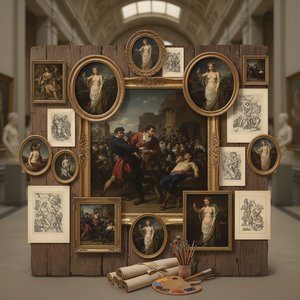
Jean Baptiste de Champaigne (1631 – 1681): Un puente entre Flandes y París
Jean Baptiste de Champaigne se erige como una figura fundamental en el panorama artístico del siglo XVII, encarnando el espíritu ferviente de la pintura barroca mientras navegaba simultáneamente por las corrientes intelectuales que fluían desde Amberes hacia París. Nacido en Bruselas en 1631, surgió de un linaje profundamente arraigado en la tradición artística; su tío, Philippe de Champaigne, se había consolidado como un pintor célebre en París e influyó profundamente en los años formativos de Jean Baptiste. Este vínculo cimentó la trayectoria de Champaigne hacia la excelencia artística parisina, moldeando no solo su técnica, sino también su visión del mundo.- Primeros años y formación: Jean Baptiste recibió su educación artística inicial bajo la tutela de Philippe, absorbiendo las innovaciones estilísticas del manierismo y abrazando la grandeza dramática característica del movimiento barroco.
- La influencia florentina: Reconociendo la importancia de dominar los ideales clásicos, Champaigne emprendió un viaje transformador a Italia en 1658, dedicándose a copiar meticulosamente obras maestras de Rafael y Tiziano, experiencias que infundieron en él un compromiso inquebrantable con la precisión anatómica y el equilibrio compositivo.
Maestría religiosa: El martirio de San Lorenzo y más allá
La producción artística de Champaigne está definida predominantemente por su devoción a la iconografía religiosa, reflejando la piedad imperante en su época. Su representación del “Martirio de San Lorenzo”, conservada en el Musée Magnin de Dijon, ejemplifica su dominio magistral del claroscuro —esos contrastes dramáticos entre luces y sombras—, transmitiendo con destreza tanto el sufrimiento físico como la trascendencia espiritual. El detalle meticuloso de la pintura y su retrato emotivo subrayan la capacidad de Champaigne para infundir las narrativas bíblicas con una emoción humana palpable.- Destreza técnica: La técnica de Champaigne hacía gala de una profunda comprensión de la mezcla de pigmentos, la pincelada y la perspectiva, sellos distintivos de la pintura barroca flamenca.
- Simbolismo y emoción: Sus composiciones empleaban con frecuencia gestos simbólicos y metáforas visuales para comunicar conceptos teológicos, demostrando su sensibilidad hacia la dimensión espiritual del arte.
Reconocimiento académico y legado parisino
Tras su regreso de Italia, Champaigne obtuvo una posición prestigiosa en la Académie Royale de peinture et de sculpture en París en 1671, una institución que sirvió como crisol para la innovación artística y el debate intelectual. Sorprendentemente, sobrevivió más tiempo que los propios hijos de Philippe, fomentando un vínculo familiar similar al de una mentoría y asegurando que la crianza de su hijo reflejara la propia educación artística privilegiada de Champaigne. Este entorno enriquecedor contribuyó, sin duda, a la perdurable aportación de Jean Baptiste a la pintura barroca francesa.- Labor docente: Como maestro, Champaigne inculcó en sus alumnos los principios de la observación, el disegno (dibujo) y el color expresivo, moldeando la sensibilidad artística de las generaciones futuras.
- Influencia en la escena artística parisina: Su presencia en la Academia consolidó la reputación de Champaigne como un artista y educador destacado, reforzando la posición de París como el principal centro de excelencia artística en Europa.
Obras notables y estilo artístico
Más allá del “Martirio de San Lorenzo”, Champaigne produjo varios retratos —notablemente el “Retrato de un hombre, posiblemente Philippe de la Trémoïlle, conde de Olonne”— que demuestran su habilidad para capturar la complejidad psicológica y la grandeza aristocrática de sus sujetos. Su estilo fusionaba el realismo flamenco con la elegancia manierista italiana, dando como resultado pinturas caracterizadas por una factura refinada, paletas de colores luminosas y un compromiso inquebrantable con la precisión anatómica. El legado de Jean Baptiste de Champaigne continúa inspirando a los artistas de hoy, asegurando su lugar como piedra angular de la historia del arte barroco.Exploración adicional
Para profundizar en el viaje artístico y las contribuciones de Jean Baptiste de Champaigne, consulte los recursos disponibles en Wikipedia y The National Gallery of Art.Preguntas y respuestas
¿Dónde puedo explorar las obras de Jean Baptiste De Champaigne organizadas por color?
El Índice de color de Jean Baptiste De Champaigne organiza las obras del artista por colores.
¿Cómo se divide la trayectoria de Jean Baptiste De Champaigne en periodos?
La trayectoria de Jean Baptiste De Champaigne se despliega etapa por etapa en la página Trayectoria: una línea de tiempo horizontal de sus obras, agrupadas en capítulos según sus periodos creativos.
¿Cómo puedo seguir la obra de Jean Baptiste De Champaigne año tras año?
Puedes consultar la cronología de las obras de Jean Baptiste De Champaigne en su página de Cronología de obras, donde las piezas aparecen ordenadas por fecha de creación.