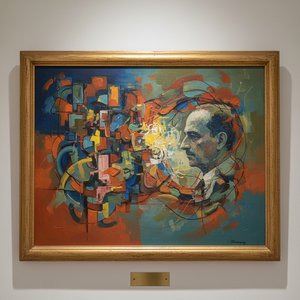
Una vida entre continentes: El alma transatlántica de José Aguiar García
La vida de José Aguiar García fue un tapiz tejido con los hilos vibrantes de dos mundos, abarcando desde los paisajes bañados por el sol del Caribe hasta las legendarias tradiciones de España. Nacido en 1895 en el exuberante entorno de Santa Clara, Cuba, sus primeros años estuvieron marcados por el movimiento y las profundas raíces culturales de sus padres emigrantes. Aunque su nacimiento fue cubano, su corazón se ancló en Agulo, La Gomera, donde su familia se estableció poco después de su llegada. Esta identidad dual —una mezcla de vitalidad cubana y herencia ibérica— se convertiría en la protagonista silenciosa de su viaje artístico, dotando a su obra de un sentido único del lugar y una conexión profunda con la condición humana.
El camino de Aguiar hacia la grandeza no se pavimentó inicialmente con pinceles y paletas, sino con el riguroso estudio del derecho. Al trasladarse a Madrid en 1914, cursó estudios jurídicos durante dos años; sin embargo, el canto de sirena de las artes resultó irresistible. Impulsado por un hambre creativa innata, abandonó sus ambiciones académicas para matricularse en la prestigiosa Escuela de Bellas Artes de San Fernando en 1916. Fue aquí donde encontró al influyente maestro José Pinazo Martínez, un docente cuyo compromiso con el realismo y la pincelada expresiva dejaría una huella indeleble en la técnica de Aguiar. Bajo esta tutela, el joven artista comenzó a refinar un estilo que equilibraba la observación meticulosa con una creciente profundidad emocional.
La maestría del color y el espíritu regionalista
A medida que su carrera maduraba, Aguiar desarrolló un lenguaje visual que era, a la vez, monumental e íntimo. Su obra se entrelazó profundamente con el movimiento regionalista, un periodo en el que dirigió su mirada hacia los paisajes rurales y las costumbres tradicionales de las Islas Canarias. No se limitaba a pintar escenarios; buscaba capturar la esencia misma de las personas que habitaban estas tierras. Sus lienzos de esta época se caracterizan por un uso exuberante del color y una sensación de luz que se percibe casi táctil, reflejando un mundo lleno de vida, lucha y dignidad.
Su evolución técnica se enriqueció aún más con la exposición internacional, incluyendo un periodo transformador en Florencia, Italia, gracias a una beca del Cabildo Insular de La Gomera. Este encuentro con los maestros del Renacimiento le permitió integrar estructuras formales clásicas en sus tendencias más modernas y expresivas. El resultado fue una fascinante tensión estilística: un realismo monumental que podía sentirse tanto antiguo como inmediato. Ya fuera representando un retrato sereno o una grandiosa escena religiosa, la mano de Aguiar se movía con una confianza que tendía un puente entre lo tradicional y lo contemporáneo.
Un legado escrito en murales y luz
Quizás el testimonio más perdurable del genio de Aguiar reside en sus monumentales encargos muralísticos. Verdadero maestro de la narrativa a gran escala, utilizó los muros como lienzos para relatos alegóricos y heroicos. Sus murales, repartidos por las Islas Canarias y la España peninsular, a menudo fusionaban el costumbrismo —la representación de la vida cotidiana— con profundos temas religiosos e históricos. En estas obras, la figura humana se eleva a una escala heroica, plasmada con una paleta vibrante que insufla vida a la piedra y al yeso.
Más allá de sus obras públicas, las contribuciones de Aguiar al mundo del arte estuvieron marcadas por importantes roles institucionales y una influencia duradera:
- Liderazgo académico: Su etapa como profesor de dibujo en Sevilla le permitió transmitir las tradiciones del expresionismo español a una nueva generación.
- Reconocimiento institucional: Su participación en la Asociación Española de Pintores y Escultores (AEPE) consolidó su posición dentro de la jerarquía artística española.
- Presencia perdurable: Hoy en día, sus obras maestras residen en colecciones prestigiosas, incluyendo el Museo de Arte Moderno de Barcelona y el Centro de Arte Reina Sofía, asegurando que su visión de un mundo luminoso y centrado en lo humano continúe inspirándonos.
En última instancia, la importancia de José Aguiar García reside en su capacidad para sintetizar influencias dispares en una voz única y poderosa. Permanece como un puente entre los ecos coloniales de Cuba y el peso clásico de España; un artista que encontró lo universal dentro de lo regional, y lo eterno dentro de la luz fugaz de las islas.
Preguntas y respuestas
¿Puedo estudiar el uso del color de José Aguiar García en toda su obra?
El ADN de la Paleta de José Aguiar García presenta el perfil cromático de su obra.
¿A qué periodo histórico pertenecía José Aguiar García?
José Aguiar García trabajó durante el periodo Edad Moderna. Este periodo sitúa la actividad del artista en su contexto histórico.
¿Existe un recorrido virtual en 3D de las obras de José Aguiar García?
La Galería 3D de José Aguiar García es una página que muestra las obras del artista en una galería virtual tridimensional.