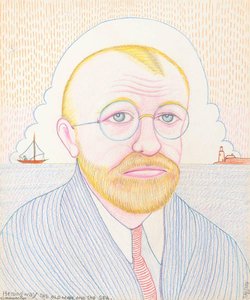
Jack Savitsky: A Voice from the Coal Country
Born in New Philadelphia, Pennsylvania, in 1910, Jack Savitsky’s life was inextricably linked to the harsh realities of the American coal mining industry. His early years were spent immersed in this world, following in his father's footsteps and beginning work in the mines at just twelve years old. This formative experience—thirty-five years spent toiling underground – profoundly shaped not only his physical health but also the very essence of his art. The debilitating effects of black lung disease and emphysema ultimately forced him into early retirement, a transition that unexpectedly unlocked a remarkable artistic talent.
Savitsky’s journey as an artist began serendipitously, suggested by his son, Jack Savitt. Unlike many self-taught artists who emerge from obscurity, Savitsky was already a man of considerable experience – a seasoned miner, a father, and a husband – bringing a unique perspective to his work. He eschewed formal training, relying instead on direct observation and the vivid memories of his life in the Pennsylvania coalfields. His subjects weren’t grand landscapes or historical events; they were the everyday lives of miners, their families, and the simple beauty found within the rural villages surrounding the mines.
The Palette of a Miner
Savitsky's distinctive style is immediately recognizable – bold, confident strokes rendered in vibrant, often unmixed colors. He primarily worked on canvas board and Masonite, utilizing oils and acrylics to create scenes brimming with energy and emotion. His technique involved layering thick paint, creating a textured surface that seemed to pulsate with life. The heavy lines, reminiscent of woodcut prints, provided a strong structural framework for his compositions, while the broad washes of color conveyed a sense of immediacy and spontaneity.
Interestingly, Savitsky’s health deteriorated as he continued to paint, exacerbating his existing respiratory ailments. Recognizing the detrimental effects of paint fumes, he shifted his medium to pencils, prismacolor pastels, and markers – a testament to his resilience and determination to continue creating. This transition didn't diminish the intensity or emotional power of his work; rather, it offered a new avenue for expressing the experiences that defined his life.
Themes of Rural Life and Social Commentary
Savitsky’s paintings are not simply depictions of rural Pennsylvania; they are poignant narratives about hardship, resilience, and community. He captured the dignity of miners facing grueling labor, the warmth of family life amidst challenging circumstances, and the quiet beauty of the surrounding landscape. His work subtly addresses social issues prevalent in the coal mining regions – poverty, disease, and the impact of industrialization on rural communities.
Beyond the immediate subject matter, Savitsky’s art possesses a remarkable spiritual quality. He frequently depicted religious scenes—Adam and Eve, the Peaceable Kingdom—infused with a deeply personal faith rooted in his experiences. These images, rendered in his signature style, offer a glimpse into his worldview and his belief in redemption and hope.
Recognition and Legacy
Jack Savitsky’s work gained recognition throughout his lifetime, culminating in inclusion in prestigious collections such as the Smithsonian American Art Museum, the Museum of American Folk Art, and the Abby Aldridge Rockefeller Collection. His art has been exhibited nationally and internationally, solidifying his place among America's most significant self-taught artists. His legacy extends beyond the canvases themselves; he represents a powerful voice from the coal country – a testament to the enduring spirit of those who shaped the American landscape.
Savitsky’s paintings continue to resonate with viewers today, offering a rare and intimate portrait of a bygone era and a profound reflection on the human condition. His work stands as a vibrant reminder that art can emerge from unexpected places and that even in the face of adversity, beauty and meaning can be found.