A Master of Romantic Realism: The Life and Legacy of José Benlliure y Gil
In the grand tapestry of Spanish art history, few threads shine with as much dramatic brilliance as those woven by José Benlliure y Gil. Born in the sun-drenched landscapes of Valencia in 1858, Benlliure emerged as a pivotal figure who bridged the gap between the sweeping emotionality of Romanticism and the unflinching, meticulous detail of Realism. His life was a journey of profound artistic evolution, moving from the academic rigor of Madrid to the vibrant, classical atmosphere of Rome, where he would eventually cement his reputation as a master of historical narrative and atmospheric storytelling.
The foundations of Benlliure’s genius were laid under the watchful eye of Francisco Domingo Marqués, a mentorship that provided him with the technical discipline required for large-scale monumental works. His early pursuit of excellence led him to the Escuela Superior de Pintura in Madrid, an experience that expanded his horizons beyond his Valencian roots and introduced him to the broader currents of European art. This period of formation was not merely about learning brushwork; it was about absorbing the soul of Spanish tradition, a passion he shared deeply with his brother, the renowned sculptor Mariano Benlliure. Together, the brothers represented a formidable force in Spanish fine arts, blending the plastic beauty of sculpture with the narrative depth of painting.
The Roman Years and the Zenith of Achievement
The true flowering of Benlliure’s creative spirit occurred during his transformative residency in Rome between 1903 and 1913. Immersed in the eternal city, he became a central figure in the Spanish art colony, finding inspiration in the layers of history that permeated every Roman street and monument. It was during this era that his work achieved its most breathtaking heights, characterized by a command of light and shadow that could breathe life into the ancient past. His ability to decorate public buildings with grand, sweeping compositions earned him significant commissions and the respect of the Spanish government.
Nowhere is his mastery more evident than in his magnum opus, “La Visión en el Coliseo” (The Vision in the Coliseum). Completed in 1908, this painting serves as a breathtaking window into antiquity. Through a masterful use of technique, Benlliure captures the visceral tension of gladiatorial combat, imbuing the scene with a psychological depth that transcends mere historical reenactment. The work is a symphony of movement and emotion, where the grit of the arena meets the sublime grandeur of the Roman spirit. This achievement earned him prestigious accolades, including a first prize at the National Exhibition, signaling his ascent to international acclaim.
A Lasting Impression on the Spanish Canon
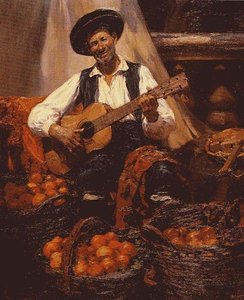
Beyond the monumental canvases that define his legacy, Benlliure’s oeuvre is celebrated for its versatility. He possessed the rare ability to pivot from the epic scale of historical drama to the quiet, evocative intimacy of genre paintings and Italian landscapes. His brush could capture the rugged texture of a soldier's armor or the soft, fleeting light of a Mediterranean afternoon with equal grace. This duality allowed him to resonate with both the academic elite and those moved by the simple beauty of everyday life.
The historical significance of José Benlliure y Gil lies in his role as a custodian of narrative painting during a period of rapid artistic transition. While the world began to move toward more abstract expressions, Benlliure remained dedicated to the power of the image to tell stories, to evoke empathy, and to honor the weight of history. His work remains a testament to the enduring strength of Romantic Realism, offering modern viewers a profound connection to the triumphs, tragedies, and timeless beauty of the human experience.