Robert Weir Allan (1851 – 1942): Echoes of the Scottish Coast
Robert Weir Allan, born in Edinburgh in 1851, was a Scottish painter whose distinctive style fused Impressionistic techniques with an unwavering fascination for the rugged beauty of Scotland’s coastline and rural communities. Unlike many artists of his era preoccupied with grand narratives or formal portraiture, Allan dedicated himself to capturing the essence of everyday life – fishermen hauling nets, children playing on beaches, and the quiet grandeur of windswept hillsides – transforming these scenes into canvases brimming with light and color.- Early Life & Education: Allan’s formative years were spent in Edinburgh, where he received a grounding in classical art principles at James Baikie's School of Art. However, it was his exposure to the burgeoning Impressionist movement that truly ignited his artistic vision.
- Influences: Allan’s palette and approach owe considerable debt to French Impressionists like Claude Monet and Camille Pissarro. He meticulously observed atmospheric conditions – mist, sunlight filtering through foliage – striving to convey not just what he saw but how it felt. The influence of Scottish Romantic painters such as William Turner also subtly permeated his work.
A Painter’s Obsession: The Scottish Landscape
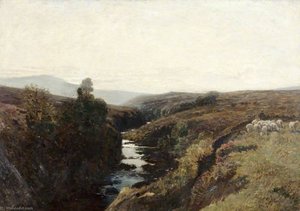
Allan's artistic output centered almost exclusively on landscapes, particularly those depicting the Firth of Forth and Orkney Islands. He possessed an extraordinary ability to translate fleeting moments into enduring images—a sunrise over Cromarty Firth, a storm brewing off Stromness Sound—capturing the dramatic interplay between light and shadow with remarkable precision. His canvases aren’t merely representations of places; they are imbued with emotion, conveying a palpable sense of solitude and wonder. Consider his iconic depiction of Orkney beaches – “The Old Pier,” for instance – where Allan skillfully employed broken brushstrokes to evoke the turbulent sea spray and the muted hues of twilight.- Technique: Allan’s technique involved layering thin washes of color onto canvas, building up tonal variations gradually. He favored a plein air approach—painting outdoors directly from nature—allowing him to capture the immediacy of observation and respond instinctively to changing conditions.
- Notable Works: Among his most celebrated paintings are “The Old Pier,” “Dunstanburgh Castle” and “Kirkwall Harbour.” These works exemplify Allan’s mastery of Impressionistic principles and his unwavering commitment to portraying the Scottish landscape with unparalleled sensitivity.
Recognition & Legacy
Allan's dedication to his craft garnered him considerable acclaim during his lifetime. He exhibited extensively in Scotland and internationally, securing commissions for murals and decorative panels. Although he remained largely unrecognized by mainstream art critics of his time, his paintings continue to resonate with viewers today—a testament to their enduring beauty and emotional depth. Allan’s legacy resides not merely in the artworks themselves but also in his unwavering belief that art should serve as a conduit for experiencing the sublime – capturing the grandeur and majesty of the natural world.- Posthumous Reputation: Following Allan's death in 1942, his work gradually gained recognition within specialist circles. Today, he is regarded as one of Scotland’s foremost landscape painters of the late nineteenth century—a pivotal figure in establishing Impressionism’s presence on British shores.
Further Exploration
To delve deeper into Robert Weir Allan's artistic journey, consult resources such as:- The Scottish National Gallery
- Kirkcaldy Art Gallery
Küsimused ja vastused
Kuidas leian teatud teemal Robert Weir Allan teoseid?
Et leida kunstniku Robert Weir Allan teoseid teatud teemal, kasutage kunstniku Märksõnade kaupa lehte, kus teosed on grupeeritud märksõnade järgi.
Kas saan Robert Weir Allan teoseid teema järgi uurida?
Robert Weir Allan teoseid teemade järgi klassifitseerib leht Teemade ülevaade.
Kuidas saan jälgida Robert Weir Allan teos loendit kronoloogiliselt?
Kunstniku Teoseline ajaline joon lehel on esitatud Robert Weir Allan teosed ajastatud järjekorras, aasta aastale.