


 Katso seinällä
 Lähetä
 Jaa
Jaa
 Tarkemmat tiedot
 Guide
Guide

 Lataa kuva
 Samanlaisia kohteita
 Röntgenkuvaus
 Diaesitys
 Tilastot
Women outside the Church at Ruokolahti
 Oil On Canvas
- WallArt
- Contemporary Realism
 1887
1887 158.0 x 129.0 cm
 Ateneum
 Lue lisää
Käsinmaalattu öljyvärinen jäljennös
Käsinmaalattu öljyväri kankaalle haluamassasi koossa ja kehyksissä, taiteilijoidemme valmistamana tilauksesta. ( Vaihda tulosteeseen Siirry digitaaliseen kuvaan)




P118B $10

P118H $10

P118W $10

P438Z $10

P508JH $12

P508YH $12

P805H $10

P805Z $10

P919BZ $10

P919G $10

P919XJ $10

P959ZH $10

P968JZ $12

W106C $8

W218G $10

W218JH $8

W218Y $10

W307PJ $10

W316G $10

W316PJ $8

W316Y $10

W398PJ $8

W4111J $10

W500HY $15

W500JH $15

W692G $12

W849H $8

W940BG $15

W953PJ $8




Valitse valmiista mitoistamme sellaiset, jotka vastaavat teoksen alkuperäisiä mittasuhteita.

Voit syöttää omat mitat sopimaan tiettyyn kehykseen tai tilaan. Jos valitsemasi koko ei vastaa alkuperäisen kuvan mittasuhteita, rajaamme taideteoksen tai jatkamme maalausta käsin maalatuilla elementeillä. Digitaalinen esikatselu lähetetään hyväksyttäväksi ennen tuotannon aloittamista.
Huomioithan, että näytöllä oleva esikatselu ei vastaa todellista rajausta tai jatkamista. Vain digitaalinen mallikuva näyttää lopullisen sommittelun tarkasti.
Vaikka mittatilaustyöt ovat mahdollisia, suosittelemme valitsemaan mitan ennalta määritetystä listasta alkuperäisten mittasuhteiden säilyttämiseksi.
Tilauksen jälkeen AllPaintingsStore.com -tiimi lähettää asiakkaalle sähköpostitse ohjeet ja esikatselukuvan.
Maailmanlaajuinen toimitus () 3–4 viikossa tavallisen 5 viikon sijaan. (21 syyskuu). Laadusta ei tingitä.

Ilmainen pikatoimitus ympäri maailman

Korkealaatuinen pellavakangas

Kattava kuljetusvakuutus

Tulliveron palautustakuu

Takuu täydellisestä värien vastaavuudesta

100 päivän palautusoikeus valmistusvirhetapauksissa

100% rahat takaisin -takuu

Määräalennus saatavilla
 Lasivaihtoehto on saatavilla vain alle 110 cm kokoisille teoksille

Women outside the Church at Ruokolahti
Reproduktiotapa
Replikaatin koko
-


Kokonaishinta
$ 258
A Snapshot of Rural Finnish Life: Albert Edelfelt’s “Women Outside the Church at Ruokolahti”
Albert Edelfelt's "Women Outside the Church at Ruokolahti," painted in 1887, is more than just a depiction of a local gathering; it’s a poignant window into the heart of Finnish rural life during a pivotal period of national identity formation. The painting captures a moment of quiet community amidst the rolling hills of Uusimaa, offering a glimpse into the everyday lives and social fabric of a region that would soon become a cornerstone of modern Finland. Edelfelt, a master of Realism with subtle Impressionistic touches, skillfully rendered this scene not as a grand historical tableau, but as an intimate portrait of ordinary people – a deliberate choice that profoundly shaped his artistic legacy.
The canvas itself is dominated by a group of women assembled outside the Ruokolahti Church. Nine figures are present, ranging from young girls to older women, engaged in conversation and seemingly enjoying each other’s company. The composition isn't rigidly formal; instead, Edelfelt allows the scene to breathe with a naturalism that reflects his deep respect for his subjects. Notice how he captures their individual personalities – the animated discussion of the younger women, the thoughtful expression on the face of an older woman, and the subtle gestures that reveal their shared experience. The artist’s attention to detail extends beyond mere likeness; he imbues each figure with a sense of life and character.
Technically, Edelfelt employs a technique characterized by loose brushstrokes and a vibrant color palette. He utilizes broken color—small, distinct strokes of paint rather than smooth blends—to create a shimmering effect that captures the light filtering through the trees and illuminating the women’s faces. The use of warm earth tones – ochres, browns, and greens – grounds the scene in its rural setting, while touches of red (particularly in the scarf worn by one woman) provide visual interest and draw the eye. The painting's scale—measuring 158 x 129 cm—further enhances the sense of immersion, inviting the viewer to step into this intimate moment in time.
Contextualizing a Nation Forged in Observation
To fully appreciate “Women Outside the Church at Ruokolahti,” it’s crucial to understand Edelfelt's artistic philosophy and the historical context of his work. He famously declared that he found his entire nation within the landscapes and people of Uusimaa, a region just south of Helsinki. This belief stemmed from a conscious decision to move away from grand historical subjects favored by many of his contemporaries and instead focus on portraying the lives of ordinary Finns – a deliberate act of national representation at a time when Finland was striving for independence from Russia. The painting’s creation coincided with a period of intense nationalist sentiment, fueled by a desire to establish a distinct Finnish identity rooted in its own traditions and culture.
The Ruokolahti Church itself holds significance within this narrative. Built in 1752, it represents the enduring strength and continuity of local community life. Its presence serves as a focal point for the gathering, symbolizing faith, tradition, and social connection. The church’s architecture—a simple yet dignified timber structure—contrasts subtly with the more informal attire and relaxed demeanor of the women, highlighting the interplay between religious observance and everyday life.
Symbolism and Emotional Resonance
Beyond its straightforward depiction of a rural gathering, “Women Outside the Church at Ruokolahti” is rich in symbolic meaning. The act of conversation itself represents the transmission of knowledge, values, and traditions from one generation to the next. The women’s shared presence suggests a strong sense of community solidarity – a vital element for a nation forging its identity. Even the red scarf worn by one woman can be interpreted as a symbol of warmth, vitality, or perhaps even a touch of defiance against societal norms.
Perhaps most powerfully, the painting evokes a feeling of quiet contentment and belonging. There’s no drama or conflict in this scene; instead, it offers a glimpse into a world where simple pleasures – conversation, companionship, and connection with one's community – are valued above all else. The soft light, the relaxed postures, and the genuine expressions on the women’s faces combine to create an atmosphere of warmth and serenity—a testament to Edelfelt’s ability to capture the essence of human experience.
A Timeless Masterpiece: Reproduction and Legacy
Today, “Women Outside the Church at Ruokolahti” stands as a beloved icon of Finnish art. Reproductions of this captivating painting are highly sought after by collectors and interior designers alike, offering a chance to bring a piece of Finnish heritage into any space. When selecting a reproduction, consider the quality of materials used – a hand-painted reproduction will undoubtedly capture the nuances of Edelfelt’s brushwork and color palette far more effectively than a digital print. This remarkable artwork serves as a poignant reminder of Finland's rich cultural heritage and the enduring power of art to connect us to our past.
Samankaltaisia teoksia


Taiteilijan elämäkerta
early life and education
Albert Gustaf Aristides Edelfelt, a Finnish painter who achieved international renown, was born on July 21, 1854, in Porvoo, Finland. His parents, Carl Albert Edelfelt and Alexandra Edelfelt (née Brandt), were Swedish-speaking Finns. From an early age, Edelfelt demonstrated an innate fascination with art—a passion that would propel him toward formal studies at the Drawing School of the Finnish Art Society in 1869. This formative experience laid the groundwork for his artistic journey and instilled within him a lifelong dedication to mastering his craft.artistic journey
Edelfelt’s artistic pursuits extended beyond Finland's borders, shaping him through exposure to diverse artistic traditions. He embarked on a significant educational voyage to Antwerp Academy of Art in 1873-74, where he honed his skills in history painting under the guidance of Jean-Léon Gérôme—a pivotal step in developing his stylistic sensibilities. Subsequently, he pursued further refinement at École nationale des beaux-arts in Paris (1874-78), continuing to learn from Gérôme and absorbing influences from Impressionism. A brief period spent in Saint Petersburg (1881-82) broadened his artistic horizons and introduced him to the stylistic nuances of Russian art.rise to prominence and notable works
Edelfelt’s career ascended rapidly following a triumphant performance at the Paris Universal Exposition of 1889, securing him a gold medal—a testament to his talent and dedication. Among his most celebrated paintings are “Portrait of Louis Pasteur,” which garnered him the Legion of Honor in 1886, capturing the likeness of the renowned scientist with remarkable accuracy and detail. Equally compelling is “Young Woman in Her Boudoir,” portraying femininity with grace and subtlety—a masterful depiction of light and shadow that exemplifies Edelfelt’s artistic prowess. Furthermore, “Under the Birches” stands as a poignant emblem of Finnish landscapes, conveying both beauty and melancholy through evocative brushstrokes and atmospheric perspective. And finally, "Girl from Porvoo" is an unforgettable portrait capturing the essence of youthful innocence and charm.legacy and impact
Albert Edelfelt’s contribution to Finnish art history is undeniable—he stands as one of the pioneers who ushered in a new era of realism within the nation's artistic landscape. His influence resonated deeply with younger artists like Akseli Gallen-Kallela and Gunnar Berndtson, whom he mentored during their formative years in Paris—solidifying his position as a pivotal figure in shaping Finnish art’s trajectory. Today, Edelfelt’s works are housed in prestigious museums across Europe, including Ateneum Museum in Helsinki, where they continue to inspire admiration for their artistic merit and historical significance. His legacy persists not only through the enduring beauty of his paintings but also through the lasting impact he had on subsequent generations of Finnish artists—a testament to his enduring contribution to art history.museum collections and commemoration
Edelfelt’s masterpieces are proudly displayed in Ateneum Museum, Helsinki, Finland, allowing visitors to immerse themselves in the splendor of his artistic vision. To honor his remarkable life and legacy, a €100 Albert Edelfelt commemorative coin was issued in 2004—celebrating the centenary of his birth anniversary. This symbolic gesture underscores the enduring appreciation for Edelfelt’s contribution to Finnish culture and art—a lasting reminder of his indelible mark on artistic history.
Albert Edelfelt
1854 - 1905 , Suomi
Tietoa taiteilijasta
- Artistic Movement Or Style: Realismi
- Artists Or Movements Influenced By This Artist: ['Impressionismi']
- Artists Who Influenced This Artist:
- Jean-Léon Gérôme
- Akseli Gallen-Kallela
- Date Of Birth: 21 heinäkuuta 1854
- Date Of Death: 18 elokuuta 1905
- Full Name: Albert Gustaf Aristides Edelfelt
- Nationality: Suomalainen
- Notable Artworks:
- Louis Pasteurin muotokuva
- Nuori nainen boudoirissa
- Koivujen alla
- Place Of Birth: Porvoo, Suomi
Aiheeseen liittyvät artikkelit

Akseli Gallen-Kallela: Shaping Finnish Identity Through National Romanticism & Symbolism
Explore the captivating world of Akseli Gallen-Kallela, Finland's iconic National Romantic painter. Discover his symbolic landscapes, Kalevala illustrations & lasting impact on Finnish identity. Expert analysis & high-quality reproductions at AllPaintingsStore.

Albert Edelfelt: A Pioneer of Finnish Realism & International Impressionist Circles
Explore the life & work of Albert Edelfelt, a pioneering Finnish Realist painter who bridged Impressionism & national identity. Discover his masterpieces and lasting influence on art history.

The Enduring Muse: Women as Subject & Symbol in Art History
Explore the rich history of women in art – from archetypal representations to contemporary voices challenging norms. Discover iconic artists & movements, and learn about reclaiming female narratives through painting and beyond.

The Enduring Muse: Women as Subject & Symbol in Art History
Explore the rich history of women in art – from iconic muses to groundbreaking artists. Discover feminist movements, global perspectives & reclaim female narratives with AllPaintingsStore.
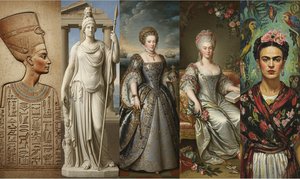
Portrayals of Power & Perception: A Historical Survey of Women in Art
Explore the rich history of women in art – from iconic muses to groundbreaking artists. Discover feminist movements & reclaim female narratives with AllPaintingsStore. Expert insights for discerning collectors.


