Eliza Susan Quincy: A Pioneer of American Watercolor and Family History
Eliza Susan Morton Quincy (1798-1884) stands as a remarkable figure in 19th-century American art and scholarship—a woman who defied societal expectations to pursue both artistic expression and meticulous genealogical research. Born in Quincy, Massachusetts, the eldest child of Eliza Susan Morton and Josiah Quincy III – a prominent Bostonian lawyer and Harvard University president – Quincy’s upbringing instilled in her a deep appreciation for intellectual curiosity and familial heritage, shaping her lifelong endeavors.
Her early life was characterized by exceptional educational opportunities afforded by her father's influence. Harvard University became her academic sanctuary, fostering a foundation for her later pursuits in history and art—a testament to the transformative power of privilege and scholarly aspiration. This formative experience instilled within her a lifelong dedication to knowledge and understanding, mirroring the values upheld by Quincy’s family lineage.
The Art of Observation: Watercolor Landscapes and Artistic Influences
Despite prevailing societal constraints on women's artistic endeavors during her time, Eliza Susan Quincy passionately pursued watercolor painting. Recognizing the importance of formal training, she sought guidance from Sarah Vaughan, a respected artist in Hallowell, Maine, immersing herself in techniques that prioritized tonal subtlety and precise rendering—approaches emblematic of the era’s landscape painters. Notably, Quincy adopted Vaughan’s monochromatic palette, reflecting her unwavering commitment to mastering artistic principles. This deliberate stylistic choice underscores her desire for technical excellence and her adherence to established artistic conventions.
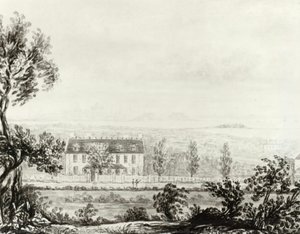
Her most enduring achievement resides in “View of the Residence of John Adams and of John Quincy Adams Presidents of the United States” (1831)—a meticulously crafted watercolor depicting Adams’ homes. This piece exemplifies Quincy's skill in capturing architectural detail and conveying atmospheric perspective—a testament to her artistic talent and dedication. The drawing skillfully portrays the grandeur of Philadelphia, utilizing subtle washes of gray to illuminate the facades of both residences, demonstrating a mastery of tonal rendering that aligns with prevailing landscape painting styles of the period.
Genealogical Scholarship & The Quincy Family Legacy
Beyond her artistic pursuits, Eliza Susan Quincy distinguished herself as a dedicated genealogist. Driven by an unwavering fascination with familial history, she undertook the monumental task of reconstructing the Quincy family’s lineage—tracing its roots back to Edmund Quincy II (1602–1636), an English settler who established the Quincy surname in Massachusetts Bay Colony. Her meticulous research culminated in a comprehensive memoir documenting her father's life and accomplishments. This ambitious undertaking reflects not only Quincy’s intellectual curiosity but also her profound connection to her family’s heritage—a desire to preserve its story for posterity.
Her collaboration with Josiah Quincy III extended beyond mere familial ties; she actively participated in his scholarly endeavors, contributing to his seminal writings and furthering the Quincy family's reputation for intellect and civic engagement. This partnership exemplifies the importance of intellectual exchange within a prominent Bostonian household—demonstrating how shared interests could shape individual pursuits and collective achievements.
Historical Significance & Lasting Impact
Eliza Susan Quincy’s contribution to American art history is significant not only for her artistic output but also for challenging gender roles within Victorian society. Her unwavering commitment to both artistic expression and genealogical scholarship serves as an inspiration—demonstrating the power of intellectual curiosity and perseverance in overcoming societal barriers. Furthermore, her detailed depictions of Adams residences provide invaluable insight into the architectural landscape of early America, enriching our understanding of historical context. She remains a symbol of female empowerment during a time when women’s roles were largely confined to domestic spheres—a testament to her determination to pursue passions beyond conventional expectations. Her legacy continues to resonate today as an emblem of intellectual courage and artistic accomplishment.