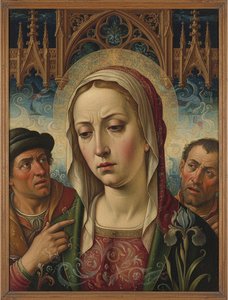
Goswijn van der Weydenin perintö: Silta Brysselin ja Antwerpenin välillä
Flanderin renessanssin suuressa kudelmassa harva nimi kalskahtaa yhtä vakaasti kuin Goswijn van der Weyden. Brysselissä noin vuonna 1465 syntynyt Goswijn oli paljon enemmän kuin pelkkä taidemaalari; hän oli elintärkeä linkki kahden taiteellisen kehityskauden välillä. Legendaarisen Rogier van der Weyren tyttärpoikana hän peri itselleen syvän taiteellisen linjan, jota leimasivat äärimmäinen realismi ja voimakas emotionaalinen resonanssi. Hänen todellinen suuruutensa kuitenkin piili kyvyssä ylittää isoisänsä edustaman Brysselin perinteen juhlallisuus ja täyttää työnsä Antwerpenin manierismin nousevalla energialla ja dramaattisella loistolla. Vaikka hänen elämäänsä varjostivat henkilökohtaiset tragediat – kuten vauvaikänsä sydäntäsärkevä menetys – hänen luova henkensä kieltäytyi himmenemästä surun edessä.
Goswijnin tekniikan kehitys on kiehtova tutkimusmatka tyylilliseen murrokseen. Rogierin varhaisessa opastuksessa hän hallitsi psykologisen tarkkuuden taidon, oppien vangitsemaan aiheidensa sielun hienovaraisten ilmeiden ja hämmästyttävän ihmisläheisyyden kautta. Uran edetessä hänen tyylissään voidaan havaita siirtymä kohti ilmaisullisempaa kieltä. Hän alkoi kokeilla dramaattista valon käyttöä ja levottomia, läpitunkevia katseita, jotka rikkoivat varhaisemman alankomaalaisen taiteen staattisen hartauden. Tämä evoluutio mahdollisti hänelle kuilun umveltisen, lähes mikroskooppisen yksityiskohtaisuuden ja Brysselin koulukunnan sekä nousevan Antwerpenin tyylin voimakkaan emotionaalisen intensiteetin ja liikkeen välillä.
Hartauden ja muotokuvataiteen mestariteokset
Goswijnin taiteellinen tuotanto oli hämmästyttävän monipuolista, ulottuen monumentaalisista uskonnollisista alttarilavoista intiimeihin, psykologisesti monimutkaisiin muotokuviin. Hänen tunnetuin saavutuksensa, ‘The Gift of Kalmthout’, seisoo hänen teknisen taidokkuutensa huipentumana. Leuvenin Pyhän Johannes Kastajan sairaalalle tehty tämä mestariteos on täydellinen synteesi hänen vaikutteistaan. Teoksessa katsoja kohtaa Neitsyt Marian syvän hellyyden vastasyntynyttä Jeesusta kohdatessaan; maalaus on toteutettu niin hehkuvin värein ja monimutkaisin kankain, että kohtauksen hengellinen paino tuntuu melkein käsinkosketeltavalta. Maalaus vangitsee jumalallisen kohtaamisen hetken, jossa maallinen ja taivaallinen sulautuvat yhteen mestarillisen käsityön kautta.
Uskonnollisten tilaustöiden lisäksi Goswijn oli muotokuvan mestari, lajilaji, joka antoi hänelle mahdollisuuden tutkia ihmisidentiteetin ja sosiaalisen aseman vivahteita. Hänen muotokuvansa tunnetaan ylellisestä kauneudestaan ja historiallisesta merkityksestään; ne toimivat ikkunoina 1400- ja 1500-lukujen aristokraattiseen ja porvarilliseen luokkaan. Merkittäviä teoksia ovat:
- Portrait of a Woman (1464): Varhainen esimerkki hänen kyvystään vangita ajaton kauneus herkällä öljytekniikalla.
- Portrait Diptych of Laurent Froimont: Vangitseva tutkimus seesteisestä kauneudesta ja yksityiskohdista, joka osoittaa taiteilijan taidon vangita yksilöllinen luonne rakenteelliseen muotoon.
- Isabella of Portugal: Upea varhais-alankomaalainen muotokuva, joka ilmentää hänen käyttöään rikkaista väreistä ja tekstuureista historiallista loistoa ja kuninkaallista arvokkuutta välittäessään.
Historiallinen merkitys ja taiteellinen vaikutus
Goswijn van der Weydenin historiallinen merkitys piilee hänen roolissaan tyylillisen välittäjänä. Hän ei ainoastaan toistanut menneisyyttä, vaan valmisteli maaperää tulevalle. Integroimalla varhais-alankomaalaisen perinteen tarkkuuden Antwerpenin manierismin dynaamisempiin ja ilmaisullisempiin elementteihin, hän auttoi muovaamaan pohjoisen renessanssin visuaalista kieltä. Hänen kykynsä hallita valoa ja varjoa tunnelman luomiseksi ennusti dramaattisia muutoksia, jotka myöhemmin määrittelivät suuren osan eurooppalaista maalaustaidetta. Nykyään hänen teoksensa ovat elintärkeitä kiintopisteitä ymmärtäessä transition myöhäiskeskiajasta renessanssin kukoistavaan ja monimutkaiseen aikakauteen, seisten pysyvinä monumentteina elämälle, joka oli omistettu taiteellisen totuuden etsimiselle.
Kysymykset ja vastaukset
Voinko selata Goswijn Van Der Weyden teoksia tunnelman mukaan?
Taiteilijan Tunnelman mukaan -sivulla Goswijn Van Der Weyden:n teokset on järjestetty niiden tunnelman mukaan.
Mistä voin nähdä kaikki taideteokset, jotka ovat Goswijn Van Der Weyden tekemiä?
Jokaisen tämä verkkosivusto-sivustolla olevan Goswijn Van Der Weyden teoksen voi selata artistin Kaikki teokset -sivulta.
Miten Goswijn Van Der Weydenin ura on jaettu eri aikakausiin?
Goswijn Van Der Weyden'n ura avautuu vaihe vaiheelta artistin Kronikka -sivulla: vaakasuuntainen aikajana teoksista, ryhmiteltynä uravaiheiden mukaisiin lukuihin.