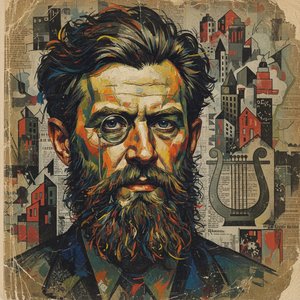
Modeste Mussorgsky: A Pioneer of Russian Musical Identity
Modeste Petrovich Mussorgsky (1839 – 1881) stands as a monumental figure in Russian musical history, recognized primarily for his unwavering commitment to forging a uniquely national soundscape—a defiant rejection of the prevailing stylistic trends of Western European music. Born into a family of intellectuals and educators in Saratov Province, Russia, Mussorgsky’s early life was marked by academic pursuits and a fascination with literature and philosophy, shaping his artistic sensibilities profoundly. He studied law at Saint Petersburg University but abandoned legal studies to pursue music wholeheartedly, enrolling at the Moscow Conservatory where he honed his compositional skills under Nikolai Rimsky-Korsakov—a relationship that proved pivotal in his artistic development.
Early Influences: Mussorgsky’s formative years were steeped in Romanticism and Wagnerian opera, yet he possessed an innate desire to transcend these influences, seeking inspiration from Russian folklore, mythology, and the raw emotional power of peasant life.
The Five Composers: He was a founding member of “The Five,” a group of composers who championed artistic independence and aimed to elevate Russian music to international stature. This collective ethos fueled their experimentation with harmonic language and dramatic structure.
Musical Innovation and Iconic Works
Mussorgsky’s musical innovations are characterized by his deliberate disregard for conventional formal structures, prioritizing expressive intensity over adherence to established rules. He employed techniques such as fragmentation, dissonance, and orchestration that were considered radical at the time—methods he championed with unwavering conviction. His output encompasses operas, orchestral music, piano pieces, and vocal cycles, each imbued with a distinctive psychological depth and emotional resonance. Among his most celebrated achievements are:
Boris Godunov (1869): Considered by many to be Mussorgsky’s masterpiece, Boris Godunov explores themes of political corruption, religious fervor, and the human condition with unflinching honesty—a dramatic portrayal rooted in historical accounts of Tsar Boris III's reign.
Night on Bald Mountain (1880): This orchestral tone poem captures the mystical atmosphere of a pagan ritual celebration, utilizing dissonant harmonies and unconventional orchestration to evoke a visceral experience of primal energy and spiritual ecstasy.
Pictures at an Exhibition (1883): Originally conceived as a piano suite based on paintings by Viktor Hartmann—a friend and fellow composer—Pictures at an Exhibition transformed into one of the most influential musical works of the late nineteenth century, its episodic structure mirroring the viewing experience of an art exhibition.
Legacy and Historical Significance
Mussorgsky’s music continues to inspire composers and audiences alike, cementing his place as a cornerstone of Russian cultural heritage. His pioneering approach to musical composition challenged prevailing aesthetic conventions and paved the way for subsequent generations of artists—particularly those associated with Expressionism—to explore darker emotional territories and embrace unconventional stylistic choices. Mussorgsky's uncompromising vision remains profoundly relevant today, reminding us that artistic integrity transcends temporal boundaries and speaks to universal human experience. His music stands as a testament to the power of national identity expressed through musical innovation—a legacy that resonates powerfully across time.
Further Exploration
For more information about Modeste Mussorgsky’s life, works, and artistic influence, explore these resources:
Explore the revolutionary art of David Burliuk, a key figure in Russian Avant-Garde & Cubo-Futurism. Discover his impact on painting, poetry, and design with AllPaintingsStore.
Mihin historialliseen aikakauteen Modeste Moussorgski, Dmitri Bertman kuului?
Modeste Moussorgski, Dmitri Bertman työskenteli 19th Century -aikakaudella. Aikakausi sijoittaa taiteilijan toiminnan historialliseen kontekstiin.
Miten löydän tietyn teeman mukaisia Modeste Moussorgski, Dmitri Bertman teoksia?
Löytääksesi tiettyyn teemaan liittyviä Modeste Moussorgski, Dmitri Bertman teoksia, käytä taiteilijan Avainsanojen mukaan -sivua, joka ryhmittelee teokset avainsanojen mukaan.
Mistä Modeste Moussorgski, Dmitri Bertman on kotoisin?
Modeste Moussorgski, Dmitri Bertman on syntynyt Russia.
Mistä voin selata Modeste Moussorgski, Dmitri Bertman's teoksia tunnelman mukaan järjestettynä?
Modeste Moussorgski, Dmitri Bertman:n teoksia voi selata tunnelman mukaan artistin Tunnelmallinen huone -sivulta, jossa teokset on järjestetty niiden välittämän tunnelman mukaan.
Millä muilla nimillä Modeste Moussorgski, Dmitri Bertman tunnetaan?
Modeste Moussorgski, Dmitri Bertman tunnetaan myös nimillä Modest Mussorgsky.
Mihin tyylisuuntauksiin Modeste Moussorgski, Dmitri Bertman kuului?
Modeste Moussorgski, Dmitri Bertmann edustamat taidesuuntaukset löytyvät artistin Kaikki taidesuuntaukset -sivulta, jossa teokset on ryhmitelty tyylisuuntien mukaan.
Mistä voin nähdä Modeste Moussorgski, Dmitri Bertman teosten väriprofiilin?
Modeste Moussorgski, Dmitri Bertman teosten väriprofiili on nähtävissä taiteilijan Paletin sielunmaisema -sivulla.
Miten voin seurata Modeste Moussorgski, Dmitri Bertman's teoksia vuosi vuodelta?
Modeste Moussorgski, Dmitri Bertman:n teoksista on saatavilla aikajana: taiteilijan Teosten aikajana -sivulla teokset on järjestetty luomisjärjestykseen.
Mistä voin nähdä kaikki Modeste Moussorgski, Dmitri Bertman teokset?
Voit selata kaikkia tämä sivusto-sivuston Modeste Moussorgski, Dmitri Bertman teoksia artistin Kaikki teokset -sivulta.