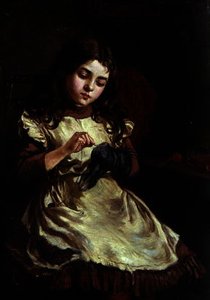
Ralph Hedley: A Chronicle of Tyneside Life
- Born: December 31, 1848, Gilling West, North Yorkshire
- Died: June 14, 1913, Newcastle upon Tyne
- Nationality: British
- Artistic Mediums: Oil Painting, Wood Carving, Illustration
Early Life and Training
- Ralph Hedley's family moved to Newcastle upon Tyne in 1850 due to industrial opportunities.
- At the age of 13, he was apprenticed to Thomas Tweedy, a woodcarver, gaining valuable skills in that craft.
- Simultaneously, he studied art and design at the 'Government school' in Newcastle and attended evening classes under William Bell Scott, a significant influence on his artistic development.
- He received a bronze medal from the government’s Department of Art and Science at age 14, demonstrating early talent.
Artistic Career: Painting and Wood Carving
- After his apprenticeship, Hedley established a successful woodcarving business while pursuing painting and illustration.
- His paintings began to gain recognition with *The Newsboy* exhibited at the Royal Academy in 1879.
- He co-founded the Bewick Club in 1884 with Henry Hetherington Emmerson and Robert Jobling, promoting local artists of the North East.
- Notable wood carving commissions include work for the Cathedral Church of St Nicholas, Newcastle, including the choir and rood screen.
- He was a member of the Royal Society of British Artists and exhibited over fifty paintings at the Royal Academy between 1879 and 1904.
Style and Subject Matter
- Hedley is best known for his realist depictions of everyday life in Tyneside, particularly scenes featuring working-class people.
- His style captured the atmosphere and character of North East England with a focus on authenticity and detail.
- Recurring themes include children at play, market scenes, and domestic interiors, often featuring cats or other animals.
- Paintings like *Blinking in the Sun* (*Cat in a Cottage Window*) and *Last in Market* are particularly beloved for their charming portrayal of ordinary moments.
Legacy and Historical Significance
- Hedley's work provides a valuable historical record of life in late 19th and early 20th century Tyneside.
- Contemporary critics recognized his ability to portray the lives of working people with dignity and empathy, drawing parallels between him and Scottish artist Allan Ramsay.
- His paintings have achieved significant auction prices, demonstrating their enduring appeal and value.
- Hedley was honored with a commemorative plaque in Newcastle upon Tyne, recognizing his contribution to the city's cultural heritage.
- He remains an important figure in North East art history, celebrated for his realistic depictions of local life and his skilled craftsmanship as both a painter and woodcarver.
Kysymykset ja vastaukset
Onko Ralph Hedley teoksista saatavilla 3D-virtuaalikierrosta?
Ralph Hedley-taiteilijan 3D-galleria esittelee taiteilijan teoksia virtuaalisessa kolmiulotteisessa galleriassa.
Missä ja minä vuonna Ralph Hedley on syntynyt?
Ralph Hedley syntyi Gilling Westssä vuonna 1848.
Voinko selata Ralph Hedley teoksia tunnelman mukaan?
Ralph Hedley:n teoksia voi selata tunnelman mukaan artistin Tunnelmallinen huone -sivulta, jossa teokset on järjestetty niiden välittämän tunnelman mukaan.
Voinko tutkia Ralph Hedley's värinkäyttöä kaikissa teoksissa?
Ralph Hedley-taiteilijan Paletin sielunmaisema esittelee taiteilijan tuotannon väriprofiilin.