Rahat takaisin -takuu · 100 päivää Ilmainen toimitus ympäri maailman
646 446teokset 53 409taiteilijat 5 406museot 32kielet
Frédéric Bazille muotokuva

Frédéric Bazille -teokset: 88 kuuluisinta, järjestettynä

Päivitetty lokakuu 2026 · järjestetty suosituimmuuspisteiden mukaan (jokaisen teoksen haut, vierailut ja tilaukset) · 88 teosta taiteilijalta Frédéric Bazille luettelossamme

Pika-vastaus

Tunnetuin Frédéric Bazille -teos on Nainen ja mies kylässä (1869); alkuperäinen teos sijaitsee kohteessa Fogg Art Museum, Cambridge. Perhekohtous (1867) ja The Pink Dress (1864) ovat numerot kaksi ja kolme. Valitsemalla Frédéric Bazille teoksista 88 teoksen valikoimasta, tässä ovat 88 tunnetuinta teosta järjestettynä vuosiluvun ja museon mukaan, jotta voit valita haluamasi maalauksen tilattavaksi.

1841 – 1870, Montpellier Impressionist landscape Eniten teoksia: Musée Fabre

Frédéric Bazille -taiteilijan 10 parasta teosta, järjestettynä

1
Nainen ja mies kylässä (1869) tekijä Frédéric Bazille

Nainen ja mies kylässä

1869 · Öljyväri kankaalle · Fogg Art Museum, Cambridge

Jean Frédéric Bazille: Nuorten Energian Hymni – ”Bathers (Summer Scene)” Jean Frédéric Bazillen vuoden 1869 mestariteos ”Nuoret kylpijät” on lumoava ilmaus Impressionismin kasvavaa henkeä. Tämä kirkkaanvärinen kangas tuo katsojat aurinkoiselle metsäiselle uintialueelle, jossa nuoret miehet nauttivat huolettomia aktiviteetteja – uimista, kamppailua ja yksinkertaisesti auringon lämpöä. Tämä työ ei ole pelkästään vedenalaisen maailman kuvaus vaan rohkea taiteellinen ilmaisema ja nuoruuden energian juhla. Impressionistiset Tekniikat Ja Taiteellinen Innovaatio Bazille käyttää mestarillisesti impressionistisia…

2
Perhekohtous (1867) tekijä Frédéric Bazille

Perhekohtous

1867 · Öljyväri kankaalle · Musée d'Orsay, Pariisi

Jean Frédéric Bazillinin maalauksessa ”Family Reunion” (1867) näkyy eläväinen ja yksityiskohtainen kuva ulkoilmassa tapahtuvan sosiaalisen kokoontumisen. Tämä teos vangitsee vilkkaan kohtauksen suuren puun alla, jossa ihmiset ovat keskustelemassa ja nauttimassa vapaa-ajasta. Kompositio on rikas yksityiskohtien suhteen, ja se tuo kohtauksen eloon monimutkaisilla kuvioilla ja tekstuureilla. Maalauksessa yhdistyy impressionistinen tyyli, joka korostaa värejä, valoa ja huolellisia tekstuureja. Bazillin tekniikka on erittäin tarkka, erityisesti hahmojen vaatteiden ja luonnon elementtien esittämisessä. Kirkkaat värit…

3
The Pink Dress (1864) tekijä Frédéric Bazille

The Pink Dress

1864 · Acrylic On Canvas · Musée d'Orsay, Pariisi

Marilyn Monroe’s “Pink Dress,” designed by William Travilla for Howard Hawks’ 1953 film *Gentlemen Prefer Blondes*, transcends mere costume; it embodies an enduring symbol of glamour, ambition, and the seductive allure of Hollywood. The dress itself—a shocking pink silk satin gown adorned with black satin lining and a large bow—represents more than just fabric and embellishments; it encapsulates a pivotal moment in cinematic history and continues to fascinate audiences today.

4
La Toilette (1870) tekijä Frédéric Bazille

La Toilette

1870 · Acrylic On Canvas · Musée Fabre, Montpellier

The Painting's Significance and Context La Toilette, an oil-on-canvas painting by Jean Frédéric Bazille, is a remarkable work of art that showcases the artist's skill in capturing intimate moments. Created in 1869-1870, this painting is one of Bazille's last works before his untimely death in the Franco-Prussian War. Composition and Symbolism The painting depicts three women in a room, with one woman lying on a bed while the other two…

5
Landscape on the Shore of Lez (1870) tekijä Frédéric Bazille

Landscape on the Shore of Lez

1870 · Oil

Landscape on the Shore of Lez is a significant work by Frédéric Bazille, an artist whose life was marked by a brief but intense period of creativity. Born in 1841, Bazille’s career was tragically cut short when he died in 1870. This particular painting, completed in June 1870, represents one of his final artistic statements. It is a large landscape that the artist himself described as an eclogue, a term…

6
The Family Gathering (1867) tekijä Frédéric Bazille

The Family Gathering

1867 · Oil On Canvas · Musée d'Orsay, Pariisi

To stand before The Family Gathering is to step directly into a sun-dappled afternoon of pure, unscripted joy. This painting by Jean Frédéric Bazille captures more than just a social assembly; it arrests the very essence of conviviality. One feels the gentle warmth emanating from the canvas, as if the viewer has stumbled upon this private moment in time. The composition is masterfully arranged beneath the generous canopy of a…

7
The Scoter (1864) tekijä Frédéric Bazille

The Scoter

1864 · Oil · Musée Fabre, Montpellier

The painting depicts a bird perched upon a wooden surface that possesses a yellowish hue. The central subject is a bird that appears to be dead or in the process of dying. This bird is positioned near the center of the frame and occupies most of the composition.

8
Le petit jardinier, ca Museum of Fine Arts, (1867) tekijä Frédéric Bazille

Le petit jardinier, ca Museum of Fine Arts,

1867 · Oil On Canvas · Museum of Fine Arts, Houston

A woman in a pink dress occupies the center of this 1867 composition, her form integrated into a lush, verdant landscape. She holds a watering can, a quiet gesture of tending to the earth. Around her, the garden is alive with color and movement. A large bush erupts with red flowers, providing a sharp contrast to the deep greens of the foliage. In the distance, another figure walks away, adding…

10
Portrait of an Unknown Sitter as a Troubadour (1875) tekijä Frédéric Bazille

Portrait of an Unknown Sitter as a Troubadour

1875 · Oil On Canvas · Dallas Museum of Art, Dallas

In this intimate oil portrait, we find ourselves drawn into a quiet, private moment with a young man. The composition is a close-up, bust-length study that pushes the subject toward the viewer through a dramatic use of chiaroscuro. A deep, nearly black background provides a void from which the sitter emerges, illuminated by a highly directional light source. This light catches the contours of his face, leaving the other side…

Frédéric Bazille -teokset sijoilla 11–88

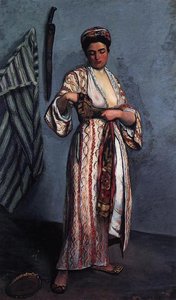
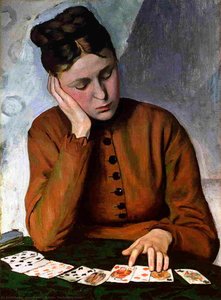
11Petite Italienne chanteuse des rues (1866) tekijä Frédéric BazillePetite Italienne chanteuse des rues1866 · Musée Fabre 12Portrait of Alphonse Tissie (1868) tekijä Frédéric BazillePortrait of Alphonse Tissie1868 · Musée Fabre 13Two Herrings (1867) tekijä Frédéric BazilleTwo Herrings1867 14Mystic marriage of Saint Catherine (1859) tekijä Frédéric BazilleMystic marriage of Saint Catherine1859 15Two Figures in a Railroad Car (1870) tekijä Frédéric BazilleTwo Figures in a Railroad Car1870 · Hood Museum of Art 16Jeune homme nu couché sur l'herbe (1870) tekijä Frédéric BazilleJeune homme nu couché sur l'herbe1870 · Musée Fabre 17Portrait of Pierre-Auguste Renoir, Oil on canv (1867) tekijä Frédéric BazillePortrait of Pierre-Auguste Renoir, Oil on canv1867 18View of the Village (1868) tekijä Frédéric BazilleView of the Village1868 · Musée Fabre 19View of the Village of Castelnau-le-Lez (1868) tekijä Frédéric BazilleView of the Village of Castelnau-le-Lez1868 · Musée Fabre 20Portrait of Renoir (1867) tekijä Frédéric BazillePortrait of Renoir1867 · Musée d'Orsay 21The Studio on the Rue La Condamine (1870) tekijä Frédéric BazilleThe Studio on the Rue La Condamine1870 · Musée d'Orsay 22Portrait of Edmond Maitre (1869) tekijä Frédéric BazillePortrait of Edmond Maitre1869 · National Gallery of Art 23Reclining Nude (1864) tekijä Frédéric BazilleReclining Nude1864 · Musée Fabre 24Fontainebleau forest (1865) tekijä Frédéric BazilleFontainebleau forest1865 · Musée d'Orsay 25Portrait of Edouard Blau (1866) tekijä Frédéric BazillePortrait of Edouard Blau1866 · National Gallery of Art 26Self Portrait (1870) tekijä Frédéric BazilleSelf Portrait1870 27Portrait of a Man (1867) tekijä Frédéric BazillePortrait of a Man1867 28Self-Portrait (1867) tekijä Frédéric BazilleSelf-Portrait1867 · Minneapolis Institute of Art 29The Studio on the Rue de Furstenberg (1865) tekijä Frédéric BazilleThe Studio on the Rue de Furstenberg1865 · Musée Fabre 30Chailly - White Horse Inn (1863) tekijä Frédéric BazilleChailly - White Horse Inn1863 31Study of Trees (1863) tekijä Frédéric BazilleStudy of Trees1863 32Nude Woman from the Back (1864) tekijä Frédéric BazilleNude Woman from the Back1864 33In the Garden (1864) tekijä Frédéric BazilleIn the Garden1864 34Rue de village, Chailly (1865) tekijä Frédéric BazilleRue de village, Chailly1865 · Musée Fabre 35Fleurs (1869) tekijä Frédéric BazilleFleurs1869 · Musée Fabre 36Étude pour une vendange (1868) tekijä Frédéric BazilleÉtude pour une vendange1868 · Musée Fabre 37Étude pour une vendange (1868) tekijä Frédéric BazilleÉtude pour une vendange1868 · Musée Fabre 38Edmond Maître (1869) tekijä Frédéric BazilleEdmond Maître1869 · National Gallery of Art 39Village Street (also known as Chailly) (1865) tekijä Frédéric BazilleVillage Street (also known as Chailly)1865 · Musée Fabre 40The Little Gardener (1867) tekijä Frédéric BazilleThe Little Gardener1867 41Soup Bowl Covers (1864) tekijä Frédéric BazilleSoup Bowl Covers1864 · Musée Fabre 42Louis Auriol Fishing (1870) tekijä Frédéric BazilleLouis Auriol Fishing1870 43The Terrace at Méric (Oleander) (1867) tekijä Frédéric BazilleThe Terrace at Méric (Oleander)1867 · Cincinnati Art Museum 44Seascape: The Beach at Sainte-Adresse (1865) tekijä Frédéric BazilleSeascape: The Beach at Sainte-Adresse1865 · High Museum of Art 45Jean Frederic Bazille's studio at 9 rue de la Condamine, Oil (1870) tekijä Frédéric BazilleJean Frederic Bazille's studio at 9 rue de la Condamine, Oil1870 46The Dog Rita Asleep (1864) tekijä Frédéric BazilleThe Dog Rita Asleep1864 47The Artist's Studio, Rue de la Condamine (1870) tekijä Frédéric BazilleThe Artist's Studio, Rue de la Condamine1870 48Studio of The Rue Visconti (1867) tekijä Frédéric BazilleStudio of The Rue Visconti1867 · Virginia Museum of Fine Arts 49Self-Portrait (1868) tekijä Frédéric BazilleSelf-Portrait1868 50Still Life with Fish (1866) tekijä Frédéric BazilleStill Life with Fish1866 · Detroit Institute of Arts 51Flowers (1868) tekijä Frédéric BazilleFlowers1868 52Study of Flowers (1866) tekijä Frédéric BazilleStudy of Flowers1866 53Portrait d'homme barbu tekijä Frédéric BazillePortrait d'homme barbu 54Grape Picker in a Cap tekijä Frédéric BazilleGrape Picker in a Cap 55Grape Picker in a Cap 1 tekijä Frédéric BazilleGrape Picker in a Cap 1 56Young Woman with Lowered Eyes tekijä Frédéric BazilleYoung Woman with Lowered Eyes 57Family Reunion on the terrace of the Château de Meric tekijä Frédéric BazilleFamily Reunion on the terrace of the Château de Meric 58La robe rose ou Vue de Castelnau le Lez tekijä Frédéric BazilleLa robe rose ou Vue de Castelnau le Lez 59Man with a Pipe tekijä Frédéric BazilleMan with a Pipe 60Réunion de famille tekijä Frédéric BazilleRéunion de famille 61Grape Picker in a Yellow Hat tekijä Frédéric BazilleGrape Picker in a Yellow Hat 62L'AMBULANCE IMPROVISEE tekijä Frédéric BazilleL'AMBULANCE IMPROVISEE 63Queens Gate at Aigues-Mortes (1867) tekijä Frédéric BazilleQueens Gate at Aigues-Mortes1867 · Metropolitan Museum of Art 64Self Portrait at Saint-Sauveur (1867) tekijä Frédéric BazilleSelf Portrait at Saint-Sauveur1867 · Musée Fabre 65Landscape at Chailly (1865) tekijä Frédéric BazilleLandscape at Chailly1865 · Art Institute of Chicago 66Deux harengs tekijä Frédéric BazilleDeux harengsMusée Fabre 67Self Portrait tekijä Frédéric BazilleSelf Portrait 68The Pink Dress tekijä Frédéric BazilleThe Pink Dress 69Forêt de Fontainebleau tekijä Frédéric BazilleForêt de Fontainebleau 70Toilet (1870) tekijä Frédéric BazilleToilet1870 · Musée Fabre 71The Fisherman with a Net (1868) tekijä Frédéric BazilleThe Fisherman with a Net1868 · Arp Museum Bahnhof Rolandseck 72Summer Scene (Bathers) tekijä Frédéric BazilleSummer Scene (Bathers)Fogg Museum 73The Improvised Field Hospital (also known as Monet after His Accident at the Inn of Chailly) (1865) tekijä Frédéric BazilleThe Improvised Field Hospital (also known as Monet after His Accident at the Inn of Chailly)1865 · Musée d'Orsay 74Negress with Peonies (1870) tekijä Frédéric BazilleNegress with Peonies1870 · Musée Fabre 75Studio in the rue de Furstenberg (1865) tekijä Frédéric BazilleStudio in the rue de Furstenberg1865 · Musée Fabre 76The Banks of the Lez tekijä Frédéric BazilleThe Banks of the LezMinneapolis Institute of Art 77Ruth et Booz (1870) tekijä Frédéric BazilleRuth et Booz1870 · Musée Fabre 78Woman in Moorish Costume (1869) tekijä Frédéric BazilleWoman in Moorish Costume1869 · Norton Simonin museo 79Portrait of Auguste Renoir (1867) tekijä Frédéric BazillePortrait of Auguste Renoir1867 · Musée d'Orsay 80Self Portrait with Palette (1865) tekijä Frédéric BazilleSelf Portrait with Palette1865 · Art Institute of Chicago 81The Fortune Teller (1869) tekijä Frédéric BazilleThe Fortune Teller1869 82Portrait of Renoir (1867) tekijä Frédéric BazillePortrait of Renoir1867 · Clevelandin taidemuseo 83Edouard Blau (1869) tekijä Frédéric BazilleEdouard Blau1869 · National Gallery of Art 84Fleurs tekijä Frédéric BazilleFleursMusée de Grenoble 85Aigues-Mortes tekijä Frédéric BazilleAigues-MortesMusée Fabre 86The Heron (1867) tekijä Frédéric BazilleThe Heron1867 · Musée Fabre 87The Western Ramparts at Aigues-Mortes (1867) tekijä Frédéric BazilleThe Western Ramparts at Aigues-Mortes1867 · National Gallery of Art 88Young Woman with Peonies (1870) tekijä Frédéric BazilleYoung Woman with Peonies1870 · National Gallery of Art

Frédéric Bazille teokset aikakausittain

Frédéric Bazille -taiteilijan teokset aiheen mukaan

Tämän sijoituksen neljä yleisintä aihetta ja jokaisen parhaat teokset.

Museot, joissa on Frédéric Bazille'n alkuperäisteoksia

Tämän sivun teoksista eniten sisältävät 8 museota.

Museo Kaupunki Frédéric Bazille teokset Tämän listan maalaukset
Musée Fabre, MontpellierMusée Fabre Montpellier 23 La Toilette, The Scoter, Petite Italienne chanteuse des rues
Musée d'Orsay, PariisiMusée d'Orsay Pariisi 8 Perhekohtous, The Pink Dress, The Family Gathering
National Gallery of Art, WashingtonNational Gallery of Art Washington 6 Portrait of Edmond Maitre, Portrait of Edouard Blau, Edmond Maître
Minneapolis Institute of Art, MinneapolisMinneapolis Institute of Art Minneapolis 2 Self-Portrait, The Banks of the Lez
Art Institute of Chicago, ChicagoArt Institute of Chicago Chicago 2 Landscape at Chailly, Self Portrait with Palette
Fogg Art Museum, CambridgeFogg Art Museum Cambridge 1 Nainen ja mies kylässä
Museum of Fine Arts, HoustonMuseum of Fine Arts Houston 1 Le petit jardinier, ca Museum of Fine Arts,
Dallas Museum of Art, DallasDallas Museum of Art Dallas 1 Portrait of an Unknown Sitter as a Troubadour

Frédéric Bazille vuosikymmenittäin: jokaisen vuosikymmenen huipputeos

Teokset vuosikymmenittäin

Valitse vuosikymmen nähdäksesi sen suosituimman maalauksen.

Frédéric Bazille -taiteilijan teokset: usein kysytyt kysymykset

Mikä on Frédéric Bazillein tunnetuin maalaus?Näytä vastaus

Nainen ja mies kylässä (1869), Fogg Art Museum, Cambridge, on ensimmäinen, ja sitä seuraavat Perhekohtous (1867) ja The Pink Dress (1864).

Kuinka vanha Frédéric Bazille oli, kun teos Nainen ja mies kylässä maalattiin?Näytä vastaus

Frédéric Bazille oli 28 vuotta: Nainen ja mies kylässä on päivätty vuodelle 1869, ja Frédéric Bazille syntyi 1841.

Mitkä ovat Frédéric Bazille 10 parasta maalausta?Näytä vastaus

Nainen ja mies kylässä, Perhekohtous, The Pink Dress, La Toilette, Landscape on the Shore of Lez, The Family Gathering, The Scoter, Le petit jardinier, ca Museum of Fine Arts,, Saint-Saveur ja Portrait of an Unknown Sitter as a Troubadour. Vuosi ja museo löytyvät yllä olevasta sijoituksesta.

Kuinka monta Frédéric Bazille -teosta listallasi on?Näytä vastaus

Luettelossamme on 88 teosta taiteilijalta Frédéric Bazille, aikaväliltä 1859–1870.

Missä Frédéric Bazille alkuperäiset maalaukset säilytetään?Näytä vastaus

Pääasiassa Musée Fabre (Montpellier), Musée d'Orsay (Pariisi) ja National Gallery of Art (Washington). Katso yllä oleva museotaulukko nähdäksesi täydellisen listan.

Mikä aikakausi tuotti Frédéric Bazille'n kuuluisimmat maalaukset?Näytä vastaus

Aikakaudella 1860s: 54 tästä 88 maalauksesta on peräisin kyseiseltä ajalta, mukaan lukien Nainen ja mies kylässä.

Mitkä ovat tunnetuimmat Frédéric Bazille -teokset aikaisimmista ja uusimmista ajoista?Näytä vastaus

Sivun vanhin teos: Mystic marriage of Saint Catherine (1859). Uusin: La Toilette (1870).

Mitkä ovat Frédéric Bazille's maalausten pääaiheet?Näytä vastaus

Tässä sijoitettujen 88 maalauksen joukossa: Portraits (6), Men (6) ja French painting (5).

Mihin tekniikkaan useimmat Frédéric Bazille alkuperäisteokset kuuluvat?Näytä vastaus

Oil On Canvas, 23 seuraavista 88 teoksesta.

Mihin taidesuuntaukseen Frédéric Bazille kuuluu?Näytä vastaus

Impressionist landscape, perustuen tämän sivun maalauksiin.

Mitkä Frédéric Bazille alkuperäisteokset ovat kohteessa Musée Fabre?Näytä vastaus

Musée Fabre, Montpellier -museossa on 23 tämän listan maalauksista, mukaan lukien La Toilette, The Scoter ja Petite Italienne chanteuse des rues.

Voinko tilata Frédéric Bazille -taiteilijan reproduktioita?Näytä vastaus

Kyllä. Voit tilata jokaisen tämän sivun maalauksen käsinmaalatun öljyreproosion tai painatuksena. Avaa maalaus, valitse koko ja tee tilauksesi.

Tietoa taiteilijasta: Frédéric Bazille

Jean Frédéric Bazille: A Fleeting Radiance in the Dawn of Impressionism

Jean Frédéric Bazille’s story is one of breathtaking promise, tragically cut short before it could fully blossom – a brief but intensely vibrant chapter in the history of art. Born in Montpellier, France, on December 6th, 1841, into a prosperous Protestant family deeply rooted in the wine trade, Bazille initially seemed destined for a life far removed from the world of artistic creation. His parents, while supportive of his creative inclinations, recognized the practicalities of their social standing and encouraged him to pursue a career in medicine alongside his passion for painting – a compromise reflecting the societal expectations of the time and their desire for his financial security. This dual pursuit shaped his early years, dividing his attention between the rigorous study of anatomy and the captivating allure of color, light, and fleeting moments. However, it was within the bustling heart of Paris, where he relocated in 1862 to continue his medical training, that Bazille’s artistic path truly began to ignite with purpose.

Forging a Path Amongst Artistic Giants

Paris proved to be an extraordinary crucible for young Bazille. He quickly immersed himself in a vibrant circle of artists who would become synonymous with the burgeoning Impressionist movement: Claude Monet, Pierre-Auguste Renoir, and Alfred Sisley. These kindred spirits shared a radical vision – a desire to break free from the rigid conventions of academic art and capture the essence of modern life as they truly *saw* it. Studying under Charles Gleyre provided him with invaluable formal training, but it was the intense discussions, collaborative experimentation, and mutual encouragement exchanged amongst these friends that truly fueled Bazille’s artistic evolution. His family's financial stability – a fortunate contrast to the often precarious existence of his companions – allowed him to generously support them, providing studio space, materials, and unwavering belief in their collective potential. He became a vital hub for this emerging group, fostering an environment of fearless innovation and shared ambition. Early works like *The Pink Dress* (c. 1864) already demonstrate a remarkable sensitivity to the interplay of light and color, foreshadowing the Impressionist style he would help define. Crucially, Bazille wasn’t simply mimicking established styles; he was actively participating in the creation of something entirely new – a revolutionary approach to painting that prioritized capturing the ephemeral beauty of the world around him.

A Style Defined by Light, Friendship, and a Touch of Realism

Bazille's artistic style possessed a unique character within the broader Impressionist aesthetic, distinguished by a subtle yet significant balance between innovation and tradition. While wholeheartedly embracing *plein air* painting – working directly outdoors to capture the nuances of natural light – his compositions often retained a more structured quality than those of Monet or Renoir. He frequently combined figure painting with landscape, meticulously arranging his subjects within their environment, as powerfully evidenced in masterpieces such as *Family Reunion* (1867-1868). This work transcends mere depiction; it’s an evocative exploration of light filtering through the branches of trees, animating the scene and imbuing it with a palpable sense of warmth and intimacy. Bazille's paintings weren’t merely representations of what he *saw*; they were expressions of how he *felt* – capturing the emotional resonance evoked by color, form, and light. He was profoundly influenced by Eugène Delacroix, whose vibrant use of color resonated deeply with his own artistic sensibilities, yet he moved beyond academic conventions to embrace a more modern, liberated approach. Interestingly, Bazille’s work often retained elements of Realism, particularly in the careful rendering of figures and details, creating a harmonious blend of observation and innovation.

A Life Tragically Cut Short: Legacy and Remembrance

The blossoming career of Jean Frédéric Bazille was brutally interrupted by the Franco-Prussian War in 1870. Driven by a profound sense of patriotic duty, he enlisted in a Zouave regiment just months after the conflict erupted. Tragically, he was killed in action on November 28th, 1870, at the young age of 28, near Beaune-la-Rolande. His untimely death sent shockwaves through the artistic community, robbing them of a talented friend and generous benefactor. For many years, Bazille’s work remained relatively unknown, overshadowed by the more established reputations of his contemporaries. However, in recent decades, there has been a growing recognition and appreciation for his significant contributions to Impressionism. Today, his paintings are proudly displayed in prestigious museums such as the Musée d'Orsay in Paris, and reproductions allow art lovers worldwide to experience the beauty and innovation of his vision. Bazille’s legacy extends far beyond his artistic output; he embodies the spirit of youthful idealism, unwavering dedication, and the enduring power of friendship – qualities that defined the early days of Impressionism. He remains a poignant reminder of the potential lost, yet also a testament to the lasting impact of a brief but brilliant career.

Key Works

* **The Pink Dress (c. 1864):** A quintessential example of Bazille’s early style, capturing a fleeting moment of domestic tranquility with remarkable sensitivity to light and color. * **Family Reunion (1867-1868):** Demonstrates his ability to integrate figures seamlessly into the landscape, creating a harmonious composition that evokes warmth and intimacy. * **Studio in Rue de Furstenberg (c. 1867):** A glimpse into the vibrant social life of Parisian artists, showcasing Bazille’s skill in capturing human interaction and atmosphere. * **Bathers (Summer Scene) (c. 1869):** A study in light and movement, reflecting Bazille's fascination with capturing the ephemeral beauty of nature.

Kaikki 88 teosta taiteilijalta Frédéric Bazille →