


 Aperçu en situation
 Partager
 Partager
 Détails
 Guide
Guide

 Télécharger
 Articles similaires
 Radiographie
 Voir le diaporama
 Statistiques
Adoration of the Shepherds (detail)


 Afficher la suite
Reproduction à l'huile faite à la main
Huile sur toile peinte à la main, avec cadre et dimensions personnalisés, réalisée sur commande par nos artistes. ( Passer au format impression Passer au format image numérique)




P118B $10

P118H $10

P118W $10

P438Z $10

P508JH $12

P508YH $12

P805H $10

P805Z $10

P919BZ $10

P919G $10

P919XJ $10

P959ZH $10

P968JZ $12

W106C $8

W218G $10

W218JH $8

W218Y $10

W307PJ $10

W316G $10

W316PJ $8

W316Y $10

W398PJ $8

W4111J $10

W500HY $15

W500JH $15

W692G $12

W849H $8

W940BG $15

W953PJ $8




Choisissez parmi nos formats prédéfinis qui respectent les proportions originales de l’œuvre.

Vous pouvez saisir vos propres dimensions pour l'adapter à un cadre ou à un espace spécifique. Si la taille sélectionnée ne correspond pas aux proportions de l'image d'origine, nous recadrerons l'œuvre ou prolongerons la peinture avec des éléments peints à la main supplémentaires. Une maquette numérique vous sera envoyée pour approbation avant le début de la production.
Veuillez noter que l'aperçu à l'écran ne reflète pas le recadrage ou l'extension réels. Seule la maquette montrera fidèlement la composition finale.
Bien que des tailles personnalisées soient disponibles, nous vous recommandons de sélectionner une dimension dans la liste prédéfinie afin de préserver les proportions d'origine.
Après la commande, l’équipe AllPaintingsStore.com contactera le client par e-mail pour recueillir ses instructions et lui fournira une maquette d’aperçu
Livraison dans le monde entier () en 3 à 4 semaines au lieu des 5 semaines habituelles. (21 septembre). Aucun compromis sur la qualité.

Livraison express gratuite dans le monde entier

Toile de lin de haute qualité

Assurance transport complète

Garantie de remboursement des droits de douane

Garantie de fidélité des couleurs

Garantie de retour de 100 jours (uniquement en cas de défaut)

Garantie de remboursement à 100%

Tarifs dégressifs sur quantité
 L'option verre n'est disponible que pour les dimensions inférieures à 110 cm.

Adoration of the Shepherds (detail)
Technique de reproduction
Format de la reproduction
-


Prix total final
$ 258
A Celestial Encounter in Venetian Gold
Within the hallowed, quiet corridors of the San Zaccaria church in Venice, a profound moment of divine intimacy unfolds upon a monumental canvas. Antonio Balestra’s Adoration of the Shepherds (detail) invites the viewer into a nocturnal miracle, where the boundaries between the earthly and the celestial dissolve under a soft, ethereal glow. This particular detail captures the very heart of the Nativity: the tender connection between the Virgin Mary and the infant Jesus, surrounded by a heavenly host that seems to emerge directly from the swirling, atmospheric clouds. It is not merely a depiction of a biblical event, but an immersive experience of light and devotion, designed to pull the observer into a state of quiet reverence.
The atmosphere of the piece is one of profound serenity, achieved through Balestra’s masterful command of the Rococo aesthetic blended with Roman academic rigor. The painting functions as a luminous tableau, where the warmth of candlelight—or perhaps a more divine, internal radiance—illuminates the faces of the holy figures and the surrounding angels. This play of light and shadow, known as chiaroscuro, creates a breathtaking sense of three-dimensionality, making the figures feel as though they are breathing within the space of the viewer. For the collector or interior designer, this work offers a sophisticated focal point that brings both a sense of historical weight and a tranquil, meditative energy to any curated environment.
The Synthesis of Venetian Color and Roman Grace
To understand the brilliance of this work, one must look to Balestra’s unique artistic lineage. Having trained under the masters of Verona and Venice before refining his technique in the prestigious workshop of Carlo Maratta in Rome, Balestra achieved a rare stylistic harmony. He possessed the Venetian gift for rich, emotive color palettes and dramatic, sweeping compositions, yet he anchored them with the disciplined, classical structure of the Roman school. In this detail, we see this duality manifest: the clouds are rendered with a fluid, almost dreamlike movement characteristic of Venice, while the anatomical precision and graceful poses of the angels reflect the academic perfection of Rome.
The technique employed is nothing short of meticulous. Balestra utilized layers of pigment to sculpt form, using subtle gradations of tone to capture the delicate texture of skin and the weightless quality of celestial drapery. The use of light serves a symbolic purpose as well; it acts as a bridge between the human and the divine. As the shepherds and angels gaze upon the Christ child, their expressions of awe and compassion guide the viewer's emotional response, transforming a historical scene into a timeless meditation on purity, grace, and the miraculous.
An Inspiration for Timeless Interiors
For those seeking to infuse a space with a sense of grandeur and spiritual depth, a high-quality reproduction of this masterpiece serves as an exquisite choice. The painting’s ability to command attention through its soft luminosity makes it particularly suitable for classical, traditional, or even contemporary transitional interiors. It does not merely decorate a wall; it anchors a room, providing a window into the golden age of Venetian art.
Whether placed in a formal study, a grand dining hall, or a quiet sanctuary within a home, this work evokes a sense of history and refined taste. Owning a reproduction of Balestra’s vision allows for the appreciation of his "Venetian Reverie"—a piece that celebrates the beauty of the unseen and the enduring power of light to transform the mundane into the magnificent.
Œuvres similaires


Biographie de l'artiste
Antonio Balestra : Une Vie dans l'Art Rococô
Jeunesse et Formation
Antonio Balestra (né le 12 août 1666 à Vérone, en Italie – décédé le 21 avril 1740) était un peintre italien de l’époque rococo. Son parcours artistique a commencé par une apprentissage auprès de Giovanni Zeffio dans sa ville natale de Vérone. Cette formation initiale lui a permis d'acquérir des compétences précoces en dessin et en techniques de peinture.
Développement Artistique et Influences
Au début des années 1690, Balestra s’est installé à Venise, où il a continué à perfectionner ses compétences sous la direction d’Antonio Bellucci pendant trois ans. Il a ensuite voyagé à Bologne et par la suite à Rome, travaillant dans l'atelier du renommé Carlo Maratta. Cette exposition à différents centres artistiques et maîtres a considérablement façonné son style.
- Influence vénitienne : Son séjour à Venise lui a inculqué un sens de la couleur et d’une composition dramatique.
- Classicisme romain : Travailler avec Maratta lui a exposé aux idéaux classiques et à la rigueur académique.
Carrière et Œuvres Majeures
En 1694, Balestra a été reconnu en remportant un prix de l’Accademia di San Luca à Rome. Il a ensuite travaillé de manière extensive à Vérone et Venise, bien que son influence ait été probablement plus forte en Italie continentale.
- Commandes religieuses : Il a reçu de nombreuses commandes pour des peintures religieuses, notamment des œuvres pour des églises telles que I Gesuiti, San Zaccaria à Venise et Sant’Ignazio à Bologne.
- Œuvres notables : Certaines de ses œuvres importantes comprennent “L'Adoration des bergers”, “Thésée découvrant l'épée de son père” et “La mort d'Abel”.
Étudiants et Héritage Artistique
Balestra était un enseignant respecté, et plusieurs artistes notables ont étudié sous sa direction. Ses étudiants comprenaient Pietro Rotari et Giambettino Cignaroli à Vérone, et Pietro Longhi, ainsi que d'autres tels que Mariotti, Giuseppe Nogari, Mattia Bortoloni et Angelo Trevisani à Venise. Il a également influencé Giambattista Pittoni, un jeune artiste.
Style Artistique et Position Philosophique
Le style de peinture de Balestra est caractérisé par son adhésion aux normes académiques et une approche relativement conservatrice au sein de l’époque rococo. Il critiquait ce qu'il percevait comme un déclin de la discipline artistique, regrettant la tendance des peintres contemporains à s'écarter des principes établis.
“Tout le mal présent découle de la mauvaise habitude… de travailler par l’imagination sans avoir d’abord appris à dessiner après de bons modèles,” il a déclaré avec emphase.Signification Historique
Antonio Balestra représente une figure de transition dans l'art italien, reliant les périodes baroque et rococo. Tout en embrassant les éléments d’élégance et de fantaisie décorative du rococo, il est resté attaché aux idéaux classiques et à la formation académique. Son œuvre fournit des informations précieuses sur les débats artistiques et les goûts évolutifs de l'Italie du XVIIIe siècle.

Antonio Balestra
1666 - 1740 , Italie
En bref
- Artistic Movement Or Style: Rococo
- Artists Or Movements Influenced By This Artist:
- Pietro Rotari
- Giambettino Cignaroli
- Artists Who Influenced This Artist:
- Giovanni Zeffio
- Antonio Bellucci
- Carlo Maratta
- Date Of Birth: 1666-08-12
- Date Of Death: 1740-04-21
- Full Name: Antonio Balestra
- Nationality: Italien
- Notable Artworks:
- L'Adoration des bergers
- Thésée découvrant l'épée de son père
- La mort d'Abel
- Place Of Birth: Verona, Italie
Articles similaires

Jacopo Tintoretto : Les 25 Chefs-d'œuvre du Maître Vénitien | AllPaintingsStore
Plongez dans l'univers dramatique de Jacopo Tintoretto ! Découvrez les 25 œuvres incontournables du maître vénitien, ses techniques uniques et son style baroque. Reproductions de qualité muséale sur AllPaintingsStore.com.

Les 10 Chefs-d'Œuvre du Rococo : Artistes, Histoire & Décor Intérieur
Plongez dans l'univers raffiné du Rococo avec les 10 chefs-d'œuvre de Fragonard, Boucher & Watteau. Découvrez l'histoire, les techniques et la magie de ce mouvement artistique. Reproductions tableaux de qualité muséale sur .
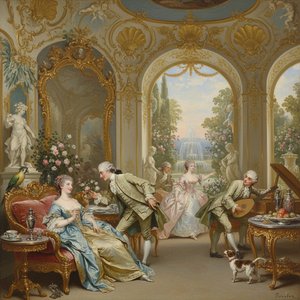
L'Esthétique Rococo : Opulence, Rébellion et la Quête du Plaisir au XVIIIe Siècle
Explorez l'esthétique rococo : opulence, rébellion et quête du plaisir au XVIIIe siècle. Découvrez les maîtres (Watteau, Boucher, Fragonard) et l'influence durable de ce style artistique raffiné. Analyse approfondie & reproductions d'exception.

Antonio Zucchi: A Venetian Master of Rococo & Neoclassical Charm
Explore the captivating world of Antonio Zucchi, a Venetian master of Rococo and Neoclassical art. Discover his collaborations with Robert Adam & Angelica Kauffmann, stunning frescoes, and enduring legacy. Learn about collecting Zucchi's works today.

Pietro Longhi's Venetian Scenes: A Study of Rococo Society & Domestic Life
Explore the captivating world of Pietro Longhi's Venetian scenes! Discover insightful analysis of his Rococo masterpieces & social commentary on 18th-century life. Learn about this 'Venetian Hogarth' and his lasting artistic legacy.

