


 Aperçu en situation
 Partager
 Partager
 Détails
 Guide
Guide

 Télécharger
 Articles similaires
 Radiographie
 Voir le diaporama
 Statistiques
Christ at the Column
 Huile sur toile
- Décoration murale
- Baroque
 1607
1607- Époque moderne précoce
 134.0 x 175.0 cm
 Musée des Beaux-Arts
 Afficher la suite
Reproduction à l'huile faite à la main
Huile sur toile peinte à la main, avec cadre et dimensions personnalisés, réalisée sur commande par nos artistes. ( Passer au format impression Passer au format image numérique)




P118B $10

P118H $10

P118W $10

P438Z $10

P508JH $12

P508YH $12

P805H $10

P805Z $10

P919BZ $10

P919G $10

P919XJ $10

P959ZH $10

P968JZ $12

W106C $8

W218G $10

W218JH $8

W218Y $10

W307PJ $10

W316G $10

W316PJ $8

W316Y $10

W398PJ $8

W4111J $10

W500HY $15

W500JH $15

W692G $12

W849H $8

W940BG $15

W953PJ $8




Choisissez parmi nos formats prédéfinis qui respectent les proportions originales de l’œuvre.

Vous pouvez saisir vos propres dimensions pour l'adapter à un cadre ou à un espace spécifique. Si la taille sélectionnée ne correspond pas aux proportions de l'image d'origine, nous recadrerons l'œuvre ou prolongerons la peinture avec des éléments peints à la main supplémentaires. Une maquette numérique vous sera envoyée pour approbation avant le début de la production.
Veuillez noter que l'aperçu à l'écran ne reflète pas le recadrage ou l'extension réels. Seule la maquette montrera fidèlement la composition finale.
Bien que des tailles personnalisées soient disponibles, nous vous recommandons de sélectionner une dimension dans la liste prédéfinie afin de préserver les proportions d'origine.
Après la commande, l’équipe AllPaintingsStore.com contactera le client par e-mail pour recueillir ses instructions et lui fournira une maquette d’aperçu
Livraison dans le monde entier () en 3 à 4 semaines au lieu des 5 semaines habituelles. (24 septembre). Aucun compromis sur la qualité.

Livraison express gratuite dans le monde entier

Toile de lin de haute qualité

Assurance transport complète

Garantie de remboursement des droits de douane

Garantie de fidélité des couleurs

Garantie de retour de 100 jours (uniquement en cas de défaut)

Garantie de remboursement à 100%

Tarifs dégressifs sur quantité
 L'option verre n'est disponible que pour les dimensions inférieures à 110 cm.

Christ at the Column
Technique de reproduction
Format de la reproduction
-


Prix total final
$ 308
Christ at the Column : A Moment of Profound Suffering
Caravaggio’s *Christ at the Column*, painted in 1607, is more than just a depiction of biblical scripture; it's an unflinching confrontation with human suffering—a cornerstone of Baroque art and a testament to Michelangelo Merisi da Caravaggio’s revolutionary vision. Currently housed in the Musée des Beaux-Arts in Rouen, France, this oil on canvas (134 x 175 cm) transcends mere historical representation, inviting viewers into an intimate dialogue with themes of vulnerability, sacrifice, and enduring faith. The painting captures the agonizing premonition of Christ’s flagellation—a pivotal scene embodying the essence of his Passion—and remains a profoundly moving experience for anyone encountering it.Compositional Mastery & Dramatic Lighting
The artwork's compositional brilliance lies in its simplicity: Christ dominates the central focus, positioned against a starkly contrasting dark background illuminated by an unseen light source. Around him stand three figures – Nicodemus, John the Apostle, and Joseph of Arimathea—each reacting to Christ’s plight with expressions ranging from solemn contemplation to apprehensive anticipation. The subtle inclusion of additional figures in the periphery adds depth without distracting from the central drama, reinforcing Caravaggio's masterful command of perspective and spatial arrangement. Caravaggio’s signature technique, tenebrism – an extreme juxtaposition between light and dark—is executed with breathtaking precision. This dramatic lighting isn’t merely decorative; it actively shapes our perception of the scene, isolating Christ’s form and amplifying his physical and emotional torment. The absence of extraneous illumination directs the viewer's gaze directly to the figure at the center, creating an atmosphere of palpable tension and psychological intensity—a hallmark of Baroque aesthetics.The Baroque Style & Artistic Innovation
*Christ at the Column* embodies the very spirit of Baroque art, rejecting the idealized forms favored by Renaissance artists in favor of realism. Caravaggio deliberately eschewed classical beauty, prioritizing emotional impact over aesthetic refinement. His approach was revolutionary for its time, reflecting a shift towards portraying human experience with raw honesty and confronting uncomfortable truths—a departure from prevailing artistic conventions. The painting’s muted palette – dominated by browns, reds, and subtle highlights – serves to heighten the dramatic effect and underscores Caravaggio's commitment to conveying profound psychological states.Historical Context & Commission
This monumental work was commissioned by the di Franco family for a chapel in San Domenico Maggiore in Naples—a decision driven by the Counter-Reformation’s fervent desire to inspire piety through emotionally resonant visual narratives. Alongside *The Flagellation of Christ*, also painted by Caravaggio and residing in the Museo Nazionale di Capodimonte, Naples, this commission exemplifies the artistic fervor of the era and underscores Caravaggio's ability to capture the complexities of human emotion within a religious framework. The artist’s turbulent life—marked by exile, violence, and personal struggles—undoubtedly fueled his capacity for portraying such visceral experiences.Symbolism & Emotional Resonance
Beyond its literal depiction of Christ’s suffering, *Christ at the Column* is laden with symbolic significance. The column itself represents imprisonment and torment, mirroring Christ's physical ordeal; the bound hands symbolize powerlessness and vulnerability—themes that resonate deeply within the viewer’s consciousness. The figures surrounding Christ embody diverse responses to his plight – indifference, apprehension, and perhaps a flicker of compassion—provoking contemplation on faith, redemption, and the human condition. Caravaggio’s masterful portrayal captures not merely what happened but *how* it felt—a testament to his unparalleled ability to evoke empathy and inspire reflection.- For collectors: A reproduction of this work adds a powerful statement piece to any collection, reflecting Caravaggio's enduring influence on Baroque art history.
- For interior designers: The painting’s dramatic palette and emotional intensity can create a focal point in spaces seeking warmth and contemplation.
- For art lovers: *Christ at the Column* offers an unforgettable meditation on faith, suffering, and the profound beauty of human experience—a masterpiece that continues to captivate audiences centuries later.
Michelangelo Merisi da Caravaggio : A Revolutionary Vision
Michelangelo Merisi da Caravaggio (also Michele Angelo Merigi or Amerighi da Caravaggio; 29 September 1571 – 18 July 1610), known mononymously as Caravaggio, was an Italian painter active in Rome for most of his artistic life. During the final four years of his life, he moved between Naples, Malta, and Sicily. His paintings have been characterized by art critics as combining a realistic observation of the human state, both physical and emotional, with a dramatic use of lighting—a technique that profoundly influenced Baroque painting. Caravaggio employed close physical observation with a dramatic use of chiaroscuro that came to be known as tenebrism. He made the technique a dominant stylistic element, transfixing subjects in bright shafts of light and darkening shadows. Caravaggio vividly expressed crucial moments and scenes, often featuring violent struggles, torture, and death. He worked rapidly with live models, preferring to forgo drawings and work directly onto the canvas. His inspiring effect on the new Baroque style that emerged from Mannerism was profound. Artists heavily under his influence were called the “Caravaggisti” (or “Caravagesques”), as well as tenebrists or tenebrosi (“shadowists”). Caravaggio trained as a painter in Milan before moving to Rome when he was in his twenties. He developed a considerable name as an artist and as a violent, touchy and provocative man. He killed Ranuccio Tommasoni in a brawl, which led to a death sentence for murder and forced him to flee to Naples. There he again established himself as one of the most prominent Italian painters of his generation. He travelled to Malta and on to Sicily in 1607 and pursued a papal pardon for his sentence. In 1609, he returned to Naples, where he was involved in a violent clash; his face was disfigured, and rumours of his death circulated. He died in 1610 under uncertain circumstances while on his way from Naples to Rome. Reports stated that he died of a fever, but suggestions have been made that he was murdered or that he died of lead poisoning."Œuvres similaires


Biographie de l'artiste
Michelangelo Merisi da Caravaggio : Vie et Héritage
Jeunesse et Formation (1571-1592)
- Michelangelo Merisi da Caravaggio, communément appelé simplement Caravaggio, est né à Milan en 1571.
- Sa famille a déménagé dans la ville de Caravaggio en raison d'une épidémie dévastatrice qui a frappé Milan.
- Après les décès de son père et de son grand-père en 1577, sa mère a élevé ses cinq enfants dans la pauvreté relative.
- En 1584, il a commencé un apprentissage de quatre ans avec Simone Peterzano, un peintre qui avait été élève de Titien. Cette formation fondamentale lui a inculqué les techniques de la peinture de la Renaissance.
Carrière Artistique et Style (1592-1610)
- La carrière artistique de Caravaggio a fleuri à Rome, où il est arrivé vers 1592. Au début, il a eu du mal à obtenir une reconnaissance, mais il s'est rapidement établi grâce à son style innovant.
- Sa caractéristique la plus déterminante était son habile utilisation de chiaroscuro, le contraste dramatique entre lumière et obscurité. Cette technique, souvent appelée ténèbres, est devenue une marque de fabrique de la peinture baroque.
- Il a rejeté les formes idéalisées au profit de représentations réalistes, utilisant souvent des personnes ordinaires comme modèles pour les figures religieuses.
- Les peintures de Caravaggio sont connues pour leur réalisme émotionnel intense et leurs récits dramatiques.
Œuvres Clés
- La Prorocesse (1594) : Une œuvre précoce montrant son style réaliste et son souci du détail.
- Le Banquet d'Emmaüs (1601-1602) : Une représentation puissante de la scène biblique, démontrant sa maîtrise du chiaroscuro et de l’intensité émotionnelle.
- Saint François d'Assise en Extase (1594) : Illustre sa capacité à transmettre une expérience spirituelle à travers des images réalistes.
- La Capture du Christ (c. 1602) : Une composition dramatique soulignant la trahison et la capture de Jésus.
- David avec la tête de Goliath (c. 1610) : Une représentation psychologiquement complexe du héros biblique.
Influences et Développement Artistique
- Caravaggio a été influencé par les œuvres des maîtres de la Renaissance tels que Titien, Léonard de Vinci et Michel-Ange, qu'il a étudiés pendant son apprentissage.
- Il s’est éloigné du style maniériste dominant, adoptant une approche plus directe et naturaliste de la peinture.
- Son utilisation de la lumière et de l'ombre a été inspirée à la fois par les traditions artistiques et par l'éclairage théâtral courant à Rome à cette époque.
Réalisations Majeures et Importance Historique
- Caravaggio a révolutionné la peinture baroque grâce à son réalisme dramatique, à son utilisation innovante du chiaroscuro et à ses compositions chargées d'émotion.
- Il a inspiré une génération d’artistes connus sous le nom de “Caravaggesques" ou "ombres", qui ont adopté son style dans toute l'Europe. Des disciples notables incluent Pierre Paul Rubens, Giuseppe de Ribera et Gerrit van Honthorst.
- Son œuvre a défié les conventions artistiques et a ouvert la voie à une approche plus moderne de la peinture.
- Malgré une vie personnelle tumultueuse marquée par la violence et des problèmes juridiques, l'héritage artistique de Caravaggio reste profond et durable.
Vie Tardive et Mort
- En 1606, Caravaggio a fui Rome après avoir tué un homme lors d’une bagarre. Il a passé les années suivantes à se déplacer entre Naples, Malte et Sicile.
- Il a recherché le pardon du pape mais a continué à faire face à des défis juridiques et à des conflits personnels.
- Caravaggio est mort à Porto Ercole, en Italie, en 1610 dans des circonstances mystérieuses. La cause de sa mort reste débattue, avec des théories allant d'une fièvre à un empoisonnement.
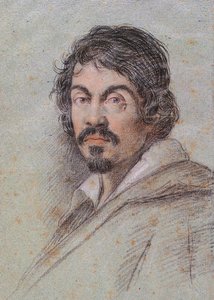
Caravage
1571 - 1610 , Espagne
En bref
- Artistes Influents:
- Titien
- Léonard de Vinci
- Michel-Ange
- Date De Décès: 1610
- Date De Naissance: 1571
- Influences Artistiques:
- Pierre Paul Rubens
- Jusepe de Ribera
- Gerrit van Honthorst
- Lieu De Naissance: Milan, Espagne
- Mouvement Artistique: Baroque
- Nationalité: Italienne
- Nom Complet: Michelangelo Merisi da Caravaggio
- Oeuvres Notables:
- La Fortune Teller
- Le Dîner à Emmaüs
- Saint François en extase
- La Prise du Christ
- David et Goliath
Articles similaires

Les 10 Chefs-d'œuvre Baroques qui ont Révolutionné l'Art |
Plongez au cœur du baroque avec les 10 chefs-d'œuvre de Caravaggio, Rembrandt et Rubens. Découvrez l'histoire fascinante de ces artistes et leurs tableaux célèbres. Reproductions d'art de qualité muséale sur – Explorez la collection !

Chiaroscuro and Soul: A Definitive Guide to the Drama and Emotion of Italian Baroque Masterpieces
Embark on a sophisticated journey through Italian Baroque art. Discover the dramatic interplay of light and emotion in Caravaggio’s masterpieces and explore how to bring this timeless grandeur into your collection with expert art insights.

Baroque : Les 10 Chefs-d'œuvre qui ont Révolutionné la Peinture | AllPaintingsStore
Plongez au cœur de la peinture baroque avec AllPaintingsStore ! Découvrez les 10 chefs-d'œuvre incontournables de Caravaggio, Rembrandt et Rubens. Histoire, techniques & émotions : trouvez l'inspiration déco et achetez des reproductions d'art de qualité muséale sur AllPaintingsStore.com

The Visceral Stage: Exploring Dramatic Narratives & Emotional Intensity in Baroque Art
Explore the dramatic world of Baroque art! Discover iconic masters like Caravaggio & Rembrandt, their techniques, and the movement's lasting impact. Expert insights for collectors & enthusiasts at AllPaintingsStore.

The Dramatic Flourish: Exploring the Baroque Movement's Enduring Legacy in Art History
Explore the dramatic world of Baroque art! Discover iconic artists like Caravaggio & Rubens, defining techniques, and its lasting impact on art history. Expert insights for collectors & enthusiasts at AllPaintingsStore.


